

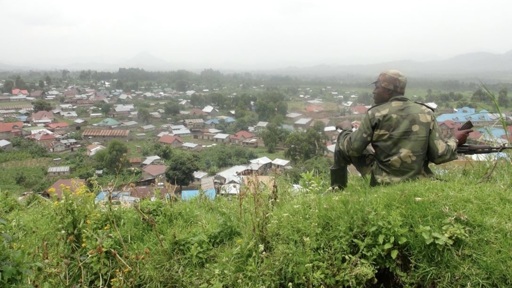
A US-brokered peace agreement signed in Washington by the presidents of the Democratic Republic of Congo (DRC) and Rwanda has failed to halt fighting in eastern Congo. Shortly after, the M23 armed group expanded its offensive into the eastern province of South Kivu, capturing the strategic city of Uvira and triggering a fresh wave of displacement, before abruptly declaring a ceasefire again this week.
The agreement, hailed by Washington as “historic”, was intended to de-escalate hostilities between Kinshasa and Kigali and rein in armed violence linked to M23. Instead, within days of the signing, fighting intensified in South Kivu, forcing an estimated 200,000 people to flee their homes amid clashes, shelling, and widespread fear.
Uvira, the second-largest city in South Kivu and a key commercial hub near the Burundi border, became the focal point of the escalation. The city has served as a temporary administrative center since instability made the provincial capital difficult to govern from. Its capture marked a significant geographic expansion of the conflict beyond M23’s traditional strongholds in North Kivu.
Capture of Uvira and competing narratives
M23 spokesperson Lawrence Kanyuka announced that the group had “captured and liberated” Uvira, framing the operation as freeing the city from what he described as “the forces of the Kinshasa regime and their ally, Burundi.” These claims were dismissed by both the Armed Forces of the DRC (FARDC) and Burundian authorities, who rejected M23’s characterization and accused the group of aggression and destabilization.
Rwanda’s role and US acknowledgement
The renewed offensive has continued the scrutiny of Rwanda’s role. Speaking at the United Nations Security Council, US Ambassador Mike Waltz stated that Rwanda has exercised strategic control over M23 and its political wing, the Congo River Alliance (AFC), since the group’s re-emergence in 2021. According to Waltz, Kigali has been “intimately involved in planning and executing the war in eastern DRC,” providing military direction, material, logistics, and training.
Waltz further said that Rwandan forces have fought alongside M23 inside the DRC, with an estimated 5,000 to 7,000 troops deployed as of early December, not including possible reinforcements during the latest advance. He added that Rwanda has deployed surface-to-air missiles and other heavy, sophisticated weaponry into North and South Kivu, and that Rwandan troops were co-located with M23 along the front lines during the push toward Uvira.
Claims of captured soldiers
As fighting continued, M23 claimed it had captured Burundian soldiers during clashes in the region. On December 15, the group released a statement saying it had facilitated the voluntary return of more than 500 Burundian refugees to Burundi. In exchange, M23 called on the Burundian government to guarantee safe passage for Congolese civilians displaced by bombardments in areas including Sange, Luvungi, and Katogota.
The statement also declared M23’s readiness to hand over captured Burundian military personnel and to proclaim a unilateral ceasefire, framing the move as a humanitarian gesture aimed at enabling displaced people to return home safely.
Ceasefire and planned withdrawal
In a separate statement, Corneille Nangaa, of the Alliance Fleuve Congo (AFC/M23), announced that, at the request of United States mediation, M23 would unilaterally withdraw its forces from Uvira as a confidence-building measure.
The announcement came after days of intense fighting and mass displacement, leaving many questioning the durability of the ceasefire and the mechanisms in place to protect civilians should M23 forces pull back.
Read More: In the wake of Trump’s “peace deal”, 200,000 displaced due to escalated M23 attacks on DRC
Uncertain peace
The rapid sequence of advance, occupation, and ceasefire has laid it bare the fragility of international peace initiatives. Events on the ground and the lived reality of conflict in eastern Congo suggest that armed actors retain the capacity to expand the war at will, with civilians paying the highest price.
The post Rwanda-backed M23 pushes conflict to Uvira despite Washington peace deal appeared first on Peoples Dispatch.
From Peoples Dispatch via this RSS feed