

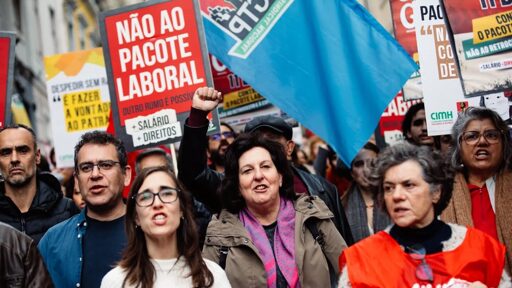
In Portugal, resistance to planned changes to labor legislation continues following a large general strike held on December 11. According to trade union estimates, around 3 million people took part in the industrial action, demanding that the government halt proposals to alter working-time arrangements, roll back parental rights, and reform fixed-term contracts in the pursuit of so-called “flexibility.”
“They call it flexibility, but we should call it what it really is: time theft,” nurse Mário Macedo told Peoples Dispatch. Among the proposals put forward by the minority center-right government is a shift toward a time-bank system, under which workers are not immediately remunerated for overtime work. Parents would see protections weakened, including those limiting night work and securing safeguards for carers of children living with disabilities. The right to strike is also endangered by the reform.
“The last time we saw proposals like this was during the Troika period in 2012,” Macedo says, referring to the years of austerity imposed by the European Union, the European Central Bank, and the International Monetary Fund. “But today there isn’t this kind of social or economic pressure to justify such changes. It is a purely ideological project.”
Tiago Oliveira, secretary general of the General Confederation of the Portuguese Workers (CGTP), raised similar arguments on the day of the strike. “When things were supposedly bad, rights, wages, pensions, vacation days, and holidays were taken away,” he said. “Now, when they say the economy is doing well and growing, what are they doing? Exactly the same thing.”
General strike overcomes traditional divides
The reform plan has proven deeply unpopular across Portugal. Macedo points out that polls suggest that even a large portion of the Democratic Alliance government’s own voters supported the strike, and that such widespread discontent has shook positioning on the right. Even the far-right party Chega, which provides “tactical support” to the minority government in parliament, faltered in its endorsement of the reforms following the industrial action.
Opposition to the revisions has also united Portugal’s main trade union organizations: both the progressive CGTP and the conservative General Union of Workers (UGT) converged on the topic. “Even the center-right sections of the UGT voted in favor of the strike,” Macedo explains, adding that both confederations have pledged to continue mobilizing. However, the UGT was recently reported meeting with government officials, aiming for a “positive restart towards an agreement.”
Macedo adds that last week’s action also overcame traditional divides between public- and private-sector workers. While private-sector employees are often less likely to engage in industrial action, the general strike saw participation from across the economy, including workers in the car industry and private health institutions.
After such a strong mobilization, the government will face more difficulties in passing the reforms, particularly the most controversial elements, Macedo emphasizes. “I’m optimistic, because we now have a real opportunity to fight this in parliament, and we also have a clear social majority in the streets that wants to push back against this law.”
Still, he adds, the struggle must extend beyond the content of a specific reform package. “Portugal’s labor code has been revised many times since the 1970s,” Macedo concludes. “And almost every revision – except for one brief moment in 2018 – was a revision against the workers and in favor of capital.”
The post Opposition to labor reform in Portugal continues after general strike appeared first on Peoples Dispatch.
From Peoples Dispatch via this RSS feed