

Image by Paola Bilancieri.
When I first traveled to China in 1990, I expected a demanding professional assignment. What I did not anticipate was an encounter that would shape my understanding of a nation on the cusp of a transformation whose magnitude few could then foresee.
Two weeks before the trip, I had lunch in Washington with Dr. Albert Sabin, the developer of the oral polio vaccine. When I mentioned my plans, he urged me to contact Zhou Sufei, the widow of Dr. Ma Haide—one of Mao Zedong’s closest physicians and a pivotal figure in modern Chinese public health.
Born George Hatem to a Lebanese-American family in New York State, Ma Haide traveled to Shanghai after medical school. Disillusioned by the city’s corruption, he abandoned private practice and joined Communist forces in Yan’an, where he treated Mao’s troops. Among his earliest assignments was evaluating rumors that Mao was gravely ill. His conclusion—that the leader was not—carried particular credibility because he was a foreigner.
Ma Haide remained with the Communists through their victory in 1949 and later became a senior public-health official. His work contributed to the eradication of leprosy in China and major advances in controlling venereal diseases, earning him the prestigious Lasker Award.
A City Between Eras
Soon after arriving in Beijing, I called Zhou Sufei. Upon hearing Dr. Sabin’s name, she invited me for tea the following day at her traditional siheyuan home, nestled among the narrow hutongs of the old city.
The visit offered a rare glimpse of a Beijing in transition. Siheyuan—courtyard homes that once fostered close-knit communal life—were rapidly disappearing, replaced by high-rise buildings that now dominate the capital’s skyline. The shift marked more than architectural change; it signaled the fading of an urban culture rooted in shared spaces and neighborly intimacy.
Zhou, a respected artist and film director, greeted me alongside her secretary. She was petite, elegant, and strikingly beautiful. We spent the afternoon discussing the changes they saw the city was experimenting. Surrounded by dark, finely crafted wooden furniture, her living room felt like a preserved fragment of a Beijing already slipping into history.
When I left, as my taxi navigated the labyrinth of hutongs—my jet lag compounded by a strong local liqueur she had insisted I sample—I reflected on the changes already underway. China was just beginning the economic surge that would soon reshape the global order.
The Scale of the Awakening
Covering 9.6 million square kilometers, China is home to one of the world’s oldest civilizations. After Japan’s defeat in World War II, the Communist Party established the People’s Republic of China on October 1, 1949.
Market reforms launched in 1978 set the stage for decades of rapid growth, averaging 8 to 9 percent annually. By 2008, China had become the world’s second-largest economy by GDP. Today it is the leading exporter and the second-largest importer globally. Yet it ranks only 71st in GDP per capita, underscoring the persistent inequalities that Mao’s revolution once pledged to eliminate.
Those disparities coexist with a consumer boom once unimaginable. In 2023, China’s automotive industry reached an estimated $1.6 trillion in production value, symbolizing the country’s shift from bicycles to cars. Fast-food sales have risen by more than 20 percent. Luxury consumption has surged, with record sales of champagne and cognac. China, including Hong Kong, now counts 516 billionaires—second only to the United States, which has 902.
Growth at a Cost
China’s economic ascent has exacted a heavy environmental toll. Sixteen of the world’s 20 most polluted cities are located in China. The country is the second-largest emitter of carbon dioxide, and Beijing alone has nearly eight million vehicles—roughly one for every three residents.
Air pollution stems not only from traffic but also from the country’s heavy dependence on coal. Water pollution remains severe, with children and the elderly particularly vulnerable. The problem is compounded by limited arable land: only 7 percent of China’s territory can be farmed, and urban expansion consumes about one million hectares annually.
As a result, China increasingly relies on imports of soybeans, wheat, metals, cement, and oil.
There is no question that economic growth has lifted millions out of poverty. But the relentless exploitation of natural resources has produced a mounting environmental and public-health crisis, especially in major cities.
Chinese authorities have stepped up efforts to curb pollution, and domestic companies—after saturating the local market with solar panels, wind turbines, and batteries—are now exporting clean-energy technologies to developing countries.
Also, this progress has been achieved at the cost of limiting civil liberties and workers’ rights, as well as people’s freedom of expression.
Even so, the momentum of China’s rise appears undiminished, despite significant political, social, and environmental challenges.
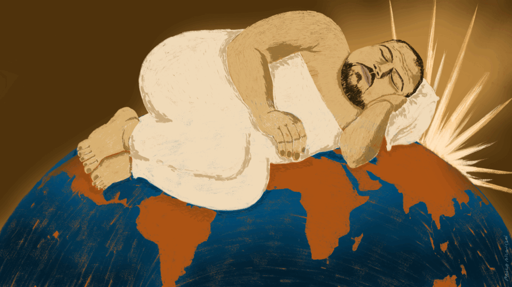
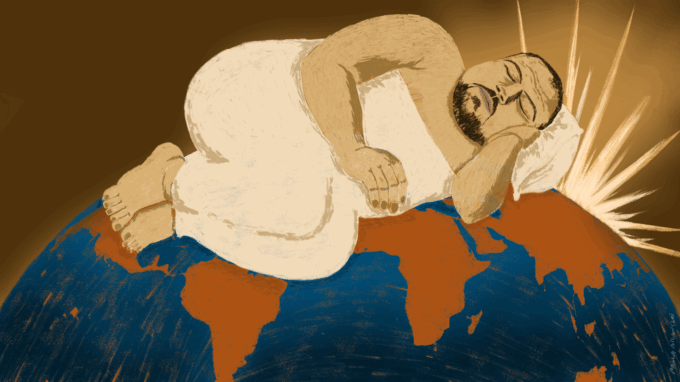
Napoleon Bonaparte once remarked: “China is a sleeping giant. Let her sleep, for when she wakes, she will shake the world.”
More than two centuries later, the statement reads less like a warning than a simple observation of reality.
The post Did Napoleon Predict China’s Rise? appeared first on CounterPunch.org.
From CounterPunch.org via this RSS feed