

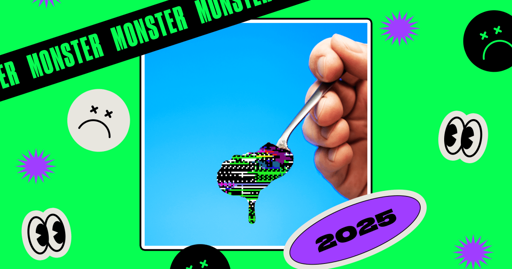
The staff of Mother Jones is, once again, rounding up the heroes and monsters of the past year. This is a non-exhaustive and totally subjective list, giving our reporters a chance to write about something that brought joy, discontent, or curiosity. Happy holidays.
It was a busy year for Peyton Manning. The retired NFL quarterback saved a failing dog shelter, adopted an 8-year-old girl named Lily, bought a minivan for a single mom, encouraged a boy with Down syndrome to play piano, and took a teenage cancer patient to prom. Popular posts on Facebook boasted his heroism: “Cancer Took Her Hair. Peyton Manning Gave Her the Strength to Walk Down the Aisle Without It”; “She Survived Cancer Because of Peyton Manning—Then Took Off Her Wig on Live TV.”; “She Told Him Not to Come In—Because She Had No Hair. What Peyton Manning Did Next Left Everyone in Tears.”
AI data centers are straining electrical grids across the country so that our president can post an AI-generated video of himself dumping shit on protesters from a fighter jet.
Perhaps, as thousands of enthusiastic baby boomers have gushed in the comments, Manning really does have a heart of gold. Unfortunately, all of these stories—and their attendant uncanny images—are AI slop.
In 2025, slop is everywhere. Low-effort, low-quality, AI-generated nonsense is polluting our social media feeds, search engine results, scientific journals, music streaming services, eBook marketplaces, universities, legal filings, and more.
The phrase “AI slop” entered the zeitgeist last year. This year, it went mainstream. Already, there’s something called Slop Evader—a browser plugin that returns your internet search experience to a simulacrum of pre-ChatGPT bliss. The Economist, Australia’s Macquarie Dictionary, and Merriam-Webster have each crowned “slop” their word of the year. And while feel-good Facebook stories about a retired football star might be the slop du jour for retirees, slop writ large does not discriminate. It fools teens, the middle-aged, millennials, and Gen Z—and according to Bloomberg reporting, there is even bespoke AI slop for babies.
Is anybody actually hungry for the slop? Of course not! But you don’t get to pick what’s served up in your trough. In order to consume content on the internet now, you must shut up and down it with a side of slop, slop, slop.
The tech oligarchs are squandering our finite natural resources so I can log on to Instagram and talk with an AI-generated chatbot named “A Literal Horse.” (“Neigh,” it says, “neigh neighhh.”) Meanwhile, increasingly unpopular AI data centers are straining electrical grids across the country—triggering rate hikes offloaded onto the likes of you and me—so that our president can post an AI-generated video of himself dumping shit on protesters from a fighter jet. Or so he can post an AI-generated video of his golden effigy in a luxury Gaza resort. Or an AI-generated photo of himself as a Star Wars Jedi.
It’s been a banner year for slop, but the general phenomenon isn’t new. Before slop, there was brain rot: a phrase that describes both the mind-numbing content one encounters online, and the feeling of cerebral atrophy induced by endless scrolling. Not all brain rot is AI slop, but all AI slop is brain rot. What makes slop worse is that it’s totally devoid of humanity and proliferating at an exponential clip. At least when people wasted hours watching soap-cutting videos, there had to be real, live people, somewhere out in the world, cutting actual, physical soap. The logistical constraints of the corporeal realm introduced some limits on how many soap-cutting videos could feasibly be produced in a day. Not so for slop. One night on Instagram Reels, I watched four consecutive videos of disembodied hands wrenching apart various fruits to reveal the wriggling, hybrid “fruit pet” assigned to a birth month. (I got the Mango Gecko.)
Technology was supposed to make things better: the lightbulb was brighter than the candle, the car was faster than the (literal) horse. The long march of human innovation has largely been undergirded by a drive to eliminate friction, reduce inefficiencies, and solve the quotidian challenges of daily life.
But over the last 15 years or so, it’s become increasingly clear that the endless push for optimization and convenience has had adverse consequences. This has led some on the left to call for a neo-luddite revolution, but the desire is even more mainstream. There’s now a market for anti-technology technology—like Brick, which makes your phone harder to use, locking away your AI fruit pets and the powerfully addictive dopamine hits they provide. (“I Bricked My Phone for 2 Weeks. My Brain Feels Much Better,” reads a recent review in Wirecutter.)
Still, even if you do go offline, you’ll find the real world is now a lot like the AI experience on your phone: supposedly easy, but shitty, and decidedly vacant. DoorDash your dinner, have Chat write your essay, get your toothpaste delivered through Amazon Fresh. The drive for a frictionless existence has sloppified our offline lives, too—fast fashion brands like Shein and mediocre, efficiency-focused bowl restaurants like Chopt are also forms of slop, as Emma Goldberg wrote in the New York Times.
There is an irony in this. Thanks to AI slop, our online lives are now actually full of friction, under the guise of being frictionless. ChatGPT lies all the time if you ask it questions. Videos can’t be believed as real. Do you know if anything is true anymore? Do you trust anything? Are you having fun?
While I said AI was devoid of humanity, that’s not entirely true. It’s tempting to paint the technology as some powerful, preternatural force, but there are people behind all of this. There are the proletarian clickbait farmers asking chatbots to craft fake Peyton Manning stories, and there are the far more nefarious Silicon Valley executives lobbying the government for fewer AI guardrails.
But many of us don’t actually want the sleek, optimized, empty lives that are being shoved down our throats; we do not want AI to take our jobs, star in our movies, or sing our songs. If AI slop turns a profit, it is because we tolerate it. If we think AI can replace consciousness, it’s because we’ve failed to realize the breadth and strangeness of our own humanity. Big business wants that—and is trying to make slop the default way we live life. It doesn’t have to be. The best way to beat the slop is systemic change, regulatory overhaul. But the second best way is by rebelling against it in our everyday lives. That means sustained, active engagement with non-slop—real people, challenging art, new ideas—in the real world and online. In 2025, we hit a turning point: keep accepting the slop, or we risk becoming slop ourselves.
From Mother Jones via this RSS feed