

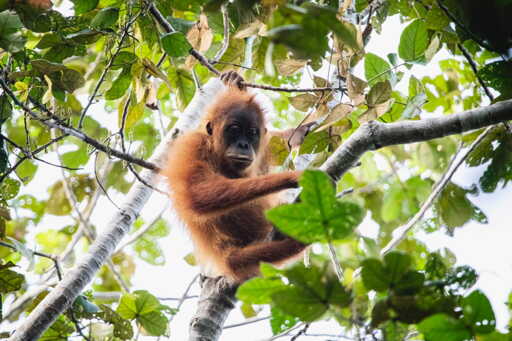
JAKARTA — Reeling from a cyclone that may have erased a chunk of its population, the Tapanuli orangutan, the world’s rarest great ape population, now faces the prospect of losing more of its already constricted habitat. Just weeks before a rare tropical storm in the Malacca Strait unleashed torrential rains and mudslides that wiped out part of the Batang Toru forest in Indonesia’s North Sumatra province, local authorities proposed a zoning overhaul that would make it easier to weaken environmental scrutiny for development projects in the region. At a meeting on Oct. 22 in Medan, the North Sumatra provincial capital, they called for scaling back the area zoned as “strategic” by nearly a third, from 240,985 to 163,402 hectares (595,487 to 403,775 acres). The “provincial strategic area” designation in the context of natural ecosystems means that zoning in the area must prioritize ecological functions, assess land-use decisions at the landscape scale, and subject applications for activities such as mining and plantations to extra scrutiny. Removing that designation weakens the legal basis for rejecting projects that pose environmental risks. Panut Hadisiswoyo, founder of the Orangutan Information Centre (OIC), who attended the Medan meeting, said the plan would devastate the western sector of Batang Toru that’s home to the highest density of Tapanuli orangutans (Pongo tapanuliensis). “If Batang Toru is excluded, the landscape would lose legal recognition as a critical ecosystem,” he told Mongabay. “The western block — the largest block [of orangutan habitat] — would no longer be part of the…This article was originally published on Mongabay
From Conservation news via this RSS feed