

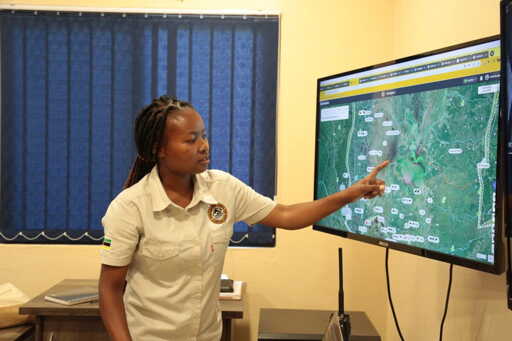
As anti-poaching techniques have improved over the years, poachers have increasingly used technology to evade detection by patrols and park rangers. Now, conservationists are rising to the challenge of the resulting technological arms race with innovations of their own. Over the past few years, researchers and conservationists have worked to develop new technology to detect and track poaching, including mobile apps, sensors, and AI. In an effort to determine which devices, strategies, and technologies are most effective, researchers assessed a suite of new developments that have been deployed or hold promise, in a recent study published in Frontiers in Ecology and Evolution. “There’s all these tools out there to try and push back against something that is increasingly well financed, increasingly organized and difficult to combat,” said study co-author Drew Cronin, a conservation biologist at the North Carolina Zoo. Leopard sitting in a tree on the Mara North Conservancy in Kenya’s Maasai Mara. Photo Credit: Maria Meinen. The researchers found that mobile devices and apps are especially cost-effective for documenting poaching and for mapping the location of wildlife. Many useful apps have been developed, including WildScan, which contains a library of photos and descriptions of protected species that can help law enforcement and transport workers identify illegal wildlife trafficking. Acoustic sensors are already frequently deployed to non-invasively detect and monitor the presence of animals. This technology has gotten better and less expensive in recent years, making it an effective way to monitor vast areas for sounds like gunshots and chainsaws…This article was originally published on Mongabay
From Conservation news via this RSS feed
You must log in or # to comment.