

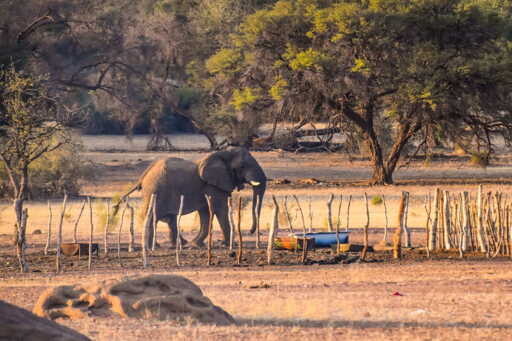
Elephants are considered a sacred totem by many in northwestern Zimbabwe, but they also frequently raid villagers’ crops near harvest time, says Agripa Ngorima, who has studied attitudes toward conservation in Simangani. During his fieldwork, he presented residents with two scenarios: one in which elephants provided benefits — such as meat, skins for ornaments or safari-industry jobs — and another in which people only incurred costs, including crop losses, fence damage or injury. Their responses diverged sharply: 88% said they would support elephant culls or translocations if they received no benefits, compared with just 20% if elephants supported their livelihoods, and 92% were unwilling to engage in conservation due to lack of financial gain from elephants. “Any cultural willingness to coexist with elephants is conditional and will be withdrawn if livelihoods are threatened,” Ngorima says. Elephants roam freely from Hwange National Park into bordering communal farming lands. IFAW’s EarthRanger project has tracked the movement of collared elephants, with some ranging more than 200 kms from the protected area and traversing communal land along the way. Image courtesy of Tyson Mayr / IFAW. Learning to live with elephants Since his fieldwork in Simangani in 2018, the government and NGOs have introduced outreach programs, teaching villagers about elephant behavior and promoting the cultivation of red-hot chile peppers — plants the animals can’t abide. Yet the most effective deterrent, physical fencing around fields, remains out of reach for most, leaving the majority of households unprotected. “This implementation gap means the current costs of…This article was originally published on Mongabay
From Conservation news via this RSS feed
You must log in or # to comment.