

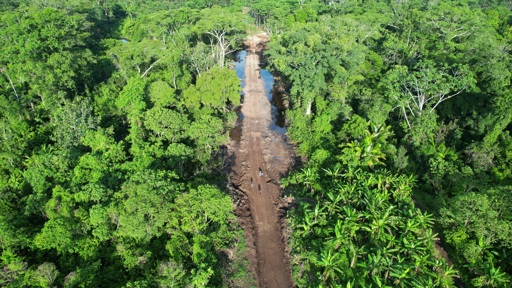
Between March and May 2025, at least eight children from the Achuar Indigenous community died of leptospirosis in the southern Ecuadorian Amazon. The disease is preventable with access to safe drinking water and timely treatment. But these two conditions are absent in Taisha, one of the poorest five cantons in Ecuador and the one with lowest coverage of basic services. Months earlier, provincial and canton authorities built access roads to Taisha, promising to address this neglect. But these projects — implemented without the full consent of the Achuar, environmental control strategies and, in some cases, technical criteria or permits — had fatal consequences. Two Achuar people were murdered. Illegal loggers used the roads and took advantage of the lack of control on the part of authorities to reach Achuar territory. The demand for timber quickly found supply in a canton where almost eight out of 10 people live in poverty or extreme poverty, according to the National Institute of Statistics and Census (INEC). Taisha also makes up a large part of Achuar territory, which is home to “one of the best-preserved and most biodiverse forests in Ecuador,” according to a recent report by the organization Amazon Conservation’s Andean Amazon Monitoring Program (MAAP). Several Achuar sold the illegal loggers timber from the cedro (Cedrelo odorata) and chuncho (Cedrelinga cateniformis) tree species from their land, says Waakiach Kuja, president of the Achuar Nation of Ecuador (NAE), who gave an interview to Mongabay Latam after coordinating the transfer of a sick community member…This article was originally published on Mongabay
From Conservation news via this RSS feed