

On Wednesday, December 17, the government in India’s north-western province of Rajasthan was forced to reconsider the proposed ethanol plant in Hanumangarh district, after large-scale protests by the farmers refused to subside.
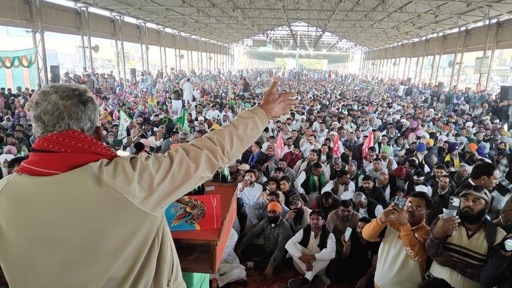
The announcement was made after thousands of farmers gathered at the grain market in Tibbi, a significant commercial hub in the district, to continue pressing for their demands, days after a large-scale police repression.
Farmers refused to accept the state’s claims that the plant would bring economic development, pointing out the possible harm the factory would cause to the regional environment and water resources.
The proposed plant, the largest of its kind in Asia, was to be built in the Rathi Kheda village of the Hanumangarh district. The district falls in an arid region where farmers struggle to meet the requirement of water for irrigating their farms during cropping seasons.
The majority of the region’s population largely depend on agriculture as their means of survival.
The ethanol factory, farmers argued, would further deplete the ground water in the region, apart from polluting the land and air, all of which would further affect the crop cycle.
Scores of farmers, including some police personnel were injured when they were attacked by the security forces on December 10. Following the incident, several farmers’ leaders were booked on charges of rioting and other serious crimes.
Farmers decided to intensify their agitation after talks with the administration were stalled earlier this week. Farmers defied fresh threats of police action, warning instead that the agitation would continue until the proposed plant is completely scrapped.
After the police repression, the farmers received support from national movements, such as the Samyukta Kisan Morcha (SKM), a collective of farmer movements which has been spearheading the farmer’s agitation at the national level for minimum support prices (MSP) and other such issues since 2019.
In a statement issued on December 12, SKM called the police action against farmers in Tibbi an atrocity committed by the state government on behalf of big capital.
SKM accused that large corporations, in collaboration with the right-wing political forces in the country, are trying to grab as much agricultural land as possible without thinking about the fate of the millions who depend on the land for their survival.
A year long struggle
The farmer’s agitation against the plant in Hanumangarh started in September 2024, after the state government, led by ultra-right-wing Bharatiya Janata Party (BJP) approved the project.
The peaceful protests intensified after the company went ahead and began construction on the proposed site in June this year, despite farmers’ objections.
Instead of listening to the farmers’ concerns, the state unleashed a regime of terror against the agitating farmers, arresting several leaders in November this year.
The ruling BJP has accused the left and other opposition parties of misleading the farmers, claiming the plant, the largest such plant in Asia, once completed, would provide employment and economic growth to the region.
The BJP governments in the state and at the federal level have consistently refused to acknowledge the concerns regarding environmental degradation, despite holding several rounds of talks since November. The agitating leaders also met the national environment minister regarding the matter recently without any success.
The government’s adamant position forced the farmer leaders to call for a large meeting (Mahapanchayat) on Wednesday.
To prevent the meeting from happening, the administration had issued prohibitory warnings imposing sections of the law criminalizing any such gathering. It also suspended internet services in the area for two days.
Repeated threats from the administration hardened the farmers’ resolve. The meeting on Wednesday attracted the largest ever numbers with militant calls for protests by the speakers.
Read More: Police repress Indian farmers’ protest against ethanol plant
The gathering was addressed by several national leaders of the SKM, including P Krishnaprasad of the All India Kisan Sabha (AIKS), and Rakesh Tikait.
Balwan Poonia, leader of the left-wing AIKS, who has been a participant in the joint movement, reiterated his claims of the administration’s insensitive approach to the demands raised by farmers.
He had asserted that repressive policies will never succeed against the united struggle of farmers and warned the administration to concede to the demands and withdraw the plant for the betterment of all, as farmers will never accept it in the region.
The post Farmers force right wing government to reconsider ethanol plant in India’s Rajasthan appeared first on Peoples Dispatch.
From Peoples Dispatch via this RSS feed