

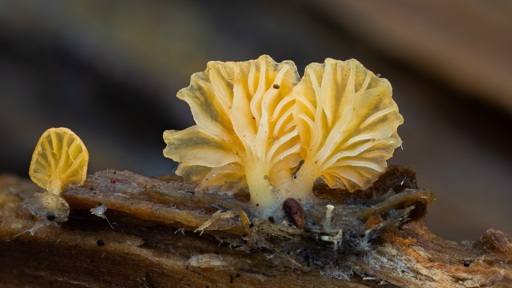
Getting to The Cedars, an ecological preserve in California’s Sonoma county, is a slog. Multiple rivers and creeks must be crossed, and it can be tough going on an often storm-destroyed road. But it’s home to a rich diversity of species found nowhere else on Earth that are uniquely adapted to serpentine soil, composed of decomposed rock and rich in heavy metals. If you’re a fungi collector, it’s well worth the trip. Over the past two years, a dedicated team of mycologists — specialists in the study of fungi — and experienced mushroom collectors have combed California’s forests, rivers and mountains in often remote locations such as this, searching for and collecting fungi. Those making the arduous journey out to The Cedars have identified more than 100 new species, 25 of which are only known from the area. They snapped photos, which were then uploaded with all pertinent data to iNaturalist, a citizen scientist biodiversity database. Collections have been sent to labs where scientists extracted DNA for sequencing. Dried specimens are stored for safe keeping at California State University, East Bay, and the University of California, Los Angeles. This is part of an expansive effort to map the state’s fungal diversity, which has yielded thousands of specimens and is the first of its kind in North America, says Harte Singer, who heads genetic research at the California Fungal Diversity Survey (CA FUNDIS). The CA FUNDIS team collected thousands of fungi species from across California. Many of those collected are undescribed.…This article was originally published on Mongabay
From Conservation news via this RSS feed
You must log in or # to comment.