

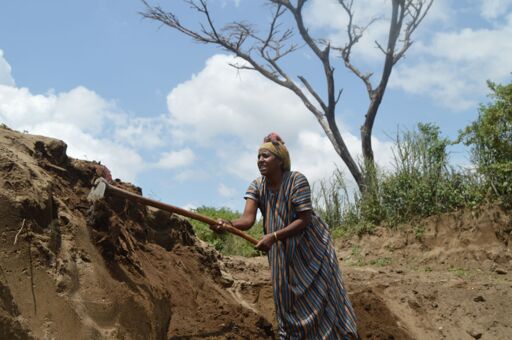
Abijata-Shalla National Park, ETHIOPIA — Under the scorching midday sun in the upper catchment of Ethiopia’s Abijata-Shalla National Park, a local youth group toils along the edges of a deep gully carved into the hills by erosion. The young men shovel soil from the loose edges of the gorge, while women fill sandbags they stack in the gullies, building barriers to hold back the next rains that strike this battered landscape “The land is healing, and so are we,” says Hamid Belo, chairman of the Mekane Fike Forest Conservation Association. Once covered with acacia woodlands and fed by steady streams, the land here has been steadily stripped bare. The loss of tree cover has allowed erosion to scar the hillsides and upset the flow of water into the lakes in this closed river system. Abijata and Shalla — the two lakes that give the national park its name — now receive less water and more sediment — their boundaries have shrunk and the quality of the water has changed, affecting fish and other aquatic life, along with flamingos and other migratory birds that once crowded their shores. For the past five years, this group of youth has been working to prevent degradation of soil and water in the landscape and begin restoring the ecosystem. Increased sediment and reduced water have caused Lake Abijata’s shoreline to retreat, but its water levels are now beginning to rise. Image courtesy of Berihun Tadele. Lake Abijata. The satellite image on the right shows lakes…This article was originally published on Mongabay
From Conservation news via this RSS feed
You must log in or # to comment.