

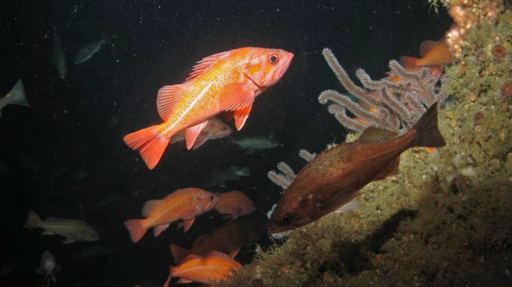
In 1888, researchers aboard the R/V Albatross began the world’s first concentrated marine research expeditions off California’s Pacific coast. The team collected untold plant and animal specimens, including orange cup corals, which they carefully preserved and stored in collections at the Smithsonian Institution. These specimens have now become rare physical evidence of ongoing changes in the chemistry of the Pacific Ocean as seawater absorbs the carbon dioxide released into the atmosphere by burning fossil fuels. Researchers recently analyzed these 130-year-old samples, which come from a time before the Industrial Revolution’s greenhouse gas impacts had really kicked in. Then they compared them with new specimens collected in the same locations by a team aboard another research vessel, the R/V Rachel Carson, in 2020. They discovered that this region is acidifying, far faster than models have predicted, findings they recently published in the journal Nature Communications. “Ocean acidification is not a distant or abstract phenomenon. It is already underway, it is amplified in some regions, and it has real consequences for ecosystems and coastal economies today,” study lead author Mary Margaret Stoll, from the University of Washington, told Mongabay. This research focused on the Salish Sea and the cold California Current System, an interweave of four currents predominantly flowing south from the Canadian province of British Columbia to the Mexican state of Baja California. Prevailing winds push water away from the coast along these currents, drawing water up from the deep, bringing nutrient-rich sediments along with it. These support exceptional biodiversity and…This article was originally published on Mongabay
From Conservation news via this RSS feed