

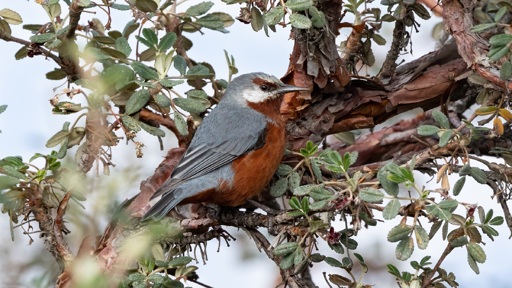
High in the Andes, Polylepis trees, with their stunted gnarled trunks and twisted limbs, cling to steep mountain slopes, boulder fields and sheltered ravines. Growing at altitudes of up to 5,000 meters (about 16,400 feet), they must withstand intense sun, biting wind, nighttime frost and seasonal drought. “They’re just crazy resilient trees,” says Tina Christmann, lecturer in environmental science at Southampton University in the U.K. Over centuries, grazing of the high mountain pastures has pushed Polylepis woodlands, called queñual in the local dialect, into only the most inaccessible locations. Researchers estimate they now cover a tiny sliver of their historic range across the Andes, about 2% of historic distribution in Peru and 10% in Bolivia. Yet the woodlands continue to play vital ecological roles. Polylepis trees have a remarkable ability to capture fog on their tiny leaves and channel water into the soil, feeding streams and rivers that travel all the way to the coast. The trees also weaken floods and stabilize mountain soils. Communities use the woodlands for firewood and medicinal herbs. A mature polylepis tree. Called queñual in local dialects in Peru, the polylepis includes 28 species of trees and shrubs. With their thick peeling bark, small waxy leaves, and stunted growth, polylepis trees are well adapted to the extreme temperatures, frequent droughts, strong winds and periodic fires that characterize the high Andes. Image by Tina Christmann. For decades, various groups have worked to restore Andean forest ecosystems, including the Polylepis woodlands. As part of her Ph.D. research,…This article was originally published on Mongabay
From Conservation news via this RSS feed
You must log in or # to comment.