

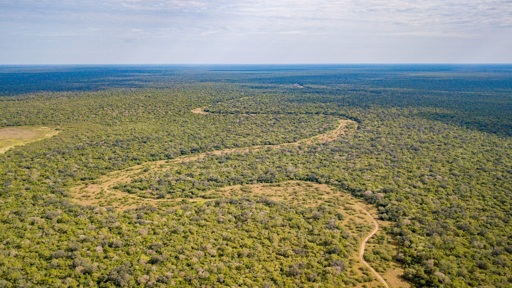
This investigation was produced with support from the International Center for Journalists (ICFJ). Isabel Alarcón contributed reporting from Ecuador. BARCELONA — Covering more than 65 million hectares (160 million acres) across Argentina, Brazil, Bolivia and Paraguay, the Gran Chaco is South America’s second-largest forest after the Amazon Rainforest. Over the last decades, the dry forest ecosystem that fosters thousands of plant and animal species and 9 million people has lost about a quarter of its area to agriculture. In 2024, the Gran Chaco was especially threatened in Argentina’s Santiago del Estero province, where it lost 54,000 hectares (133,000 acres) of forest. A few years earlier, the province’s forest ecosystem was the object of an announcement at COP26 in Glasgow, U.K. On Nov. 2, 2021, Global Carbon Parks Inc., a Miami-based startup, announced a $200-million carbon contract with the province of Santiago del Estero that, according to several sources, would support nature conservation and decarbonization in the region. The startup aimed to trade in carbon credits from subnational protected areas. The announcement of the public-private arrangement was hosted by Capital Cities 35 (CC35), a climate alliance of mayors across the Americas that aims to build capacity to tackle climate change, implement the Paris Agreement and the U.N.’s 2030 Agenda. But findings from a Mongabay investigation suggest that the secretary-general of CC35, Argentinian Sebastián Navarro, has been using CC35 to advance private interests in carbon businesses like Global Carbon Parks, which he controlled through majority stakeholder Ethic International, Inc, a holding company that…This article was originally published on Mongabay
From Conservation news via this RSS feed