

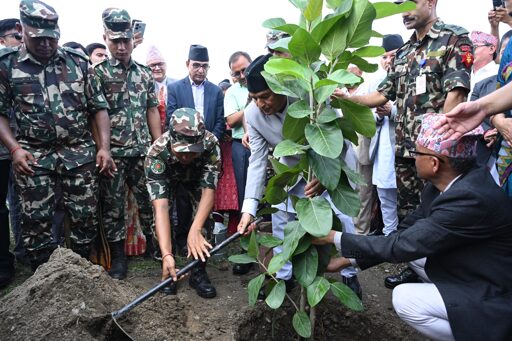
NAWALPUR, Nepal — At 75, Hasta Bahadur Sathighare Magar says he still remembers the time when the slopes above his village in the rural municipality of Rupsekot, in central Nepal, looked dead. Dust blew freely as cattle marauded the barren land. That view has since changed. The barren slopes have given way to native trees like sal(Shorea robusta), sisau (Dalbergia sissoo), jamun (Syzygium cumini) and bakaino(Melia azedarach), which cast a shade with their canopy. “When I’m in the jungle, I feel as if I gain energy from the plants. Many people like me come here to walk and enjoy nature,” Magar says. Hasta Bahadur Sathighare Magar at the Muse Danda forest. Image by Mukesh Pokhrel The barren hill in Muse Danda is now filled wth trees. Image by Mukesh Pokhrel. The recovery of the Muse Danda Community Forest wasn’t funded by large-scale tree-planting campaigns. Instead, it was driven by small local changes. Community members simply protected the land, and the forest grew back. As the government struggles to restore degraded land across Nepal’s Chure foothills through large-scale tree-planting programs, the success of low-cast, community-led efforts signals that natural regeneration could happen if communities protect the land. The Chure range is Nepal’s green spine: fragile, vital, and now fighting to survive. It covers about 13% of the country’s total area and stretches east to west along the southern foothills of the Himalayas. This biologically rich landscape supports a wide range of species — from tigers (Panthera tigris) and sloth bears (Melursus…This article was originally published on Mongabay
From Conservation news via this RSS feed
You must log in or # to comment.