

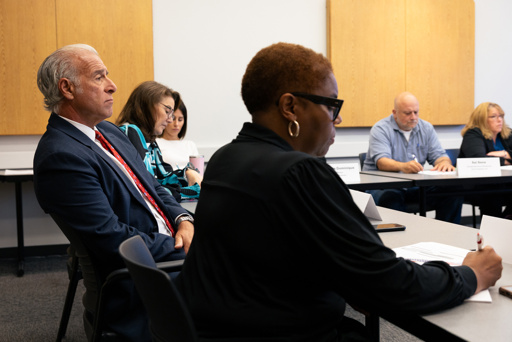
As the Connecticut legislature overhauled the state’s towing laws last spring, lawmakers came up with a hopeful idea: gather towing companies, consumer advocates and state officials to hammer out a few arcane details that could have big implications for some Connecticut drivers whose cars are towed.
The ambitions of the task force, convened in response to a Connecticut Mirror and ProPublica investigation, grew quickly as it began to meet in September to come up with recommendations for the legislature. Perhaps they could make it easier for low-income people to get their towed cars back or prevent them from being towed at all. Maybe they could change the administrative process that sometimes made it hard to find owners of the cars, which frustrated drivers and towing companies alike.
But with a Feb. 1 deadline looming for its recommendations, the panel has made little progress on reaching a consensus.
That could pose hurdles for lawmakers who say towing practices are still unfair and want to pass more reforms during the legislative session that starts in February.
“We’re still anxiously, eagerly awaiting word from the working group on their recommendations,” said state Sen. Christine Cohen, D-Guilford, who co-chairs the Transportation Committee.
Until a few months ago, Connecticut residents’ cars were towed from their own apartment complexes without warning over minor issues like an expired parking sticker.
When those residents went to pick up their vehicles, towing companies often refused to take credit cards or even let owners get their belongings from inside their cars.
And if the owners didn’t have cash to pay the fees, which mounted every day, towing companies could ask the Department of Motor Vehicles for permission to sell some vehicles after just 15 days.
Much of that changed after a new law went into effect in October following the CT Mirror and ProPublica investigation that exposed how the state’s laws had come to favor towing companies over vehicle owners.
Towing companies must now give people warning before removing vehicles from apartment parking lots unless there’s a safety issue. The towers must accept credit cards and let people get their belongings. And although the sales process can begin after 15 days for vehicles worth less than $1,500, towers must wait 30 days before selling them.
Part of the new law also required that a DMV task force examine the process companies use to get rid of towed cars. Lawmakers said they especially wanted the group to look at what happens to profits from the sales of the towed vehicles. Currently, towing companies are supposed to hold onto proceeds for a year so owners or lenders can claim them. After that, any unclaimed funds, minus the towing costs and fees, are required to be turned over to the state. But CT Mirror and ProPublica found that hasn’t happened in part because the DMV never set up a system to collect the money.
The working group has met four times. They’ve talked about stopping towing fees from accumulating once vehicle owners indicate they want their cars back. They’ve also debated changing the way towing companies value cars, which determines how soon towers can start the sales process. DMV Commissioner Tony Guerrera proposed scrapping the valuation system and letting companies sell all vehicles after 30 days.
And both consumer advocates and towing representatives complained about the process for notifying owners that their cars have been towed or are about to be sold. The system relies on the vehicle’s registration, which can often have out-of-date addresses. CT Mirror and ProPublica interviewed several people, particularly lower-income residents, who said they were never informed that their cars would be sold.
Yet at the most recent meeting Dec. 15, task force members couldn’t even agree on how many letters needed to be sent to vehicle owners. The meeting got heated on several occasions even as Guerrera warned the deadline to complete a report was approaching.
The working group hasn’t discussed how any proceeds should be given to the state.
Still, in an interview, Guerrera projected confidence that they would reach a compromise.
“You’ve got two sides here that are very passionate about what they believe in, and like any good piece of legislation that people try to draw up, it takes many times at the table to craft something that you can have individuals sign off at the end,” he said.
At Monday’s meeting, consumer advocate and attorney Raphael Podolsky said he was concerned the committee was missing some key issues including making sure people can get their vehicles back.
“I’m more concerned not how do you sell the car, but how do you make sure it never gets to that point?” Podolsky said.
Members of the towing industry argued against a DMV proposal that would mandate that companies send car owners a second certified letter when their vehicles are going to be sold, informing them of the date and location of the auction.
Eileen Colonese, secretary of the industry group Towing & Recovery Professionals of Connecticut, said more letters won’t resolve the issue of addresses being wrong.
“You have to find out who the owner of the car is,” said Colonese of Farmington Motor Sports. “If we don’t solve that problem, all the rest of this is really a waste of everybody’s time and money.”
Towers and Guerrera proposed creating a DMV portal where towing companies would list every car towed and where it was being held.
Colonese said it’s difficult for the towers to agree to most of the proposals because they would add costs to companies. Transportation Committee ranking member Rep. Kathy Kennedy, R-Milford, is considering this question as well; “it’s their livelihood,” she said of the towing companies.
Cohen and her co-chair, Rep. Aimee Berger-Girvalo, D-Ridgefield, said they also want to see more transparency from the DMV after the news organizations found that a department employee faced little consequence for five years after an internal investigation found he had abused his power by trading favors for steep discounts on towed cars. The employee was fired last month. He appealed the decision and said he had done nothing wrong.
Guerrera said he wants the working group to have at least three recommendations before the legislature begins its three-month session. He said the group may have to meet twice more in January to come to an agreement. He warned if the group doesn’t reach a consensus, neither side will be happy with the report he plans to submit and what the legislature does from there.
“I’m going to submit the report after the next meeting or two meetings, and they can come back and go to the legislature and say, ‘I still don’t like it,’” Guerrera said. “But I am going to put down what I believe is something that is fair.”
The post A Connecticut DMV Task Force Was Asked to Develop Towing Reforms. As Deadline Looms, Members Struggle to Agree. appeared first on ProPublica.
From ProPublica via this RSS feed