

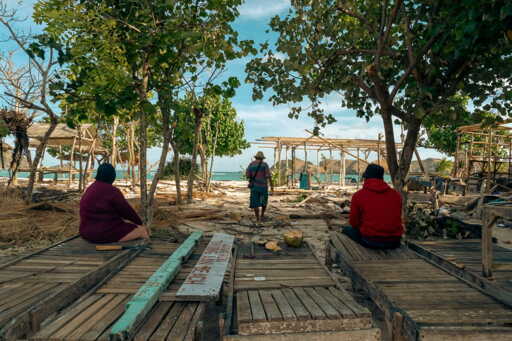
TANJUNG AAN BEACH, Indonesia — Here on the southern coast of Indonesia’s Lombok Island, dozens of residents have been told to dismantle their food stalls and leave the shoreline to make way for the Mandalika tourism development project. Once a place where families sold coconuts, rented out surfboards and cooked for visitors, Tanjung Aan Beach is now lined with debris, temporary shelters and the remains of the structures that stood for years. “I’ve had my warung [food stall] here for more than a decade,” says Ani, who now sells snacks from a table built with scrap wood. “They told us to move, but they didn’t give us a clear place to go.” The Mandalika project is part of Indonesia’s “10 New Balis” strategy, meant to establish tourism hubs in lesser-known parts of the archipelago and boost international visitors. A race circuit built as part of the project has already hosted international events like the MotoGP and World Superbike races, with resorts and other facilities still being developed. But while officials have promoted the jobs and infrastructure they say the project will bring, many residents say they were given little notice before being told to leave, and that they received no compensation or alternative livelihood assistance. Their accounts offer a picture of a community trying to adapt while watching their source of income disappear. An excavator clearing the ground for new construction along Tanjung Aan Beach. Image by Helena Ureta for Mongabay. The landscape of ruins left after the demolition of…This article was originally published on Mongabay
From Conservation news via this RSS feed