

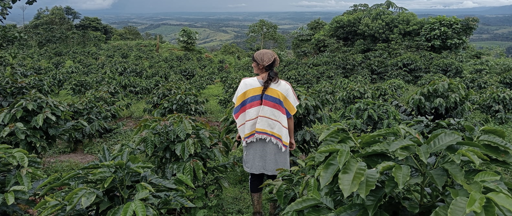
Colombia is the world’s third-largest coffee producer and the main producer of Arabica coffee, which is known worldwide for its quality. The nation began developing commercial production in 1870, which now accounts for 22% of the national gross domestic product (GDP). According to the National Federation of Coffee Growers, there are approximately 560,000 farms in the country dedicated to coffee production, most of them small scale and accounting for 15% of total production. Coffee in Colombia has become part of the national identity and is also considered part of its cultural heritage. Besides this, it has been of vital importance for the economy, representing up to 80% of total exports, and is undoubtedly partly responsible for the changes that took place between 1870 and 1930, which allowed for the integration of the country’s economy and generated positive political and social effects. However, only 5% of smallholder farmers are technically efficient (TE), reflecting poor agronomic management strategies such as inadequate uses of inputs, irrational uses of fertilizers and pesticides, low phytosanitary control and monitoring strategies, lack of labor and substandard production conditions, among other factors. Mr. Arlisson Neussa, an agricultural engineer, assisting with coffee berry borer monitoring on a coffee plantation. The agroforestry coffee system, in which the coffee is interplanted within a native forest, can be clearly seen. Image courtesy of Juliana Cajiao Raigosa. The main coffee-producing departments of the “cafetal zone” are Risalda, Caldas, Antioquia and Quindío. Coffee in these areas is considered a cultural heritage and is mainly…This article was originally published on Mongabay
From Conservation news via this RSS feed