

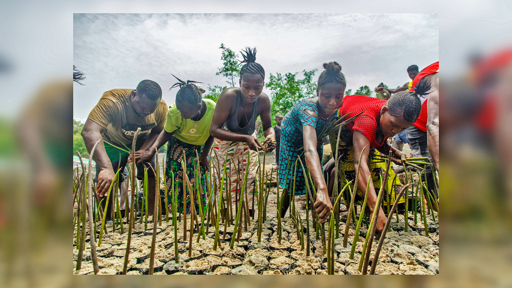
BONTHE, Sierra Leone — On the island of Sherbro in Sierra Leone, as in much of the country, there’s limited access to vital services needed to make ends meet. “Here our people only rely on fishing and a few on agriculture and have nothing else to occupy our children, our youths,” Nenneh Sumaila, the chief of Gbomgboma, a village of about 300 people on the island, told Mongabay. “There are no good roads, no proper health facilities, there’s poor housing, electricity is a dream and the standard of living is poor.” One of the ways to make ends meet in Gbomgboma is by cultivating oil palm trees. But to process the fruit into palm oil, they need fuel for fire, which often comes from mangroves — one of many local uses for the wood. Cutting mangroves unsustainably turns them from a carbon sink into a source of greenhouse gas emissions and hurts their ability to foster biodiversity and provide other ecosystem services. “Blue carbon” projects aim to reverse this trend, and one called the Sherbro River Estuary Project has just been launched with more than 124 communities there. A wholly owned subsidiary of West Africa Blue, a Mauritius-based company, reportedly signed a deal with the communities in October that will reward them financially for conserving and restoring their mangroves. Company representatives told Mongabay that the funds will be generated by selling offsets on the voluntary carbon credit market, with revenues shared between West Africa Blue, the communities and the government…This article was originally published on Mongabay
From Conservation news via this RSS feed