

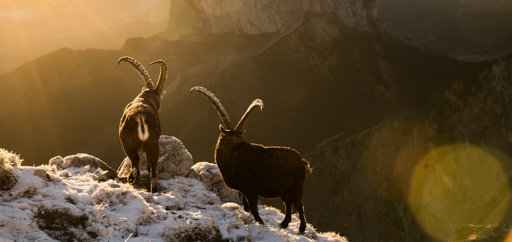
Founder’s Briefs: An occasional series where Mongabay founder Rhett Ayers Butler shares analysis, perspectives and story summaries. He has spent much of his life in the shadow of the Dauphiné Alps in southeastern France, where limestone cliffs catch the morning light and the silhouettes of horned ibex move across the ridgelines. To Fabien Quétier, who helps steer Rewilding Europe’s newest and largest French project, these animals and their battered landscape are reminders of what had slipped away — and what might return, if given a chance, reports contributor Marlowe Starling for Mongabay. Rewilding was a young idea when Quétier began working on it, more theory than practice. In the 1990s, it sounded utopian: let nature repair itself by restoring the species that once shaped it. But in the past decade, the notion took on urgency. Forests were collapsing under heat, rivers ran dry in late summer, and even here, in this quiet corner of the western Alps, droughts and fires arrived with unsettling regularity. A “fixed approach to nature doesn’t really work anymore,” Quétier tells Starling. Rewilding, he believes, offers something sturdier than nostalgia. Quétier admires the region’s stubbornness. Roe deer (Capreolus capreolus) and marmots (Marmota marmota) crept back in the mid-20th century, drawing in wolves (Canis lupus) and Eurasian beavers (Castor fiber) that crossed from Italy. Friends who share Quétier’s faith nominated the area as France’s first rewilding site in 2019. It wasn’t starting from nothing, says Olivier Raynaud, director of the subgroup Rewilding France and Quétier’s colleague. The…This article was originally published on Mongabay
From Conservation news via this RSS feed