

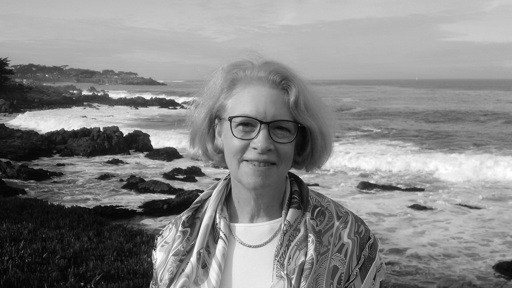
Half the planet lies outside any country’s border. In those waters, rules have long been thinner than the myths: freedom to fish meant freedom to take; “out of sight” became “out of mind.” The deep ocean and the high seas were treated as a backdrop to coastal concerns, even as they stored carbon and heat, generated oxygen, and held most of Earth’s living space. The legal problem was not a lack of treaties so much as a lack of fit. Shipping, fishing, mining, and conservation each lived in their own institutional compartments, with mandates that rarely added up to stewardship. The further from shore one went, the more governance faded into procedure: meetings, footnotes, and a slow erosion of responsibility. Changing that required someone willing to take committee work as seriously as fieldwork, and to make diplomats care about places they would never see. That someone was Kristina Maria Gjerde, a lawyer by training and an ocean advocate by vocation, who died today, December 26th, of pancreatic cancer. She was 68. For much of her career Gjerde worked through the International Union for the Conservation of Nature (IUCN), where she became one of the most persistent architects of efforts to protect biodiversity beyond national jurisdiction. Admirers sometimes called her the “mother of the high seas.” The phrase was affectionate, but also descriptive: she helped raise an idea from an obscure concern into a mainstream obligation. Gjerde’s focus sharpened as industrial activity pushed deeper and farther offshore. Bottom trawling flattened ancient…This article was originally published on Mongabay
From Conservation news via this RSS feed
You must log in or # to comment.