

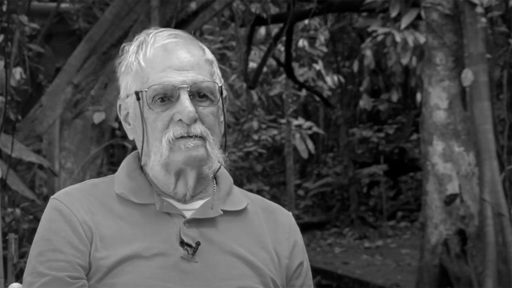
In the late 1980s, something began to go wrong in places that were supposed to be safe. Protected cloud forests, buffered from chainsaws and bulldozers, started losing animals that had persisted through far rougher times. Amphibians—often abundant, often overlooked—were vanishing in patterns that did not fit the usual explanations. Field biologists, trained to distrust drama, found themselves comparing notes with an unfamiliar unease. “A bunch of us got together and started comparing notes,” recalled Jay Mathers Savage, then a professor of biology at the University of Miami, in a 1992 interview with the New York Times. “People were struck by the fact it seemed to be occurring on a worldwide basis.” He had the credibility to make that observation land. For decades he had worked at the seam where taxonomy meets ecology, building arguments from specimens, notebooks, and repeated returns to the same humid places. His specialty was amphibians and reptiles, especially those of Central America—a region he came to know through sustained work rather than brief expeditions. One of those projects produced an animal that later became a symbol. In 1964, in what is now the Monteverde Cloud Forest Reserve in Costa Rica, Savage and a colleague documented a toad that seemed almost designed to defy understatement. Its scientific name was Bufo periglenes. In life it was better known as the golden toad, the male an improbable Day-Glo orange. It spent most of its time underground and then surfaced for an annual, explosive breeding season—a brief, concentrated ritual that…This article was originally published on Mongabay
From Conservation news via this RSS feed