

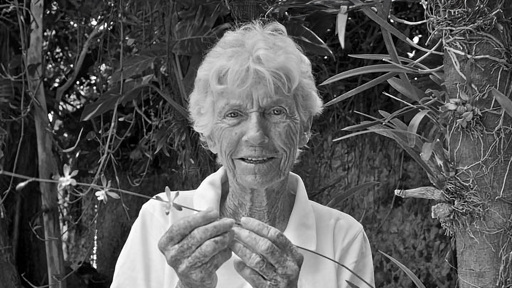
Conservation has a habit of being treated as either romance or emergency. In practice it is closer to logistics: permits, budgets, awkward meetings, long drives, and the slow work of persuading people who would rather be left alone. In places where the state is under-resourced and land is already spoken for, success often depends less on grand theory than on an ability to make institutions behave decently. That was the terrain in which Joann Andrews operated for more than four decades on Mexico’s Yucatán Peninsula. She helped turn a region better known to outsiders for ruins and resorts into a proving ground for modern Mexican conservation, one that tried to protect wildlife without pretending that communities could be edited out of the landscape. She died on December 22nd 2025 in Mérida, aged 96. She arrived in Yucatán in 1964 after marrying the archaeologist E. Wyllys Andrews IV. When he died of cancer in 1971, she faced the choice that confronts many expatriates after tragedy: return to the familiar, or stay with the life already built. She stayed. The decision kept her in Mexico with six children and anchored her to a peninsula whose natural systems she would come to know with the intimate specificity of a field notebook. Born in New Haven, Connecticut, on January 10th 1929, she studied political science at Columbia University, graduating in 1951, and later took a master’s degree in international economics at Johns Hopkins’ School of Advanced International Studies. Before Mexico, she spent a decade…This article was originally published on Mongabay
From Conservation news via this RSS feed
You must log in or # to comment.