

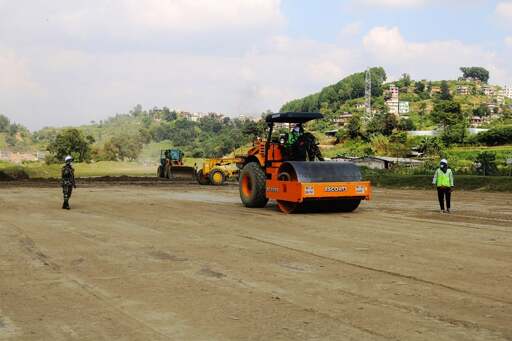
KHOKANA — For generations, Manhera Shrestha’s family has cultivated the same ancestral land in Khokana, an ancient settlement perched on the southern edge of Nepal’s capital, Kathmandu. Life here has long been rooted in the land and its harvest. But in 2016, a land acquisition notice issued by the government carried an ominous warning: a highway would cut through their fields. Under the plan, Shrestha’s family would lose about 0.3 hectares (0.75 acres) of their land to the road. The fertile land that sustains the household of 12 and anchors their livelihood would be lost, threatening their livelihood, home and a way of life rooted in the soil. “We will lose everything,” Shrestha says, standing outside her house under a balmy winter sun. “It’s not only about our land and house. Once the highway comes, it will not just change the settlement but also our culture and traditions. Khokana will not remain Khokana anymore. We will lose our identity.” Kathmandu’s urban sprawl with the town of Khoknaa to its south-west. The Kathmandu Valley and the town of Nijgadh to its south. The proposed expressway connects Kathmandu with Nijgadh via Khokana. The quiet, agrarian settlements of Khokana and neighboring Bungamati — homes to the Indigenous Newa people and centuries-old traditions and vibrant festivals — have become flashpoints in the controversy surrounding the Kathmandu–Terai Fast Track highway. The Nepali government has promoted the project as a “national pride” initiative, promising it will shorten travel times between Kathmandu and Nijgadh in the southern…This article was originally published on Mongabay
From Conservation news via this RSS feed