

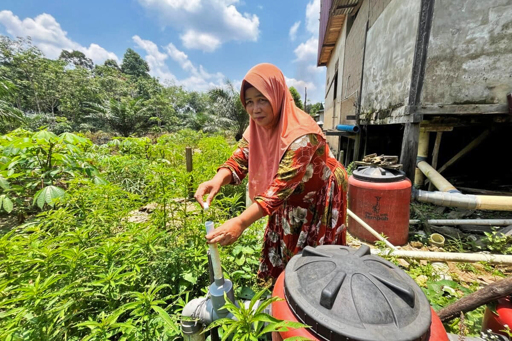
SEKADAU, Indonesia — Children’s laughter skimmed over water the color of mud as mothers wrung laundry over banks where the Sekadau joins the Kapuas, the longest river in Indonesia. Local testimony along the Kapuas River, which flows 1,143 kilometers (710 miles) east to west from Borneo’s Müller Mountains out into the Natuna Sea, suggests this river — like many flowing across the world’s largest archipelagic country — may be losing prominence as a center of community life. “The river is dirtier now and no longer a gathering place like before,” an older resident told researchers from Tanjungpura University downriver in Pontianak, the capital of West Kalimantan province, for a study published in September. But here in Sekadau, the river remains central to daily life — a place to bathe, wash vegetables, and, until recently, to defecate. Research conducted on the Kapuas from 2020-2022 and published in the Journal of Aquaculture and Fish Health last year recorded double the legal limit of lead, a heavy metal pollutant that impairs neurological development — and 24 times the maximum coliform bacteria level for rivers permitted by Indonesia’s government. The study authors said the dangerous coliform level reflected the rapid population growth that has taken place in recent decades along the banks of the Kapuas. Some here in the village of Sekadau, the seat of an eponymous district on the Kapuas, say they hope the hardening of Borneo’s main arterial river can still be mended. From 2002-2024 West Kalimantan province lost one-fifth of its…This article was originally published on Mongabay
From Conservation news via this RSS feed