

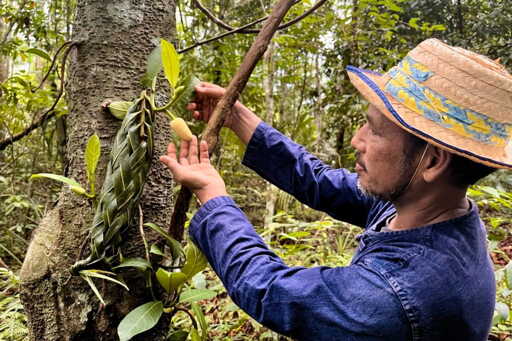
Smallholders produce significant quantities of Vietnam’s coffee, Indonesia’s palm oil, and Thailand’s rubber exported into the EU. Yet under the bloc’s upcoming deforestation-free regulation (EUDR), industry experts say small-scale producers across Southeast Asia need more support to help prepare them to comply with the new rules. The European Union Deforestation Regulation (EUDR) is set to take effect at the end of 2026, after EU lawmakers voted earlier this month to postpone its implementation for the second year in a row, citing technical concerns. Its goal is to ensure that forest-linked products imported into the EU are deforestation-free by introducing mechanisms that enable companies trading seven commodities — cattle, cocoa, coffee, palm oil, rubber, soy and timber — to track their products’ origins throughout the entire supply chain. While experts say increased oversight is a vital step to reduce the footprint of EU consumption on forests, others have warned that without appropriate support and governance mechanisms, the new rules could introduce inequities that harm small-scale producers. Many smallholders lack the capacity and capital to comply with some aspects of the new regulations, for instance. This could see them sidelined in favor of bigger producers who can more easily adapt, according to Martin Greijmans, community enterprise program lead at RECOFTC, a Thailand-based community forest nonprofit. Further complicating matters are limited resources to inform smallholders about how the regulations will affect their businesses, underscoring the need for greater efforts by governments and private companies to help smallholders adapt, he says. “One shocking thing…This article was originally published on Mongabay
From Conservation news via this RSS feed