

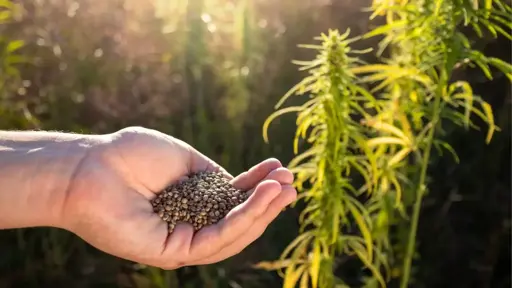
Since 2019, the commercial production of hemp has been a legal reality. In 2018, with the introduction of the Farm Bill, various policies related to it as an industrial and food crop were enacted, including legal importation and allowance for farmers to grow it as a grain crop.
While very different from medicinal cannabis, hemp has been used on an industrial scale for years and years, but its non-recreational and non-medicinal uses were suppressed for years. Farmers today can include it as a viable product on their farms, and they may want to once they know how beneficial it can be.
It takes some space to grow, but as long as you have room for 10 to 15 plants per square foot, you can! Consider adding it to tougher areas of the farm, where soil quality is low, or its structure has a tendency to erode. Hemp colonizes an area quickly, holding soil in place.
Difference Between Hemp and Medicinal Cannabis
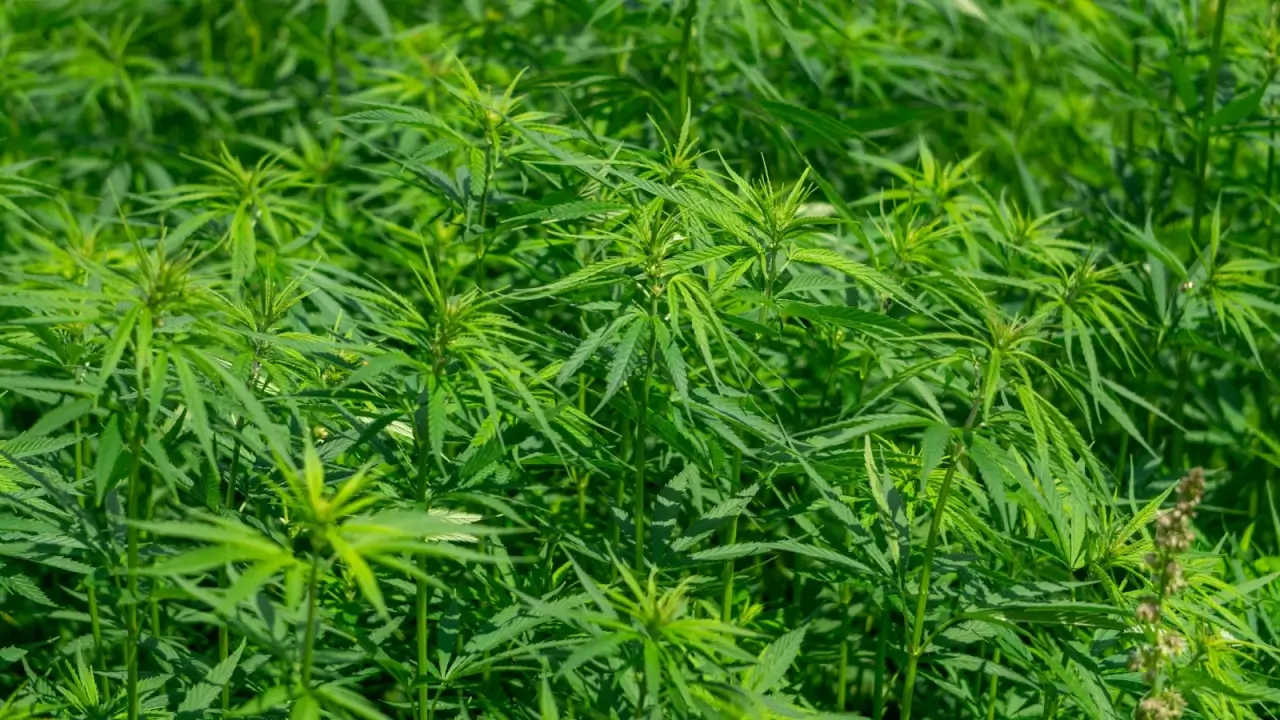
Low-THC crops require little extra care overall.
There’s a stark difference between medical cannabis and a hemp grain crop. This variance lies in its chemical composition, with grains having less than .3% THC, the chemical that holds medicinal or psychoactive properties. Most medical plants have between 10 and 30% THC.
While genetically they are the same plants, their cultivation is different. Medicinal production requires much more tending through the plant’s life cycle. Because the goal is to produce flowers, more feeding and pruning are needed. Grain hemp doesn’t require pruning, as seed production occurs without additional maintenance.
This is one reason production for grain is a great addition to the farm. All it takes is amending the soil texture and planting at the right spacing. Then, harvesting when the seeds are mature enough. There’s a process of extracting seeds, but it’s still less effort than it takes to prune and preen a “drug-type” cannabis plant.
Certain states require a license to produce and sell, even if you’re not growing plants for recreational or medicinal reasons. In this regard, touch base with your local agricultural extension office to determine if your state requires this. Some states require periodic inspections of the crop to ensure it meets the less than .3% THC requirement.
Growing Hemp Grains
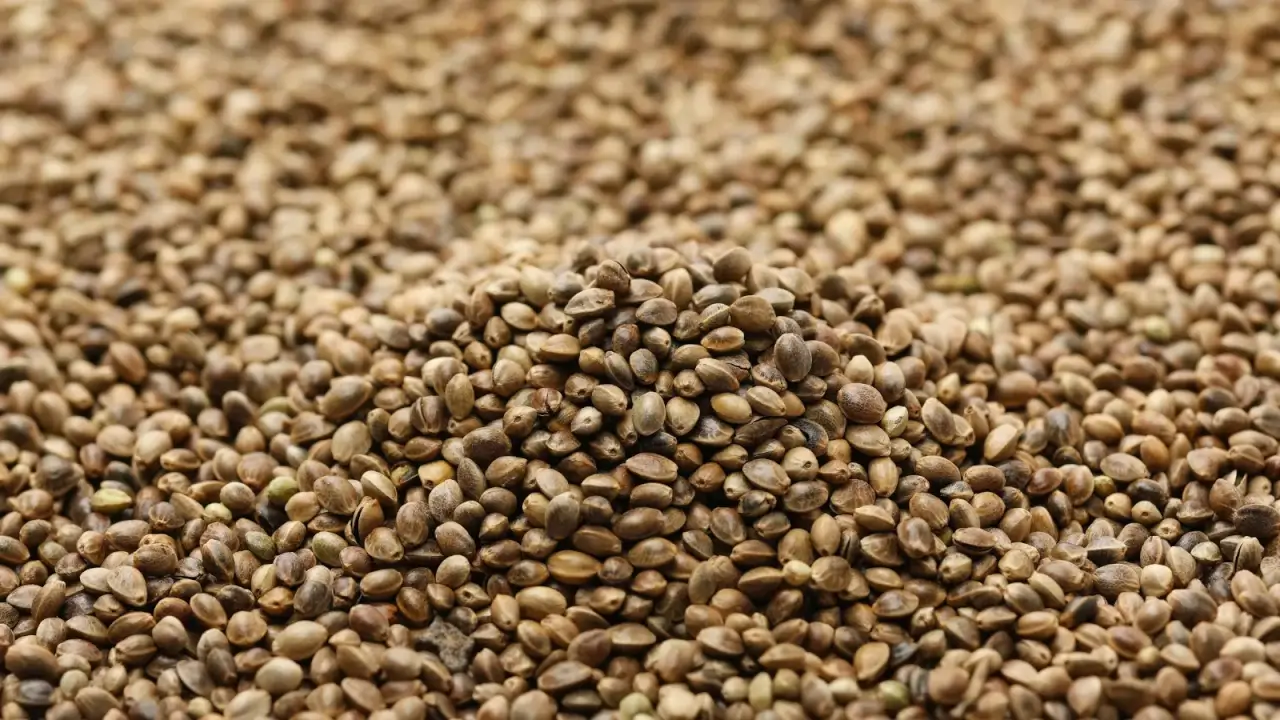
Granolas and milks benefit from these tiny seeds.
People cultivate hemp seeds to sell whole or process them into hearts. These hearts are then combined in granolas and milks. The seed is also pressed into oil for various cosmetics and household products. Most often, the grain crop is grown on a mass scale, but people with a couple of acres can glean enough to profit from it.
Growing for fiber is similar to the way you would grow for grain. Agricultural extensions recommend sowing at a rate of 20 to 30 pounds per acre. A grain drill is purportedly the best and most efficient way to sow the seeds. Any seeding method works, though. Sow seeds when the soil reaches at least 55°F (13°C).
You may choose to grow monoecious plants, which have both male and female flowers on a single plant, or dioecious varieties, which have either male or female flowers. Monoecious hemp has a slightly lower production rate and seed size, but requires less careful selection and seeding.
Current studies are in play to address fertilizer needs for grain. Recommendations start with a soil test. Then applications of nitrogen at a rate of 110 pounds per acre should be sufficient. Use the soil test to determine rates for potassium and phosphorus.
Harvesting and Processing
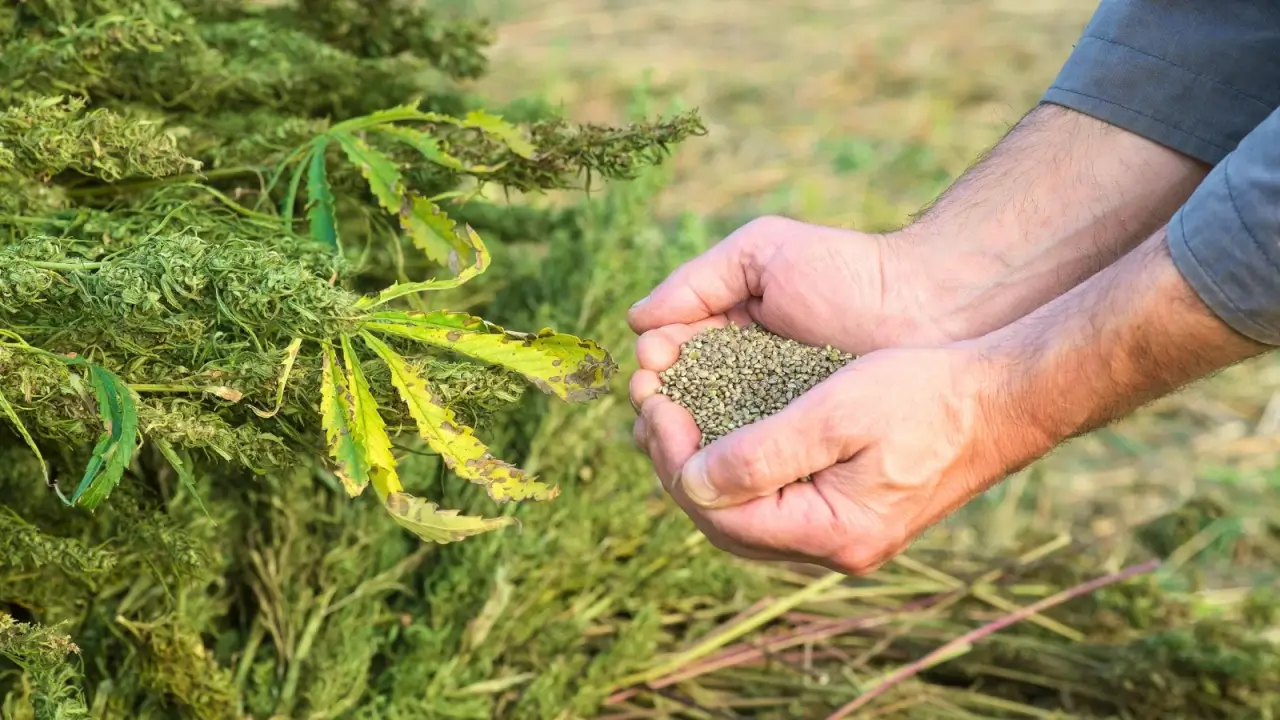
Cleaned seeds become oil, hearts, and nutritious meal.
Depending on your climate and when you sow seeds, a hemp grain crop is generally ready between August and October. Harvest when seeds are still slightly green, at 70% maturity. Once harvested, a drying process is necessary to keep the seeds in storage, due to their high moisture content.
Find a seed cleaner designed for hemp plants, and run them through. Then dry the seeds either by storing them in aerated bins. Otherwise, they can be heated to no more than 120°F, or up to 140°F for farms in Canada. If you’re heating the seed, turn it frequently to prevent mold.
After the seeds are dry, process them depending on whether you’re selling them for oil or meal. Pressed seeds produce oil for cosmetics or food. You’ll have a byproduct, called hemp hearts, that can also be sold and used for protein powders. The meal is also added to cereals.
As of now, it is not legal as an animal feed. Therefore, it’s best to forego using it as such until the laws change. Until then, hemp is a viable food and cosmetic crop for farmers in states where it’s legal to grow it.
So, You Want to Be a Hemp Farmer?
Hemp is often touted as a super-crop with myriad uses. So what does it take to grow it? Here’s an overview.
The post Reconsidering Hemp: A Promising Grain Crop appeared first on Modern Farmer.
From Modern Farmer via this RSS feed
You must log in or # to comment.