

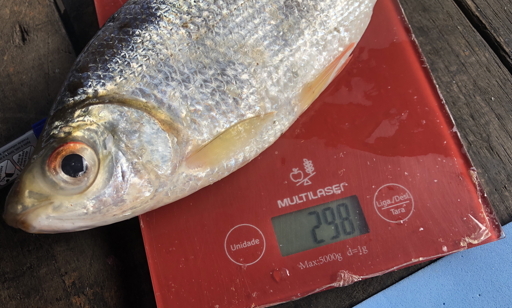
LAGO PURUZINHO, Brazil — Looking at the clear waters of Puruzinho Lake, fisher Raimundo Nonato dos Santos regrets the decline in fish stocks affecting the livelihood of his community in the Brazilian Amazon.Species like pirarucu (Arapaima gigas), tambaqui (Colossoma macropomum) and pirapitinga (Piaractus brachypomus) have “disappeared” from Lago Puruzinho community in northern Amazonas state, dos Santos said. “When we catch one, it’s a surprise.” A resident of Puruzinho since he was born 53 years ago, dos Santos, leader of the Puruzinho community and known by his nickname Leleca, said the construction of the Santo Antônio hydroelectric power plant in neighboring Rondônia state in 2008 “triggered the ruin” of his community. Often promoted as a form of “clean energy” since they don’t run on fossil fuels, hydropower plants have shown severe environmental impacts. Brazil’s fifth-largest power dam, Santo Antônio sparked outcry from environmentalists since the start of its construction on the Madeira River due to its environmental and social impacts, including a reduction in fish stocks and the displacement of traditional communities. Its reservoir spans more than 54,600 hectares (135,000 acres), limiting the natural flow of the Madeira. “Things started to spiral out of control. And the impact was huge for us: the decline in fish stocks, the [milky] water remaining for many months within [the lake in] the community. It affected us a lot,” dos Santos told Mongabay under a tall tree on the banks of Puruzinho Lake, 20 kilometers (12.4 miles) away from the city of Humaitá. As the…This article was originally published on Mongabay
From Conservation news via this RSS feed
You must log in or # to comment.