

Photograph by Nathaniel St. Clair
To paraphrase Oscar Wilde, the US might be the only country that ever went from the status quo to counterrevolution without revolution in between. We are today living in an era of historically ferocious political regression, a massive conservative backlash whose grievances are often more imagined than real. In no case is this more dramatic than race. Notwithstanding the fact that Nick Fuentes is preaching white victimhood to millions, the Coast Guard has declassified nooses and swastikas as hate symbols, and the Supreme Court has eliminated voting rights protections and affirmative action, African Americans continue to be discriminated against. Indeed, for all of the problems with the New York Times’ 1619 Project, it did show the ways in which structural racism continues to shape the US from healthcare to the labor market to criminal justice to traffic. Nevertheless, today’s anti-woke backlash is so ubiquitous that even some liberals have accepted its premise that in the movement against racism the pendulum has swung too far.
It is therefore immensely valuable that David Roediger has just written a memoir, as there are few people better equipped to evaluate the project of radical anti-racism in light of today’s all-consuming reaction. An Ordinary White: My Anti-Racist Education accomplishes a great deal. For one, it is a record of both Roediger’s life and the world into which he was born. Roediger, now 73, was raised in the southern Illinois “sundown town” of Columbia, Illinois and spent parts of his youth in Cairo, Illinois, a town whose leaders, after unsuccessfully fighting desegregation tooth and nail, decided to abandon rather than share the city’s schools, pools, and parks. Roediger writes that he was “saved” from his small town’s racist parochialism by the Catholic left and the Black freedom movement and, later, by the anti-war movement. Roediger also credits his interest in music and sports (he was an accomplished tennis player and deeply admires Arthur Ashe) for broadening his worldview and helping to lead him from a likely life of smalltown factory work to the heights of historical scholarship.
The book additionally chronicles the different milieus Roediger came up in, including the radical publisher Kerr Company and collectives such as the Red Rose Chicago Surrealist Group, and it details the evolution of his research on, and eventual bridging of, labor and race. Roediger is humble and the idea of his writing a memoir, which necessarily draws attention to its author, seems a bit incongruous. But it becomes clear that one of Roediger’s aims with the book is to credit his influences and mentors, including historians Sterling Stuckey and George Rawick. Providing the reader with an intimate depiction of scenes from the post-1970s left, Roediger also shares stories about everyone from Raya Dunayevska and CLR James to Eugene Genovese, Noel Ignatiev, Mike Davis, Toni Morrison, and Angela Davis, with whom he once escaped a late-running event to watch Spike Lee’s Bamboozled. Roediger is polite and generally prudent, but he nevertheless earns his keep as a storyteller, in part by sharing numerous excellent recommendations of writers, films, and books (other than my great former professor Jerry Watts, Roediger is the only person I’ve ever heard recommend Jack Conroy’s fantastic 1933 novel The Disinherited).
The book also frequently functions as a fun and informative form of campus lit. Roediger has taught exclusively at 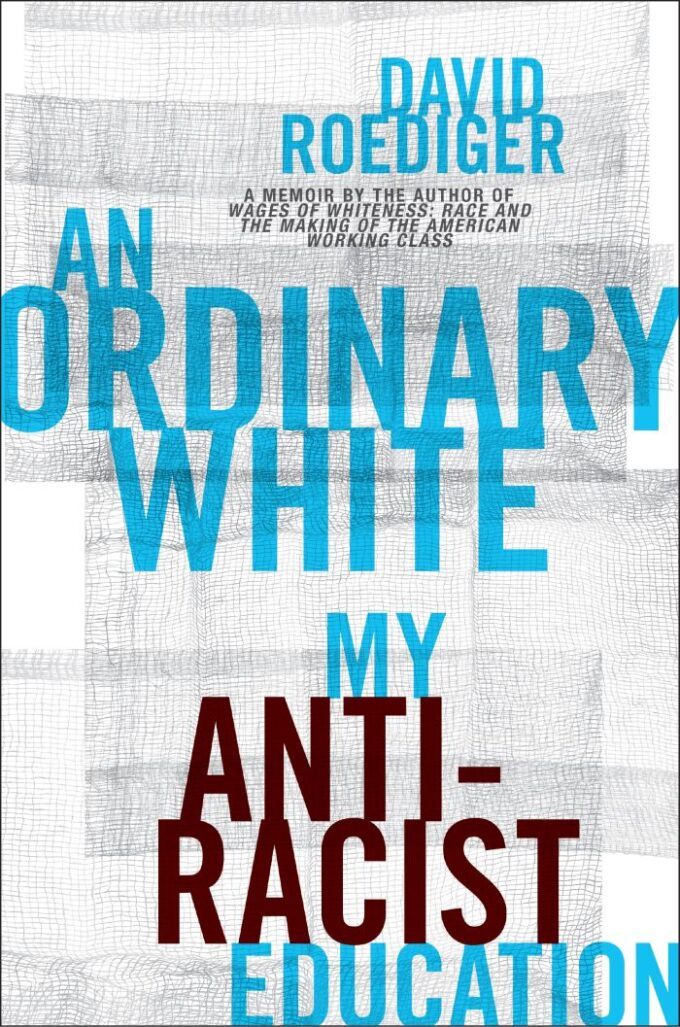 large public Midwestern land-grant universities (currently the University of Kansas) and provides a detailed account of their history and the dire straits they find themselves in today. The rot at the heart of the modern university is nicely conveyed through descriptions of posh parties attended by star professors and hosted by ambitious administrators who make “constant pronouncements of loyalty to place and mascot” while continually searching for jobs higher up the ladder. Simultaneously, Roediger points out that Thorstein Veblen observed a century ago that the university (‘”an aggregation of buildings and other improved real-estate’”) will always pursue physical construction (more than ever, sports facilities) over silly things like teaching and learning, so it’s hard to be too scandalized about the problems of the university today. Still, Roediger writes, “I find it worth critically defending the crappy, underfunded, corporate, compromised public universities that we have against the forces dismantling them.”
But the heart of the book is a defense of the politics that Roediger is most associated with. Wages of Whiteness, one of the foundational texts of White Studies (a term Roediger has shied from), had a thunderous effect on the then-prevailing conceptions of the history of race and labor. Borrowing its title from a line by W.E.B. Du Bois, the book examines the ways in which working class whites benefited from and defended the psychological wage accruing to their “race.” That is, whites’ racism was not merely an effect of top-down manipulation by elites or “false consciousness” diverting them from their “true” economic interests but was, amid the degradation of industrial labor, produced from the ground up to offset white workers’ miseries via the solace of their “at least not being Black.” While this observation seems commonplace today, it has become so in large part because of the contributions of Roediger and scholars such as Ignatiev as well as those, including Kimberlé Crenshaw and bell hooks, working in the related and much maligned field of Critical Race Studies.
The political implications of Wages of Whiteness would seem self-evident, but the book has been subject to both attack and, maybe more destructively, misinterpretation. Many Marxist thinkers originally rejected Roediger’s argument, which accorded primacy not to class and economics but psychology. To be fair, Marx himself recognized the obvious dialectic between material base and superstructure; what is defined as real is real in its effects. Roediger’s account was an essential intervention into an at times abstract Marxism that could explain labor relations in general but, when applied to the racist conditions of US history, not always in particular. There is no doubt that the bosses would send in the Klan to break up interracial cooperation among workers, but there are explicable, if tragic, reasons why it so often worked. Any revolutionary movement needs to tackle these reasons head on, not condescendingly explain them away as a result of mere manipulation of duped white workers. It is in significant part due to Roediger that there are today thankfully very few on the left who would deny “…that there is no serious US study of class that does not also take full measure of race and gender.”
If Marxists largely failed to land their blows against Wages of Whiteness, the adoption of Roediger’s arguments by liberals has ironically inflicted a great deal of damage. We seemingly cannot go a day without seeing another denunciation of woke politics, the scourge of the right but also subject to the “real talk” of liberals who are still reeling from the elections of Donald Trump. One problem is that many of these denunciations are in their particulars correct, and it isn’t difficult to score points by lampooning the institutionalization of antiracism, particularly its self-flagellating/self-indulgent “therapeutic” strains. Indeed, there is much to criticize when it comes to self-promoters like Robin DiAngelo, as HR departments have eagerly appropriated antiracism to, ironically, enhance their disciplining of labor by providing management with a moral cudgel. That management is going to opportunistically exploit whatever it can to further control workers, however, is not a criticism of antiracism but of management.
As Roediger notes, both Critical Race Theory and White Studies never sought to change the subject from class to race but instead understood that shifts “in the direction of equality under the law leave in play historic inequalities and the current structures that reproduce them, requiring a systematic remedy.” It goes without saying that hierarchical institutions that are wholly invested in maintaining capitalist relations are intrinsically incapable of pursuing such remedies. This applies not only to employment but also education. Irrespective of the merits or radicality of antiracism, without larger structural transformation it is doomed to become something else once it is incorporated into K-12 mandatory schooling, a massive coercive state bureaucracy cultivating tomorrow’s workforce through inculcating the general obedience and intellectual conformity desired by employers.
The self-serving institutional appropriation of antiracism doesn’t mean, though, that we throw the baby out with the bathwater. As Roediger writes, in working for radical transformation we have to go “through” not “around” race. As such, Roediger emphasizes that he has never once suggested that whites ought to feel ashamed for being white, a debilitating position that all but guarantees the backlash. On the contrary, calling again on Du Bois, Roediger insists that whites ought to feel not guilty but angry — angry that their political horizons have been narrowed by the lies of race, “sad failures of imagination” separating them from meaningful betterment of their world as well as their humanity.
The post Antiracism in the Age of Trump appeared first on CounterPunch.org.
From CounterPunch.org via this RSS feed