

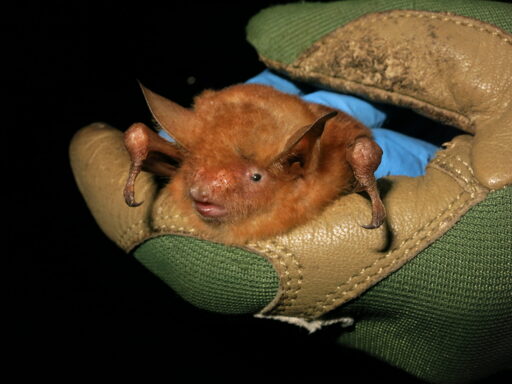
In 2018, researchers from Bat Conservation International, Cameroon’s University of Maroua and the American Museum of Natural History entered abandoned mining tunnels in Guinea’s Nimba Mountains as part of an environmental and social impact assessment for an iron ore project. They wanted to better understand the habitat and behavior of the critically endangered Lamotte’s roundleaf bat (Hipposideros lamottei) in order to mitigate the negative impacts of a proposed mining project. As they were prowling in the horizontal shafts of mines left behind in the 1970s and ’80s, they encountered a distinctive and distinctly unknown-to-science bat species. It was joy for the scientists, and potential disaster for U.S. miner Ivanhoe Atlantic (formerly HPX), which is seeking to develop an open-pit iron ore mine amid the rich biodiversity of the Nimba Mountains, part of a UNESCO World Heritage Site. Residents of the villages around Nimba had previously reported sightings of a bat with bright orange fur here in the mountains, around 1,400 meters (4,600 feet) above sea level, but the 2018 survey was the first formal record of the bat. The scientists searching the abandoned mine shafts were able to trap, examine and release just two individuals on two occasions, one male and one female. They also recorded echolocation at a total of five adits, the access tunnels to the old mines, that matched the vocalizations of the bat they’ve formally named Myotis nimbaensis. In the 2021 paper announcing the bat’s identification, the researchers explained its relationship to other members of the…This article was originally published on Mongabay
From Conservation news via this RSS feed
You must log in or # to comment.