

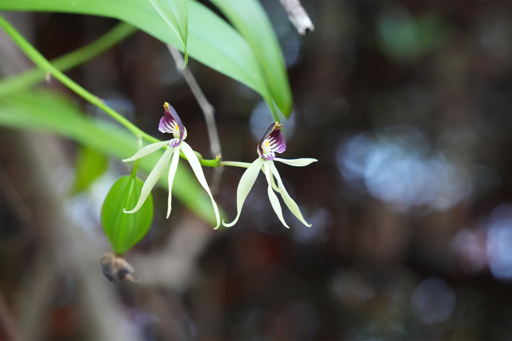
ELEUTHERA, Bahamas — Tucked away beside the main road that runs along Eleuthera, a narrow island in the Bahamas, the Leon Levy Native Plant Preserve holds 12 hectares (30 acres) of dense subtropical dry forest. Black witch moths (Ascalapha odorata), as large as bats, zigzag between the branches as fluorescent wasps hum along the path’s edge. Orchard spiders (Leucauge venusta) sit on sprawling webs between mangrove roots. Meter-high termite mounds surround the bases of tree trunks. Native Jamaican slider turtles (Trachemys terrapen) sunbathe in the artificial wetland. Tree lizards, frogs and nonvenomous snakes make the preserve their home, too. Just two decades ago, the same plot of land belonged to a hotel, with stretches of abandoned farmland. After philanthropist Shelby White purchased the land, and after many years of restoring the property, it became an accredited botanical garden. Today, it’s known for its conservation, research and education on native Bahamian plants. The Leon Levy Native Plant Preserve is funded and managed through a partnership between the Bahamas National Trust, which oversees the country’s national parks, and the philanthropic Leon Levy Foundation based in New York City. Now, it’s the island’s standout example of native plant diversity and a hub for Caribbean plant knowledge. Native Jamaican sliders (Trachemys terrapen), freshwater turtles found in the Bahamas and other Caribbean islands, bask in the artificial wetland. Image by Marlowe Starling for Mongabay. Regrowing the forest The Bahamas’ subtropical dry forests are characterized by nutrient-poor soils, lots of limestone, shrubs, hardwood trees, and frequent…This article was originally published on Mongabay
From Conservation news via this RSS feed
You must log in or # to comment.