

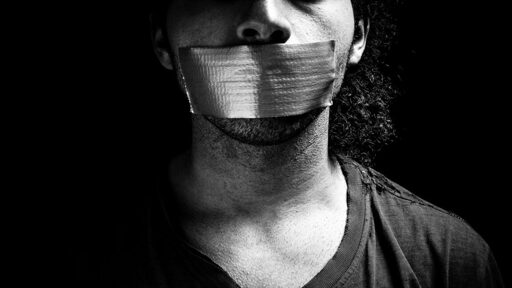
Freedom of speech is a foundational principle of healthy democracies and hence a primary target for aspiring authoritarians, who typically try to squash dissent. There is a point where the threat from authorities is sufficiently severe that a population will self-censor rather than risk punishment. Social media has complicated matters, blurring traditional boundaries between public and private speech, while new technologies such as facial recognition and moderation algorithms give authoritarians powerful new tools.
Researchers explored the nuanced dynamics of how people balance their desire to speak out vs their fear of punishment in a paper published in the Proceedings of the National Academy of Sciences.
The authors had previously worked together on a model of political polarization, a project that wrapped up right around the time the social media space was experiencing significant changes in the ways different platforms were handling moderation. Some adopted a decidedly hands-off approach with little to no moderation. Weibo, on the other hand, began releasing the IP addresses of people who posted objectionable commentary, essentially making them targets.
From Ars Technica - All content via this RSS feed
You must log in or # to comment.