

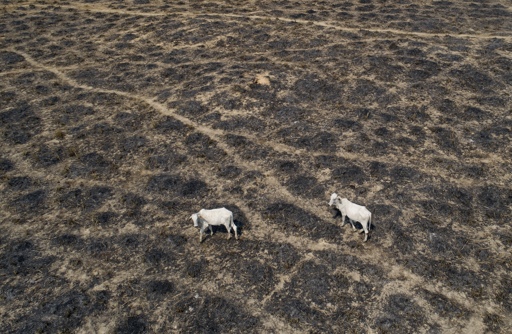
Brazil’s Triunfo do Xingu Environmental Protection Area encompasses an area of Amazon Rainforest more than half the size of Belgium. Or at least it used to. The embattled reserve has lost around half of its primary forest cover since it was created in 2006, according to satellite data from the University of Maryland’s Global Land Analysis and Discovery (GLAD) lab and visualized on monitoring platform Global Forest Watch. The data show 2024 had the highest rate of forest loss, rocketing 400% over 2023. Preliminary data show forest loss continued in 2025, concentrated in the northern portion of the 1.7-million-hectare (4.2-million-acre) reserve, where most of the largest tracts of forest remain. Satellite data from the University of Maryland show primary forest loss jumped 400% between 2023 and 2024. Image by Mongabay. Google Timelapse shows forest loss advancing rapidly through Triunfo do Xingu. This has given Triunfo do Xingu the dubious distinction of being the protected area with the highest rate of deforestation in the Brazilian Amazon. The main cause? Cattle. Triunfo do Xingu lies in the heart of Brazil’s cattle country, where cows outnumber people 38 to one. To feed this legion of cattle, ranchers carve pasture from forest, often using slash-and-burn techniques to clear areas and renew degraded soil. During a visit in 2023, Mongabay reporters observed the charred remains of sawed-down trees, and were told by local small-scale famers and officials that fires set by ranchers can spread out of control, consuming crops, homes and forest alike. “They set…This article was originally published on Mongabay
From Conservation news via this RSS feed