

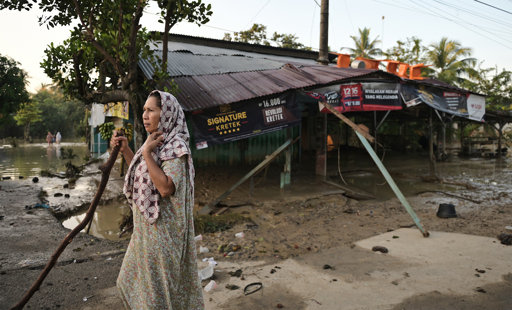
JAKARTA — Indonesia closed 2025 facing an uncomfortable reality: climate disasters are escalating while policy direction has remained largely unchanged during President Prabowo Subianto’s first year in office, with the country still heavily dependent on fossil fuels and extractive industries such as palm oil and mining. One of the deadliest disasters in Indonesia in recent years struck in November 2025, when days of intense rainfall triggered flooding and landslides across three provinces on the island of Sumatra: Aceh, North Sumatra and West Sumatra. Scientists and environmental groups say the destruction should not be treated as an isolated natural event. Instead, they point to long-standing problems in land use, energy planning and governance that have left large parts of the island more vulnerable to extreme weather. They argue that forest loss, industrial expansion and weak controls on permits and spatial planning have worsened the impact of heavy rain. River catchments, upstream forests and steep slopes that play a key role in absorbing water are still allowed to be legally deforested under current land-use rules. Disasters as warning signs, not anomalies For Leonard Simanjuntak, the Indonesia country director for Greenpeace, the disasters were a “hard warning” that the country’s environmental carrying capacity has reached a critical point — a warning that, he said, has largely gone unheeded. “I think the Sumatra disaster was a very strong warning,” he told Mongabay. “But over the past year, there have been many other warnings too, and they seem not to have been taken seriously.” Leonard…This article was originally published on Mongabay
From Conservation news via this RSS feed
You must log in or # to comment.