

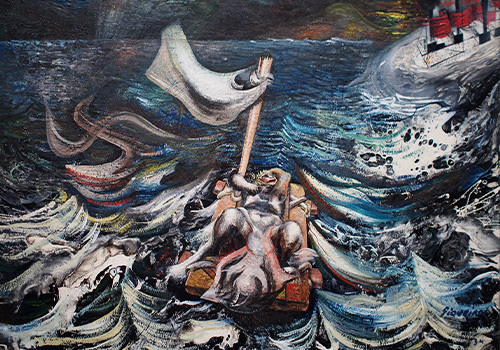
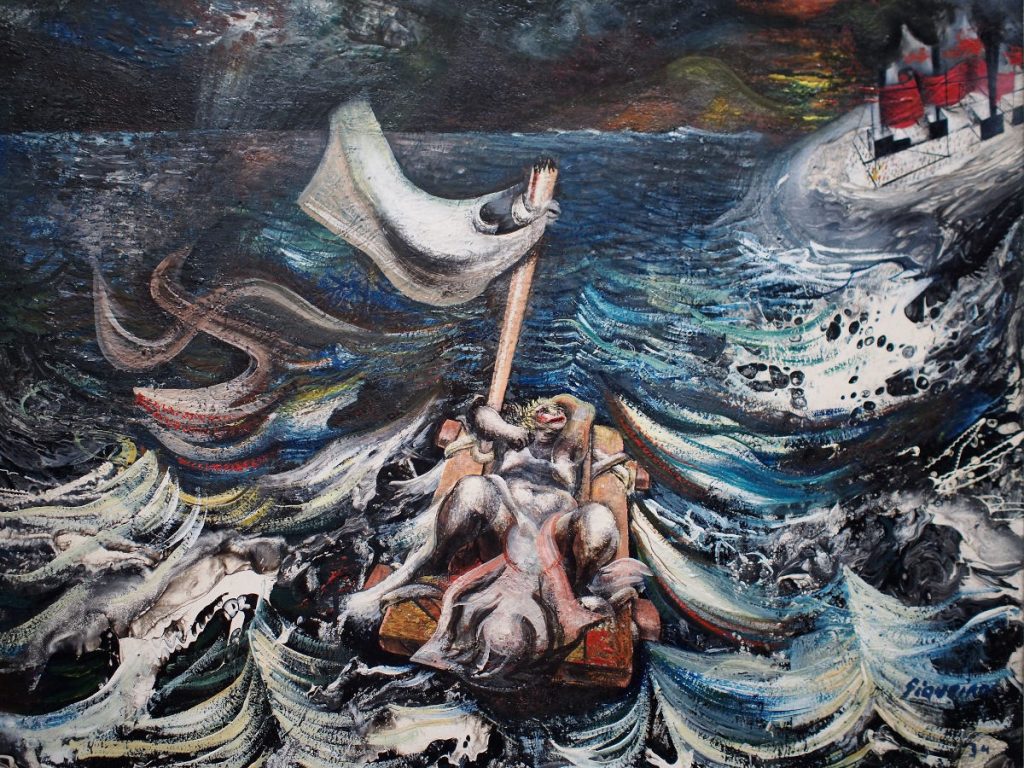
David Alfaro Siqueiros (Mexico), Birth of Fascism [El nacimiento del fascismo], 1936.
Greetings from the Nuestra América Office of the Tricontinental Institute for Social Research.
Last November, Mexico experienced protests by the right-wing opposition under the guise of “Generation Z,” which promoted violent tactics and an extreme right-wing agenda against the current Mexican government. To understand the context of these events, we asked Rodrigo Guillot, who holds a degree in International Relations and is an activist with Mexico’s National Regeneration Movement (Morena), for this contribution to the debate:
In November 2025, the Mexican right called for simultaneous marches in all Mexican capitals under the banner of the anime One Piece, which was used in the recent past by predominantly young Nepalese protesters against restrictive measures by their government. The choice of a foreign image, decontextualized from Mexican reality, seems bizarre because it is. It is a symptom of the lack of concrete causes and distinct identities experienced by reactionary sectors in Mexico since the arrival of the Fourth Transformation in 2018.
Under the administration of Andrés Manuel López Obrador (2018–2024), the same political actors who took to the streets last November held similar demonstrations, primarily against what they understood as the destruction of liberal institutions: a process of restoring state capacities initiated by López Obrador against the neoliberal precepts that governed the country for the six presidential terms preceding his government.
The nature of the protests against Mexico’s progressive government during Claudia Sheinbaum’s term shifted alongside the geopolitical landscape. In a world where the right has successfully bet on fascism, xenophobic identity politics, and the call for an extreme free-market society, the Mexican right abandoned the discourse of institutional defense and opted for that of liberty. The great orchestrator of this shift is Ricardo Salinas Pliego, owner of Banco Azteca, the Elektra store chain (known for offering unpayable credit to the lowest-income sectors), and concessionaire of TV Azteca, one of the two most powerful television networks in Mexico.
During the final stretch of Andrés Manuel’s term and the first months of Claudia’s government, the businessman toughened his opposition stance against the Mexican government due to litigation against him that could force him to pay billions of Mexican pesos in back taxes. His flight forward strategy has included threats of becoming a presidential candidate, an idea that appeals to certain sectors of Mexico’s right-wing political parties.
The seventy-year-old tycoon labeled the November marches as the Generation Z March. To stir public conversation around it, he used a team of paid influencers, fake accounts on the X/Twitter social media, and pundits employed directly by his media consortium. For weeks, they spoke of the stunt as if it were an organic movement emerging from within civil society, calling to remove the left from state power.
During the mobilization for the march, Mexico was shaken by the murder of Carlos Manzo, the mayor of Uruapan, Michoacán, known for confronting organized crime in his state. The organizers of the opposition march maneuvered to place a demand for security at the center of their demonstration and included the image of the murdered mayor in their iconography. Carlos Manzo’s wife, Grecia Quiroz—who assumed the mayoralty in Uruapan to replace her husband—was forced to publicly distance herself from the march.

Coletivo Subterráneos (México), Cucarachas fascistas {Fascist Cockroaches], 2025.
The result was that on November 15, in various cities across the country, different groups and sectors opposed to the Mexican government gathered in public squares without a common cause or unified discourse, other than the call to overthrow President Claudia Sheinbaum. However, in Mexico City’s Zócalo—the country’s main public square—groups of hooded individuals armed with metal tools and chains physically assaulted members of the police force.
In general, the opposition has been characterized by the violent use of language, but during the six years of López Obrador’s government, no physically violent event had occurred during opposition demonstrations. This fact coincides with the strategic shift of the Mexican right and is being investigated by the Mexico City Congress, as there are indications that two mayors from the National Action Party (PAN) may have financed the agitators.
The Mexican opposition undoubtedly considered the rehearsal a success, as by the following day, a second march was already being called for November 20 in Mexico City. They planned a route that intersected with the military parade held annually on that date to celebrate the anniversary of the Mexican Revolution. The President announced a change in the parade route to avoid any acts of violence, but the incident highlights the right’s determination to provoke violence.
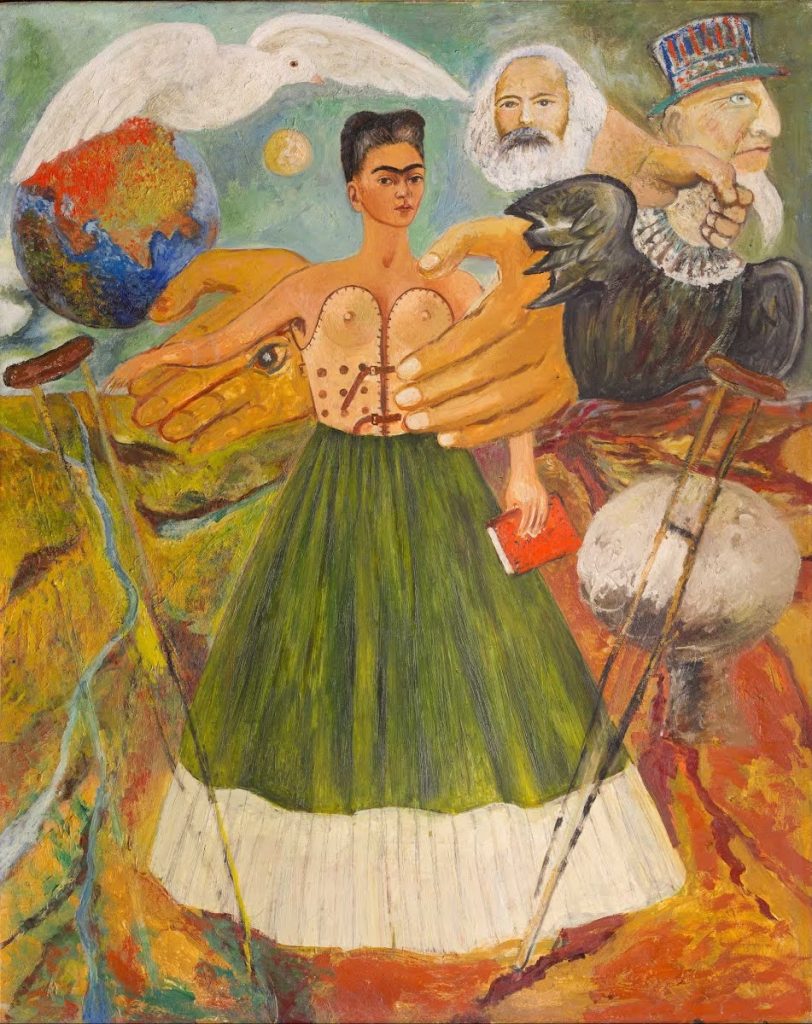
Frida Khalo (México), El marxismo dará salud a los enfermos [Marxism will give health to the sick], ca. 1954.
The second call to action failed. Not only did it not provoke a confrontation between civilians and members of the Mexican army, but it barely gathered two hundred people. Nevertheless, it clearly signals the intentions of opposition groups: to push conditions to the limit to provoke a violent confrontation with the State.
In a national context where the National Action (PAN) and Institutional Revolutionary (PRI) parties openly call for U.S. intervention under the pretext of drug trafficking, and accuse the Mexican government of being authoritarian and communist, the intensification of the right and its shift toward fascist and openly violent positions can only be understood as a tactic functional to the interventionist strategy of the United States.
Greetings to all,
Rodrigo Guillot
Rodrigo Guillot has a degree in International Relations, is a Morena activist, and political communications adviser.
From | Tricontinental: Institute for Social Research via this RSS feed
You must log in or # to comment.