

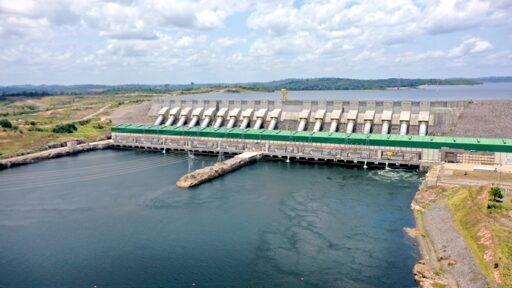
On Feb. 17, 2016, the gears ground into life at the massive Belo Monte hydroelectric plant, on the “Large Curve” of the Xingu River, or Volta Grande do Xingu, in the Brazilian Amazon. By April that year, the 11.2-gigawatt plant was already in commercial operation. That same year, researcher Jansen Zuanon visited Volta Grande do Xingu, the 130-kilometer (80-mile) stretch of this major Amazon tributary, whose course had been diverted and its flow reduced due to the operation of the hydropower plant. “I was there as soon as the first turbines started operating. At that moment, the reservoir was still filling up,” recalls Jansen, who was accompanied by observers from the Independent Territorial Environmental Monitoring (MATI) team and prosecutors from the Federal Public Ministry (MPF). “We’d go on canoes and find the caparari fish [spotted sorubim, Pseudoplatystoma corruscans] on the banks, in the shallow waters. They were clearly malnourished, with sunken eyes, wounds, missing teeth, and full of parasites. They were like zombie fish, dying little by little.” Today, almost 10 years after the start of operations, new adverse impacts from the Belo Monte dam continue to emerge. In 2025, the same monitoring group released a technical note describing visible physical changes in silver croakers (Plagioscion squamosissimus). The specimens they found had squat, oval and rounded bodies — very different from their normal elongated aspect, indicating spinal deformities. Born and raised in the Xingu area, in the riverside village of Belo Monte, Sara Rodrigues Lima was one of the fisherwomen…This article was originally published on Mongabay
From Conservation news via this RSS feed