

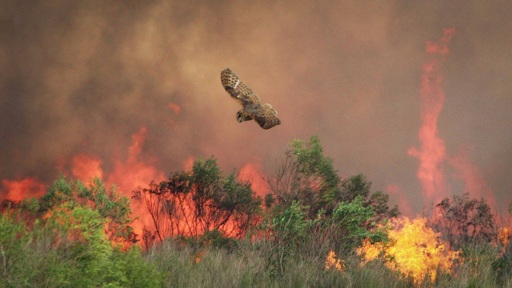
In the forests of the Sierra Nevada, the black-backed woodpecker is without parallel. The bird appears almost born of fire, thriving on the flames that flicker through California’s coniferous forests every few years. Swooping in shortly after a blaze subsides, this woodpecker species, Picoides arcticus, nests in the hollowed-out trees the burn has left behind, gorging on an abundance of longhorn and bark beetles. Throughout the forest, a steady whack-whack can be heard from the birds’ bills drilling into charred wood. The relationship between wildlife and wildfire is a complicated one. Many bird species, like the black-backed woodpecker, need the occasional inferno to create new habitat by opening up the forest canopy and increasing available food by kicking off a boom in insect populations. “While it’s ephemeral, it’s a native habitat of California that many species rely on and have evolved with over millions of years,” says ornithologist Morgan Tingley, whose research at the University of California, Los Angeles, focuses on the interplay of fire and bird populations. The black-backed woodpecker thrives on fires that burn through California’s coniferous forests every few years, opening the forest and creating an abundance of insects they feed on. Image by Morgan Tingley/UCLA. But historically, this dynamic rested on moderate or mixed-severity fire — not the raging “megafires” that now scorch through the American West and leave little behind. In California, fires have burned more than 5.3 million hectares (13 million acres) over the past decade. In 2020 alone, blazes ripped through more than…This article was originally published on Mongabay
From Conservation news via this RSS feed
You must log in or # to comment.