

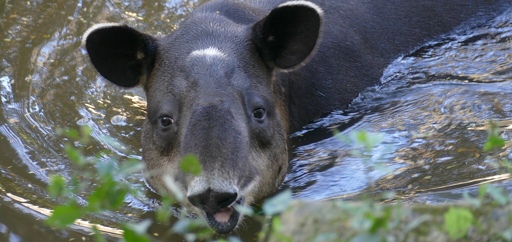
Encompassing some 7,400 square kilometers, or 2,860 square miles, along the Honduran border, Nicaragua’s Bosawás Biosphere Reserve is the largest biosphere reserve in Central America. It’s home to the Miskito and Mayanga Indigenous groups as well as countless species; endangered Geoffrey’s spider monkeys (Ateles geoffroyi) and Baird’s tapirs (Tapirus bairdii) inhabit Bosawas, as do critically endangered Saslaya moss salamanders (Nototriton saslaya), that are found nowhere else in the world. But, increasingly over the past several decades, Bosawás has also become host to cattle ranches and gold mines, at the cost of its rainforest. Despite its designation as a UNESCO site, Bosawás Biosphere Reserve has lost more than 30% of its primary forest cover since the turn of the century, according to satellite data from the University of Maryland’s Global Land Analysis and Discovery lab and visualized on the monitoring platform Global Forest Watch. Deforestation surged to a record high in 2024, with 740 km2 (286 mi2) — 10% of the reserve’s land area — cleared in a single year. A satellite image captured April 2025 by Sentinel 2b shows recently deforested areas in Bosawás Biosphere Reserve. The data show fire activity in Bosawás also rose in 2024, with 35% of annual tree cover loss caused by fire, representing a 700% jump from 2023. Preliminary data for 2025 indicate forest loss has continued this year, with satellite imagery showing telltale patches of brown spreading ever deeper into Bosawás’s remaining old-growth rainforest. Cattle ranching is one of the main drivers of forest…This article was originally published on Mongabay
From Conservation news via this RSS feed
You must log in or # to comment.