

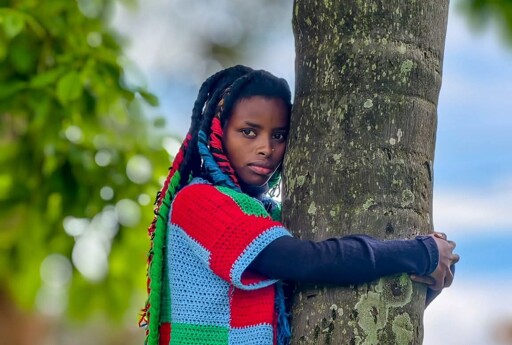
Founder’s Briefs: An occasional series where Mongabay founder Rhett Ayers Butler shares analysis, perspectives and story summaries. When Truphena Muthoni stepped up to a royal palm in Nyeri and wrapped her arms around its trunk, few expected her to stay there for three days. Even fewer thought the gesture would spark a national conversation. Muthoni is 22, softly spoken, and no stranger to environmental advocacy. Her 72-hour embrace, now awaiting verification by Guinness World Records, said something that cut through official statements and tired public debates: Kenya’s forests are in trouble, and people know it. Her vigil began as a “silent protest.” Muthoni wanted authorities to face the consequences of unplanned development, shrinking tree cover, and neglected water catchment areas. She also linked her action to mental health. “The reason for hugging trees is that it is therapeutic,” she said before starting. The claim sounded odd to some. By the end, the crowd around her included police officers, county officials, and residents who stood in the rain cheering her on. Tree hugging, usually dismissed as a caricature of environmentalism, has a long history of serious resistance. The Bishnoi of Rajasthan paid with their lives in 1730 when more than 300 villagers died protecting khejri trees at Khejarli, at the ahnds of soldiers sent by the maharaja of Marwar. Their stand helped inspire the Chipko women of Uttarakhand, who in the 1970s placed their bodies between loggers and oaks, insisting on their right to intact forests. Later came the Appiko Movement…This article was originally published on Mongabay
From Conservation news via this RSS feed
You must log in or # to comment.