

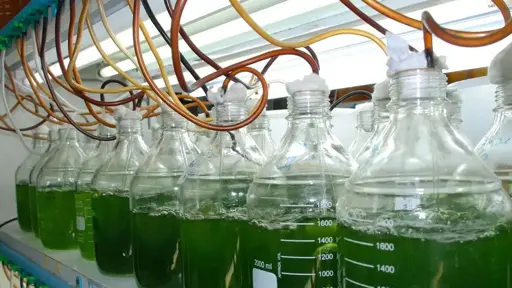
Freshwater alga, Chlorella vulgaris, is a new superfood with a small environmental footprint. The rise in interest in this alga stems from its applications across multiple areas of farming. In Japan, where it is most commonly used, it is employed as a livestock feed, a renewable energy resource, and a protein-rich food source.
While on the surface it appears to be a promising new food, there are several challenges in mass-producing this freshwater dweller. Since the 1990s, scientists have been working hard to figure out the intricacies of growing these algae on a larger scale.
At the very least, there are studies on its nutrient content, specifically related to its ability to boost immune functioning, detoxify the body, and provide antioxidant properties. It could also have use as a biostimulant.
What’s a Microalga?
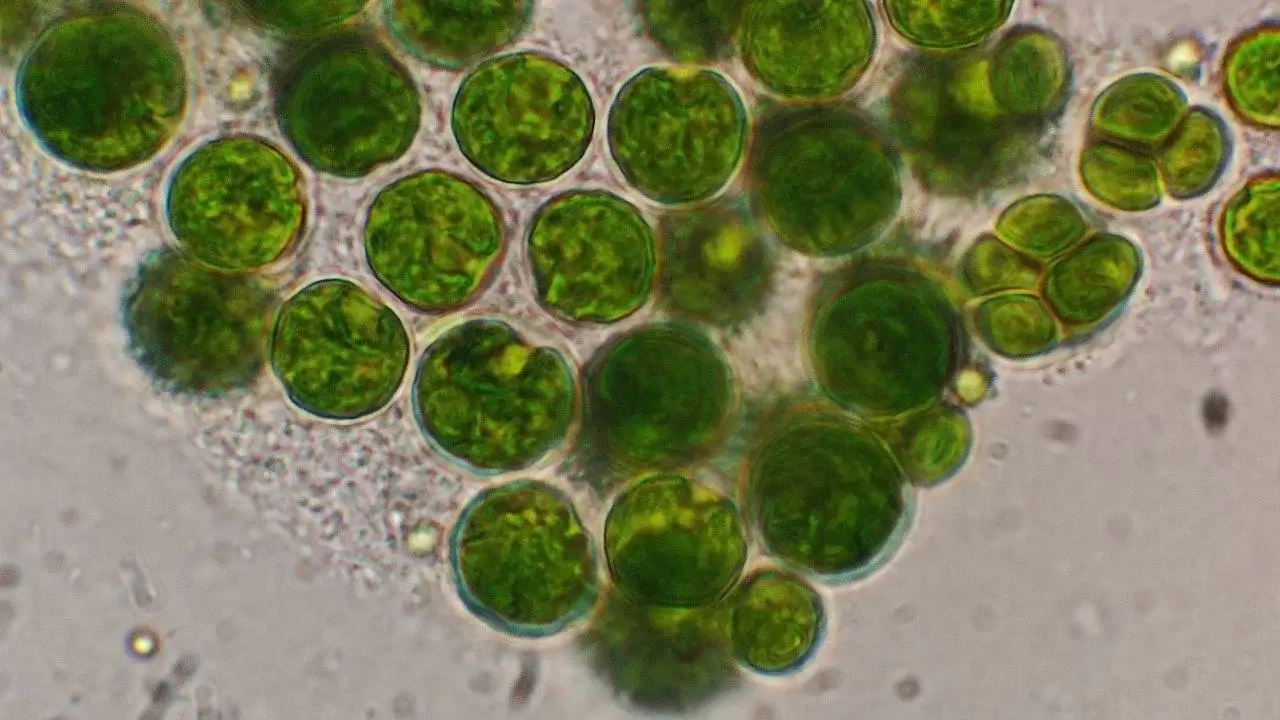
Microalga replicate readily in a variety of conditions.
C. vulgaris is what is known as a microalga, or an alga that is invisible to the naked eye, and replicates easily in optimal conditions. Algae in general need light, warmth, and nutrients to replicate. Microalgae tend to replicate rapidly in the right levels of warmth and light.
In the ocean, these organisms work together with cyanobacteria to form phytoplankton, which are the basis of the marine food web. In freshwater, these organisms are often present, but may not thrive due to cooler temperatures. Despite this, they drive the carbon and nitrogen cycles – essential ecosystem services in freshwater systems.
Microalgae are autotrophic, meaning they use carbon dioxide and inorganic nitrogen as a source for glucose consumption. This is one of its greatest benefits. All that is required is developing the right conditions, and the algae takes care of itself.
Another huge benefit is that the set of conditions for C. vulgaris to thrive is wide. There are optimal ones, but they aren’t required for reproduction. Therefore, using an organism that can essentially self-replicate offers a sustainable solution to food security issues, even if the applications of its use are in infant stages.
The Benefits of Chlorella vulgaris

Chlorella vulgaris is a rich source of nutrients and protein.
Typically, we hear about algae as a pollutant and a sign that conditions of overoxidation of waterways have occurred. This is often related to farm fertilizer runoff. But algae occur naturally even in healthy waterways as well. Chlorella vulgaris occurs naturally all over the world.
Along with water crops like kelp, this alga has been harnessed in mass production in Germany, Taiwan, and Japan, but not as much in North America. Due to its ability to absorb heavy metals, it’s an excellent bioremediant, or a natural cleaner.
Recently, studies showed C. vulgaris is a good candidate for renewable biofuel, alongside other mass-produced crops, like soy and corn. It has also been touted as a viable source of nutrients for human consumption, providing high protein and lipid content, and a viable source of Vitamin B12.
Is this alga the next superfood? With advances in producing it on a large scale, the chances are high. But there are several obstacles to clear before mass production can begin.
Challenges In Production

There are still problems to solve before microalgae can be farmed on a small-scale basis.
While farmers can produce strains of this alga on a mass scale, there are issues with the offsets of production. Trials currently show viable ways to produce and cultivate C. vulgaris, but they do not have proposed cleanup methods. As we all know, algae are a problem in the water quality field.
Another issue that arises is how production can occur on a smaller scale. Most methods developed to this point are large-scale, with associated problems. Urban farms and smaller-scale farms can’t produce algae with the same methods.
What’s Next?

Japan, Taiwan, and Germany successfully farm microalgae.
If proper sterilization techniques and small-scale solutions are determined, C. vulgaris will be a highly sought-after crop. Finding ways to integrate production into the surrounding ecosystem is a sustainable way forward. For smaller farms, finding ways to weave production into the farm is paramount.
Some propose the use of geothermal energy in natural hot springs as a cultivation strategy. The ideal temperature range for growing the algae is approximately 77°F (25°C). This temperature naturally occurs in many hot springs, especially in areas of Japan.
However, forcing the alga to grow in these conditions can lead to changes in metabolic structure, which ultimately change the nutrient content. This poses quite a challenge to the future of Chlorella vulgaris production.
There are many studies currently in trials to consider other species of microalgae that also provide the same nutrient content and potential benefits to crops. C. vulgaris is the most widespread of these, and has already been successfully harnessed in Japan, Taiwan, and Germany.
The post The New Superfood With Minimal Environmental Footprint appeared first on Modern Farmer.
From Modern Farmer via this RSS feed
You must log in or # to comment.