

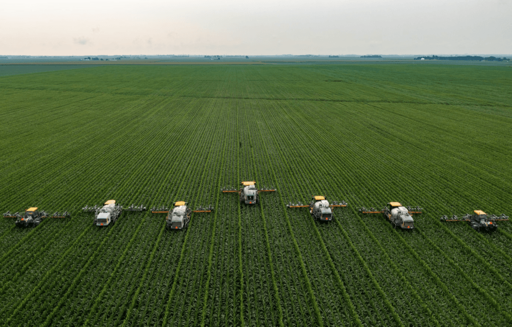
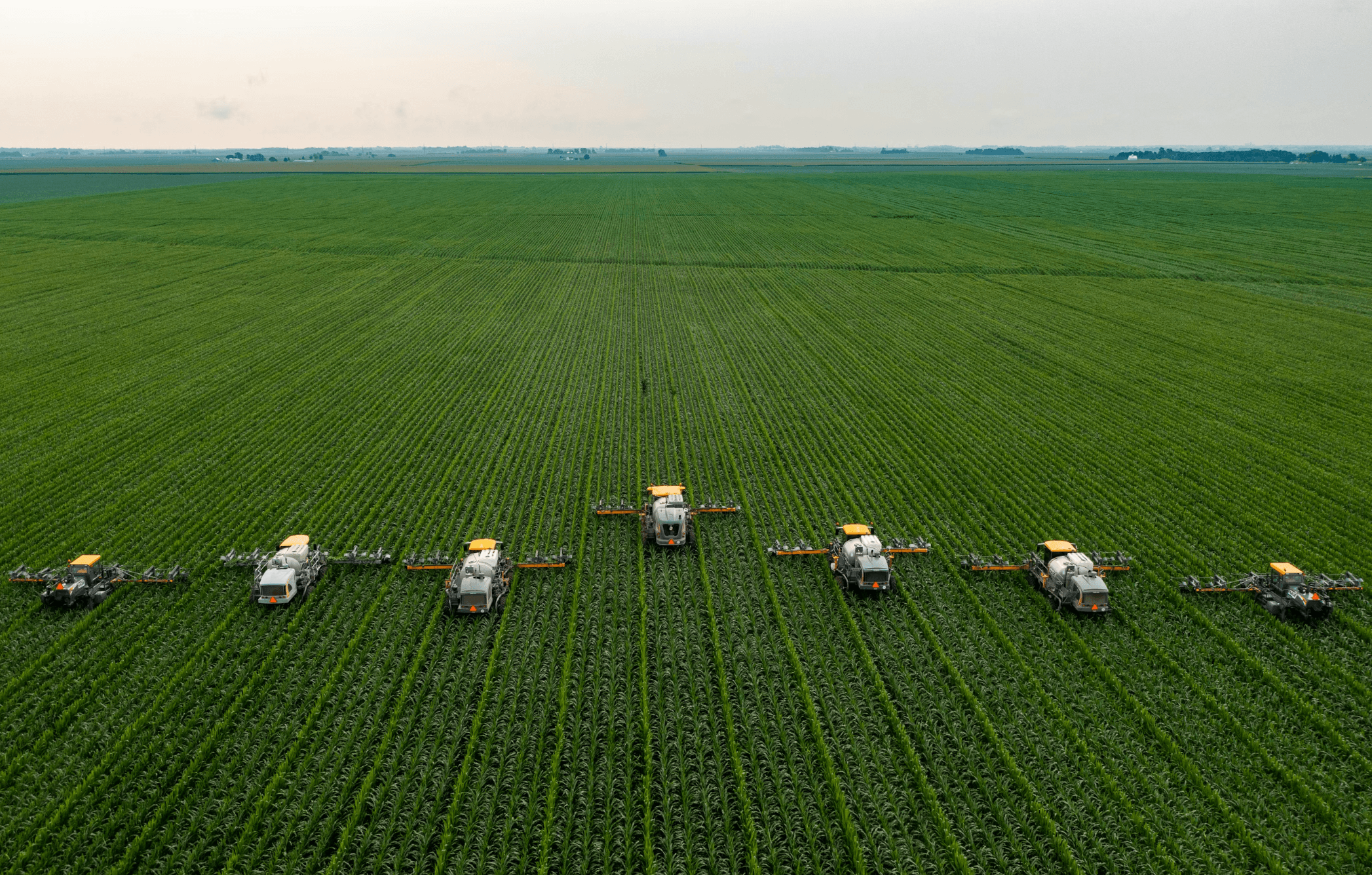

Photo by James Baltz
The “polluter pays” principle is a cornerstone of environmental regulation. It raises billions of dollars each year and has been fundamental in pushing energy companies to pursue cleaner, more cost-effective energy sources. But when it was first formalized in 1972 by the Organization for Economic Cooperation and Development (OECD), it faced resistance. Energy companies argued that internalizing environmental costs would damage competitiveness, raise consumer prices, and deter innovation. At the time, many in the energy sector warned that internalizing environmental costs would damage competitiveness, raise consumer prices, and lead to layoffs—arguments widely circulated in the media and industry forums. Despite this, the principle gradually moved from being labeled “radical” and “punitive” to becoming a foundation of environmental and economic law.
Today, we face a similar urgency for change. This time, it’s regarding our food systems.
The problem is agriculture. The very system that sustains us has become a driver of environmental breakdown. It consumes 70 percent of fresh water, occupies half of all habitable land, generates around a quarter of global greenhouse gas emissions, and is the primary cause of deforestation and biodiversity loss. With the worldwide population expected to increase by 2 billion by midcentury, demand for food is projected to rise by 50 percent, and protein demand alone is set to double by then, according to the 2017 Food and Agriculture Organization (FAO) of the United Nations report. So how can we produce more food without harming the planet, and where will the funds to support this transition come from?
The Problem With Food
Years of intensive agriculture mean that crops are being planted on exhausted fields; thus, in an ever-growing cycle of decay, farmers use more fertilizer to sustain yields. In his 2022 book Sixty Harvests Left, Philip Lymbery delivers an important message: that humanity’s food system is careening toward collapse. The title echoes a chilling United Nations warning that, under current industrial farming practices, 90 percent of the Earth’s topsoil is likely to be at risk by 2050.
Humanity consumes approximately 350 million tons of meat annually. That is equivalent to “nearly a thousand Empire State Buildings in carcass weight,” according to the book We Are Eating the Earth by Michael Grunwald. Livestock uses nearly 80 percent of agricultural land, yet provides less than 20 percent of global calories. They account for about 32 percent of global methane emissions, while beef production requires more than 15,000 liters of water per kilogram. The environmental cost of meat is disproportionately high. Global demand is rising, and protein production urgently needs innovation.
Intensifying floods, droughts, heat waves, collapsing fisheries, and accelerating species extinction are early signs of systemic stress. Agriculture is at the heart of this crisis. However, if approached differently, agriculture could also be a solution to the increasingly dire threat of climate disaster. The choices made in the coming years will shape not only our food security but also the planet’s resilience for generations to come.
Seven out of the nine planetary boundaries, as set by the Stockholm Resilience Center (SRC) in 2009, have now been breached. These boundaries were created to measure a “safe operating space for humanity.” The SRC states that, “Crossing boundaries increases the risk of generating large-scale abrupt or irreversible environmental changes.” Breaching these boundaries signals that humanity is pushing Earth’s life-support systems beyond safe limits. This is detrimental not only to all life on Earth but also to business, as supply chains, global markets, and economic stability all depend on a healthy and nurturing environment.
The Proposed Transition of the Food System
As part of the Paris Agreement, the Food and Agriculture Organization of the United Nations launched the Food Roadmap at COP28. This was the first time any climate convention put food and agriculture on its agenda—aligning agriculture with climate goals. The roadmap called for a substantial scale-up of investment to develop and deploy low-emission farming methods, alternative proteins, and technologies that enhance soil health, improve water efficiency, and protect biodiversity.
The roadmap outlines 120 science-backed actions, clustered across 10 strategic domains, including soil and water, livestock, forests and wetlands, and healthy diets. The goal is to see food systems worldwide become carbon-neutral by 2035 and to achieve a net carbon sink by 2050. Livestock methane emissions would be reduced by 25 percent by 2030, and food waste would be halved.
The international community has been slow to react. However, by developing and implementing a widely accepted strategy and integrating meat-related levies into its climate initiative, Denmark has become a leading advocate in the transition. Its dual approach of plant-based incentives and emissions costs illustrates a progressive method for reducing meat dependency.
Marie-Louise Boisen Lendal, chair of the Danish fund Plant Foundation, which is overseeing a public investment of around $200 million in innovative solutions and the move toward plant-based foods, says, “Denmark is introducing the polluter pays principle because it is the most effective path to achieving the goals of the Paris Agreement.” She told me in a “Future of Foods Interview” podcast that Danish farmers are in favor of the idea. New Zealand and other countries, notably those in Scandinavia, exhibit similar signs of movement. The United Kingdom mooted a meat tax in 2024 as part of the National Food Strategy, but ultimately decided against it, citing public pushback.
Regenerative Agriculture Versus Technology
By focusing on rebuilding soil health, increasing biodiversity, and enhancing water cycles, regenerative practices aim to sequester carbon, restore degraded ecosystems, and make food systems more resilient. However, critics argue that the impact of regenerative agriculture on carbon sequestration is overstated. Since these systems may yield less in the short term, more land is often required to produce the same amount of food, and the only available land to exploit is often forested.
Some also warn that the term “regenerative” risks becoming a vague marketing expression susceptible to greenwashing. Sajeev Mohankumar from the FAIRR Initiative—a sustainability investment network managing $80 trillion in assets—confirms that although many investors are prioritizing regenerative agriculture, its implementation remains limited. Mohankumar told “Future of Foods” that although 50 of 79 agri-food companies reference regenerative practices in their strategies, only four have provided financial incentives to farmers or producers.
Meanwhile, new agritech solutions are emerging as complementary approaches that could accelerate the transition when combined with regenerative techniques. Biofertilizers and biopesticides offer more sustainable options for soil health and could eventually replace current chemical inputs, though their effectiveness remains under evaluation.
Gene editing is already in use, producing crops that are resistant to disease, tolerant to drought, or enriched with nutrients—developments that could reduce reliance on pesticides despite political pushback. Precision fermentation is also advancing; this process utilizes microbes to produce dairy proteins, egg whites, and fats without using animals. Several products manufactured using this process have reached the market, though significant scaling up is needed to compete with conventional farming. Finally, cellular agriculture—also known as cultivated meat—continues to progress, with approvals already granted in Singapore, the United States, Israel, the United Kingdom, and Australia. Yet here, too, the challenge of scaling remains substantial.
The Cost of a Food Transition
[Content truncated due to length…]
From CounterPunch.org via this RSS feed