

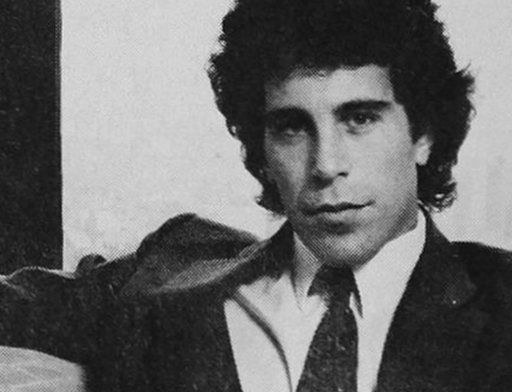
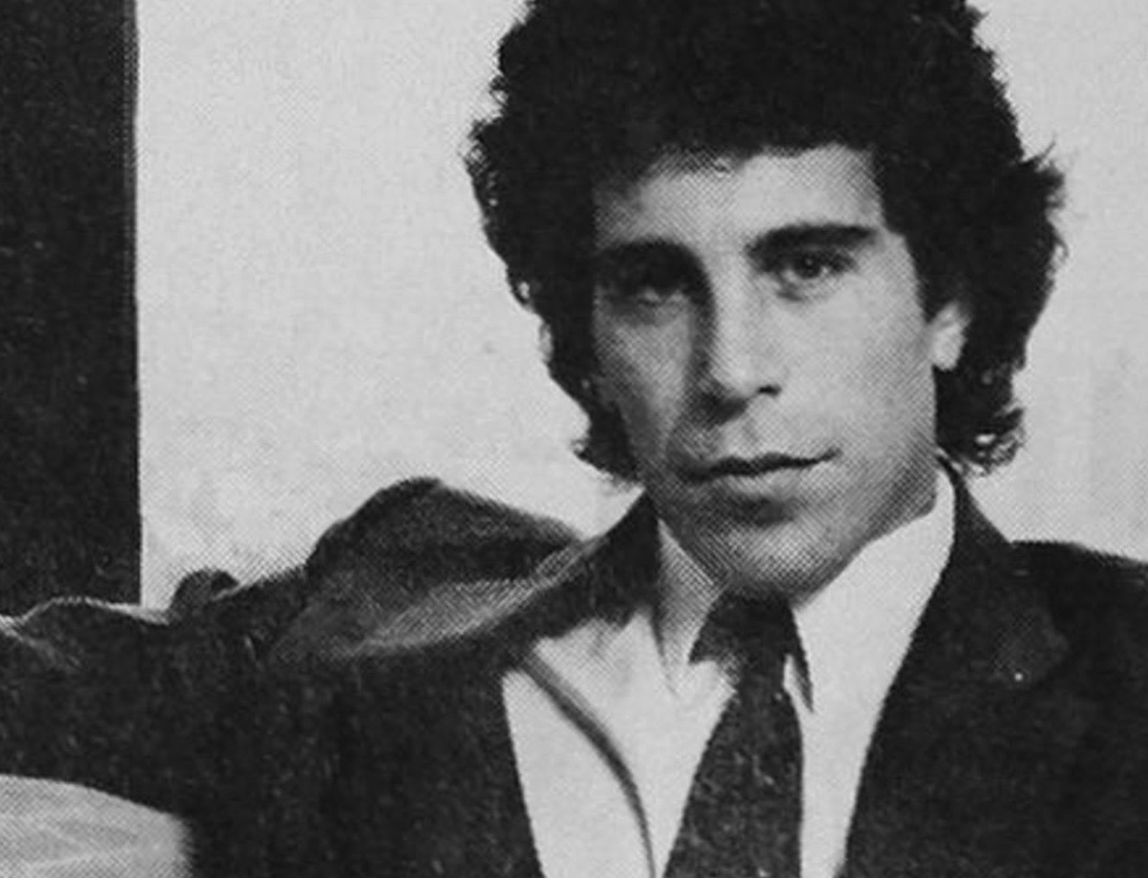

Jeffrey Epstein, 1980. Image Wikipedia.
In an article last week, I argued that Jeffrey Epstein was not a lone rogue predator. This week, I turn to the more troubling question: how did Epstein, a man with no credible résumé, no transparent wealth, or a conventional career path, manage such an unconventional ascent into America’s halls of power?
Epstein’s rise was not the result of financial brilliance. He was a college dropout, hired as a teacher at an elite Manhattan private school on dubious credentials. A former student later recalled wondering, “How did this guy get his job.” From there, Epstein invented the persona of a mathematical prodigy. A cover, uncertified qualification, designed to confer learning skills or deception to explain his rise into the world of high finance.
Epstein climbed the financial and social ladder through a singular relationship with the Israel-first Jewish billionaire Leslie Wexner. Without Wexner, there would be no Epstein as we know him. Leslie Wexner is the founder of L Brands (formerly Limited Brands), the retail conglomerate behind Victoria’s Secret, Bath & Body Works, Abercrombie & Fitch, and The Limited. Wexner accumulated considerable fortune, which he leveraged through tax-exempt mechanisms to cultivate pro-Israel Jewish leadership and strengthen Israel’s long-term political, cultural, and institutional influence in the U.S.
Epstein joined Wexner in the 1980s and suddenly became his most trusted financial adviser. What followed violates all norms of fiduciary responsibility between two parties. Epstein was granted sweeping power of attorney over Wexner’s fortune, real estate holdings, and business dealings. Epstein stayed at Wexner-owned mansions, and ran the family office, despite having little in the way of a proven financial track record prior to the relationship.
Wexner’s Foundation, which Epstein ran from 1992 to 2007, poured hundreds of millions of dollars into Israel-focused initiatives, including Birthright Israel, Hillel International, Israeli leadership fellowships, and elite training at U.S. institutions such as Harvard’s Kennedy School. These programs aimed to promote future political, academic, and media leaders with a distinctly Israel-centric orientation. Epstein helped develop and develop Wexner’s Israel-first objectives.
Central to the Wexner Foundation is the Wexner Israeli Fellowship sponsoring mid-career Israeli officials for special training at elite U.S. universities. The Fellowship bankrolled senior Israeli military officers, intelligence professionals, policy advisers, and other public-sector leaders to study in U.S. academic institutions like Harvard University’s Kennedy School of Government. The selection criteria focus on “Jewish Israeli” professional experience and leadership potential to serve Israel, likely including individuals linked to illegal Jewish-only colonies in the West Bank. Fellows taught in governance, public policy, strategic management, and institutional leadership, and while taking advantage of their extended presence in the U.S. to network and develop long-term relationships with U.S. policymakers, financiers, and academics.
Released emails showed that Epstein continued his relationship with Wexner even after his 2008 sex-crime conviction. The relation persisted—denied by Wexner— despite Epstein’s public allegations of child abuse. The Israel-firster–Wexner, may have believed that preserving Epstein’s relationship outweighs any public liability.
To properly contextualize Epstein’s relationship with Leslie Wexner, a brief background is warranted. Wexner’s father-in-law, Yehuda Koppel, was a commander in the pre-1948 Jewish terrorist organization, Haganah and served in its intelligence arm. Koppel was later posted to New York to open an office for Israeli airline El Al, which historically served as a front for Israeli intelligence.
Beyond Epstein’s role as managing the wealth that poured into Wexner’s Israel-first foundation, Epstein also acted as an informal geopolitical intermediary on behalf of Israeli strategic interests. This was evident through his extensive relationship with former Israeli prime minister and defense minister Ehud Barak. Epstein’s probable association with Israeli intelligence may have been birthed in the mid-1980s, when Barak was the head of Israeli military intelligence and later as army command. It is no coincidence that Epstein joined the Israel-first Wexner’s group soon arpund that time period.
Many years later Epstein and Barak’s relationship became public. Epstein provided him with housing in New York, assisted him financially, and helped broker deals involving Israeli military and surveillance technology. Barak continued his association with Epstein long after his 2008 conviction. In addition, an Israeli intelligence officer closely tied to Barak stayed repeatedly at Epstein’s Manhattan residence between 2013 and 2016.
Epstein was useful not only as a financial operator but as an unlikely diplomat—or perhaps an intelligence asset—whose personal networks was aligned with Israeli government interests, intelligence channels, and powerful state actors. As such, his influence went far beyond social events, or sex parties. Part of a broader covert architecture of strategic deal-making, Epstein brokered a security agreement between Israel and Mongolia. He led a backchannel between Israel and Russia during the Syria civil war, and facilitated the transfer of Israeli surveillance technology to the West African nation of Côte d’Ivoire.
How many pedophile “financial gurus” enjoy the time, reach, power, and possess fake foreign passports to operate across continents, largely in service of a single state? If this is not sufficient to condemn Epstein as a potential Israeli asset, nothing will be.
Like the Israeli airline El Al front for Israel intelligence, Epstein’s control over financial transactions for a wealthy foundation could have potentially served a similar purpose: a discreet conduit for moving money under the cover of philanthropy, shielding it from scrutiny and subverting local law-enforcement authorities.
The Epstein–Wexner relationship was far more reaching than the philanthropic foundation. This might, in part, explain Epstein’s wealth, and his decades of protection. But until Epstein’s meteoric rise in the financial market, and his relationship with Israel-first sayanim is fully examined, the Epstein story and his credible link to Israeli intelligentsia will remain incomplete.
The post How American Israel-First Sayanim Enabled and Protected Epstein appeared first on CounterPunch.org.
From CounterPunch.org via this RSS feed
You must log in or # to comment.