

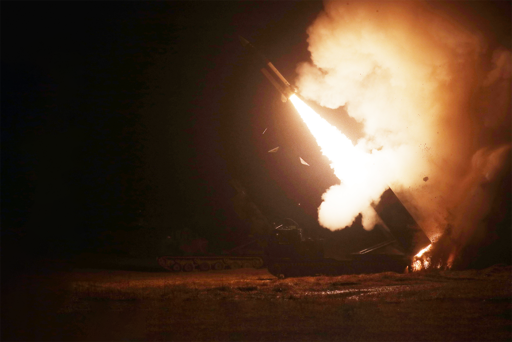
In what could be a huge boost for Ukraine’s offensive capabilities, the U.K. announced on Jan. 11 it had launched Project Nightfall, a competition to rapidly develop new long-range ballistic missiles for Kyiv.
Ukraine has repeatedly stressed the need to reinforce its ability to target Russian military sites and energy infrastructure with long-range weapons, aiming to increase the economic costs of Moscow’s war while strengthening its own air defense network against Russian strikes on Ukraine’s power grid.
So could Project Nightfall be the answer? Well yes, and no.
What is a ballistic missile?
Unlike cruise missiles like the Flamingo which are jet engine powered and fly in a relatively flat trajectory, ballistic missiles are rocket-powered and launched high into the atmosphere before arcing back down onto their target.
They’re only guided during the initial stages of launch, so they can be less accurate than cruise missiles, but have the advantage of reaching incredibly high speeds — sometimes more than 3,200 kilometers per hour — as they approach their targets.
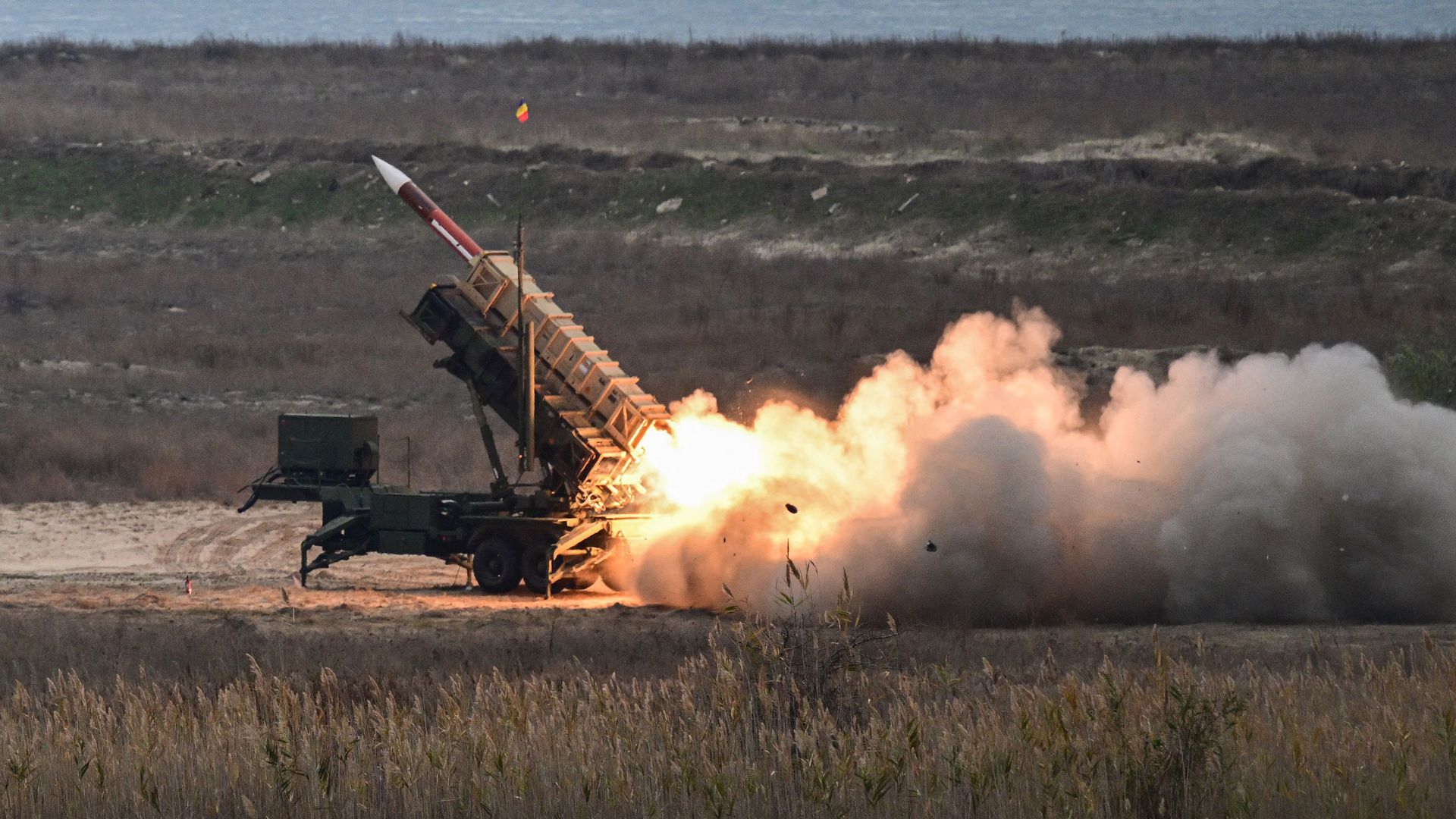
A Patriot rocket launcher of the Romanian army fires a PAC-2 ATM missile during a military drill at the Capu Midia shooting range near the Black Sea in Romania, on Nov. 15, 2023. (Daniel Mihailescu / AFP via Getty Images)
As such, they are more difficult to intercept — only the most advanced air defense systems are capable of shooting them down, the U.S.-made Patriot system being one of them.
Russia uses them to devastating effect in Ukraine, using them in combination with drones and cruise missiles to pummel the country’s energy infrastructure.
Does Ukraine have ballistic missiles?
The only ballistic missiles Ukraine has operationally fielded during the full-scale invasion are U.S.-supplied ATACMS which can fly up to 300 kilometers (186 miles) and are fired from mobile HIMARS launchers.
But supplies of U.S.-made weapons in particular are in increasingly short supply. The last reported use of ATACMS was in November of last year when they were used to strike an unspecified target inside Russian territory.
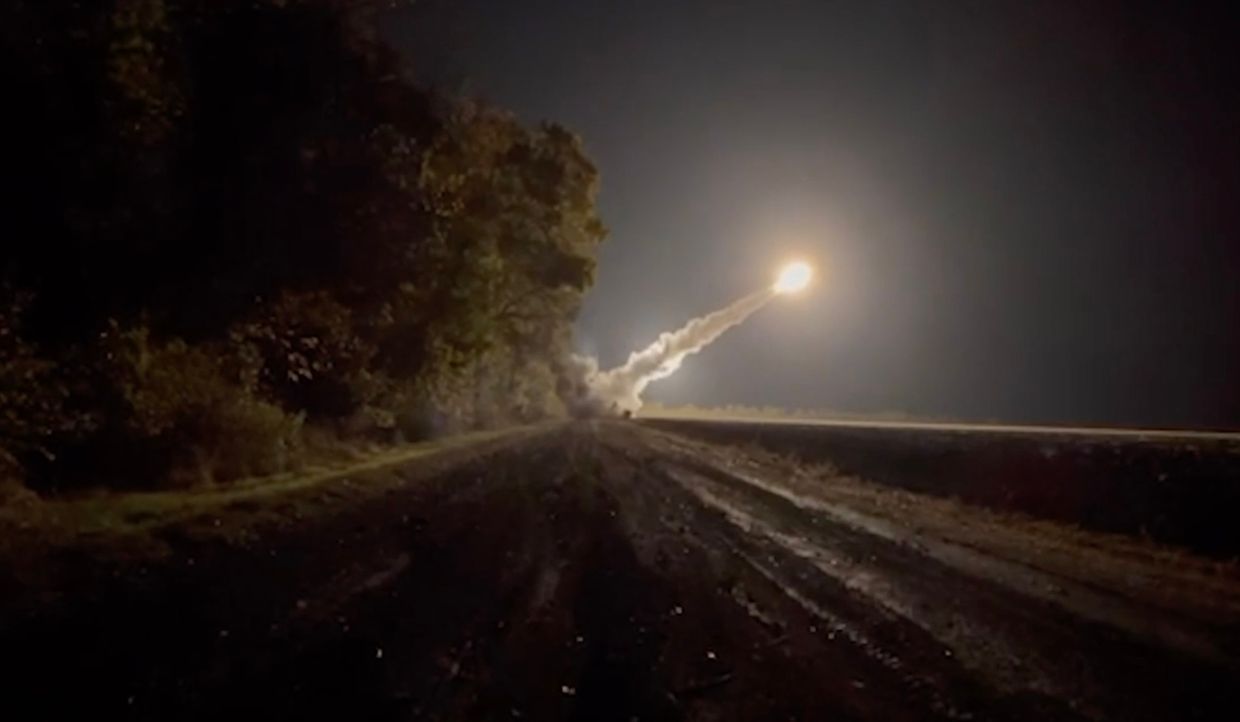
A screenshot shows an ATACMS launch in an unidentified location on Oct. 17, 2023. (Valerii Zaluzhnyi / Telegram)
According to Michael Clarke, a British academic specialising in defence studies, and professor at King’s College London, the Nightfall project is “designed to produce a missile that will substitute for the U.S. ATACMS missiles that are running short.”
“It all reflects a move by the Western allies to move away from using U.S. equipment since the U.S. has become a very unreliable ally, and the Nightfall project is something that the U.K. also wants for its own forces in the future,” he added.
Clarke adds that if the project unfolds as planned, it will provide a significant boost to “Ukraine’s deep strike abilities for the future, along with its own Sapsan missile.”
What’s a Sapsan missile?
Ukraine announced in June of last year that its short-range Sapsan ballistic missile would go into mass production, a major development in Kyiv’s ongoing efforts to domestically produce the weapons it needs to fight Russia’s full-scale invasion.
The missile completed testing in May after successfully striking a Russian military target at a range of nearly 300 km, Ukrainian officials said.
The exact specification of the Sapsan is not public but reports suggest it has a range of around 300 kilometers, and a warhead weight of over 480 kilograms.
But as far as is known, they are yet to appear on the battlefield in significant numbers.
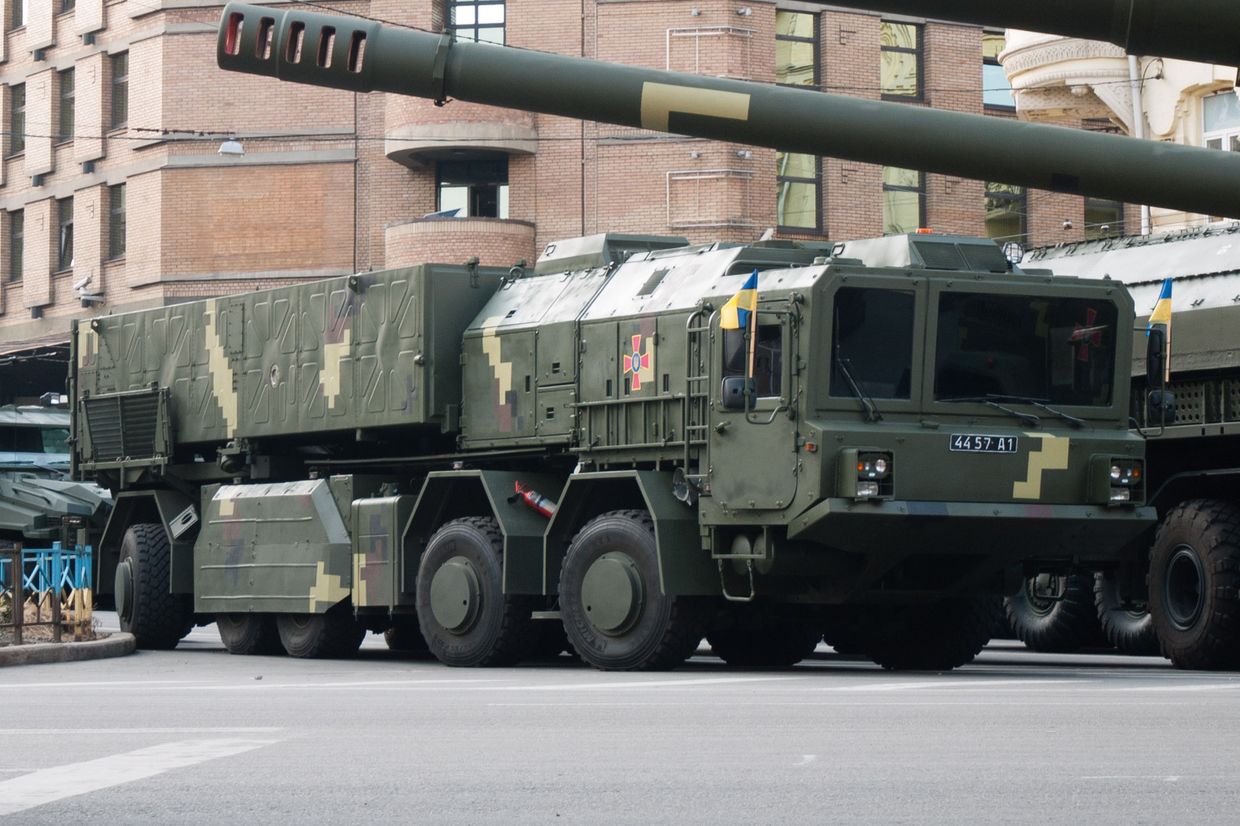
A Ukrainian Hrim-2 (Sapsan) tactical missile system takes part in a rehearsal for the Independence Day military parade in Kyiv, Ukraine, in 2018. (VoidWanderer / Wikimedia)
How does a Nightfall compare?
Nightfall missiles will carry a 200 kg warhead and have a range of over 500 kilometers (about 310 miles), the U.K. Defense Ministry said.
The ground-launched missiles are designed to be fired in rapid succession and then quickly withdrawn, giving Ukraine the opportunity to hit high-value targets before Russian forces can respond, much like how ATACMS are used with HIMARS launchers.
When will they start hitting Russian targets?
Unfortunately, they likely won’t arrive in significant enough numbers to have a decisive impact on the war in 2026.
Project Nightfall aims to grant three industry teams a $12 million development contract to produce the first three missiles for test firing within one year. Proposals will be accepted through early February, with the goal of awarding contracts in March 2026.
The U.K. Defense Ministry said test firings should be conducted “within 12 months.”
“This is a standard development cycle in the defense industry — a contractor is chosen, designs are developed, prototypes tested, ideally in combat conditions, and the product is refined based on feedback,” Mykhailo Samus, Director of the New Geopolitics Research Network, told the Kyiv Independent.
“This process usually takes from several months to a few years.”
Samus believes it likely that Ukraine’s domestically-produced missiles will reach the battlefield faster than Nightfall given they’re already several stages through development.
“For a ballistic missile like this, especially if it’s not based on existing systems, it can realistically take years,” he said.
From The Kyiv Independent - News from Ukraine, Eastern Europe via this RSS feed