

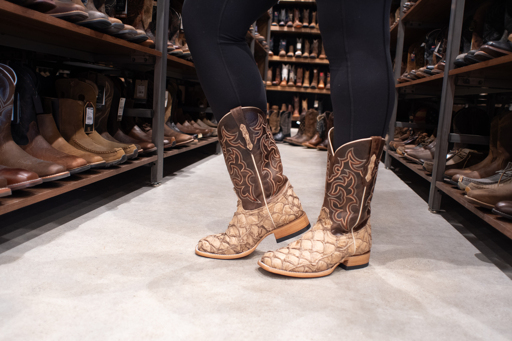
An inhabitant of the Amazon Basin and one of the world’s largest freshwater fishes, the pirarucu (Arapaima gigas) has a hard skin that’s resistant to attacks from aquatic predators such as piranhas, yet is also flexible. Such features, combined with the diamond-shaped design of its scales, have attracted the interest of the global fashion industry. The largest market for sustainably harvested pirarucu skin is the U.S. state of Texas. Country-style boots made from it are manufactured in the U.S. and in Mexico and sold in both countries, a niche business that helps finance sustainable fishing by traditional communities in the Brazilian state of Amazonas. Meat is the main product of the managed pirarucu fishery, but the skin, which weighs at least 10 kilograms (22 pounds) and used for footwear and other fashion accessories, sells for a higher price, 170-200 reais ($32-$38). “Selling the skin is crucial to maintaining the 10 reais per kilo of pirarucu [about $1.90/kg, or 86 cents/lb] paid to fishers,” said Ana Alice Britto, commercial coordinator at the Carauari Rural Producers Association, ASPROC. “The skins also help pay a small portion of the logistics, processing and storage costs.” Founded in 1994, ASPROC is the largest organization in the Middle Juruá River region, representing 800 families from 61 riverside communities. Last year, it sold 180 metric tons of pirarucu. Commercial exploitation of the colossal fish — which can weigh up to 200 kg (440 lbs) and measure 3 meters (10 feet) long — began in earnest in the…This article was originally published on Mongabay
From Conservation news via this RSS feed
You must log in or # to comment.