

Photograph Source: Mondoweiss – CC BY 3.0
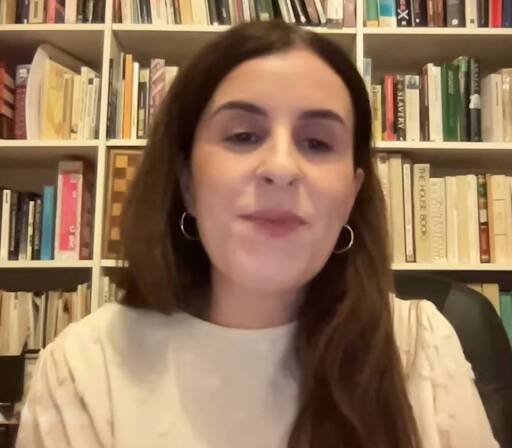
Boards of directors are a funny bunch. Often lacking expertise, claiming knowledge they do not have and insight that never illuminates, its members can make the cockup the stuff of legend. Instead of minding their own business and leaving the Adelaide Writers’ Week to take place without incident as part of the 2026 Adelaide Festival, an act of oafish meddling took place. The meddling centred on removing one invited author from the speaking schedule: the Australian-Palestinian writer and academic Randa Abdel-Fattah, who was to discuss her novel Discipline.
The Festival Board’s statement explaining their decision began with a note of gravity. “As the Board responsible for the Adelaide Festival organisation and the Adelaide Writers’ Week events, staff, volunteers and participants, we have today [January 8] advised scheduled writer Dr Randa Abdel-Fattah that the Board has formed the judgment that we do not wish to proceed with her scheduled appearance at next month’s Writers’ Week.” Then came the note of pure cowardice, framed in the bankrupt language of middle-management. “Whilst we do not suggest in any way that Dr Randa Abdel-Fattah or her writings have any connection with the tragedy at Bondi, given her past statements we have formed the view that it would not be culturally sensitive to continue to program her at this unprecedented time so soon after Bondi.”
Abdel-Fattah’s views on the war in Gaza had evidently proven so salty as to require her deprogramming. These were not specified, though various social media remarks and public statements attacking “this murderous Zionist colony” and claiming that Zionists had “no claim or right to cultural safety” were bound to have featured. Her removal was heartily approved by Norman Schueler of the Jewish Community Council of South Australia and the South Australian Premier Peter Malinauskas.
If this decision was intended to reflect balance, intellectual awareness and understanding about the shootings on December 14, 2025 that took place at a Bondi Beach event celebrating the Jewish festival of Hanukkah, it failed on all counts. It ignored the fact that the two shooters had been allegedly inspired by Islamic State (ISIS or Daesh), an obscurantist group indifferent to Palestinian statehood and hostile to Hamas. (The repeated comparison of Hamas to ISIS by Israeli Prime Minister Benjamin Netanyahu has always been erroneous to the point of mendacity.) It imputed a degree of responsibility to Abdel-Fattah as a Palestinian, a representative of a people systematically butchered, dispossessed and starved by the Israeli campaign. It implied that any discussion about Israel’s conduct in response to the Hamas attack on October 7, 2023, one deemed genocidal by the UN Independent International Commission of Inquiry on the Occupied Palestinian Territory and a number of known human rights organisations, was insensitive. Only the meek of opinion would be permitted, the impotent or inert celebrated.
A glance at some of the Board’s membership reveals corporate blandness and brand merchants versed in the nebulous world of “consultancy” and “communication”. No literary figures of note can be found, let alone historians, sociologists or anyone animated by what might loosely be called the liberal arts. There are – or least were, given several resignations – such figures as the now ex-chair, Tracey Whiting, adept in “strategic marketing, audience development and community engagement”. Leesa Chesser’s description sounds like that of an educated canine “trained in health economics and business”. Brenton Cox is all triumph and skill as managing director of Adelaide Airport. Daniela Ritorto is obviously less a journalist than a consultant about journalism, versed in “strategic communications advice” and, it would seem, “a sought-after master of ceremonies and panel moderator”. As with Australia’s innumerable and atrocious university managers, the country’s cultural and artistic governors cannot be accused of having a shred of aesthetic, let alone cerebral sense for the area of expertise they purport to control. It’s all show, and a rotten one too.
In a pugnacious statement, Abdel-Fattah called the decision to scratch her attendance “a blatant and shameless act of anti-Palestinian racism and censorship and a despicable attempt to associate me with the Bondi massacre.” Her very presence would be construed as “‘culturally insensitive’”, that she, as a Palestinian having nothing to do with the Bondi atrocity was “somehow a trigger for those in mourning”.
The Festival Board seemed to suffer the same maladies that had afflicted the organisers of the Bendigo Writers Festival last August. At the penultimate moment, they thought it wise to make writers and panellists subscribe to a Code of Conduct in what could only be seen as a nasty fit of Zhdanovism. Terms such as “Zionist” or “Zionism” were to be avoided, along with “topics that could be considered inflammatory, divisive, or disrespectful.” Many writers recoiled and withdrew.
Cancellation fever, however, remains very modish in Australia when talking about the destruction of Gaza or Israel’s adversaries who must, by definition, be seen as playdough freaks of demonology. When pianist Jayson Gillham took issue with the brutality of Israel’s Gaza campaign during a 2024 recital, his contract was cancelled by invertebrate officials at the Melbourne Symphony Orchestra. (The matter is before the courts.) The artists Khaled Sabsabi and Michael Dagostino fared somewhat better, being first cancelled by Creative Australia from representing Australia at the Venice Biennale only to be reappointed after much cutting indignation.
For Abdel-Fattah, solidarity among the scribblers abounded. Of the initial 124 participants, some 100 have withdrawn. Among them are former New Zealand Prime Minister Jacinda Adern, British author Zadie Smith, former Greek Finance Minister and rabble rouser Yanis Varoufakis, and Australian historian Clare Wright. Wright expressed shock and insult as a Jewish Australian that the Board had exploited “the tragedy of Bondi to weaponise its much loved and respected literary festival.”
Leaving aside the palpable implosion of an event that would have otherwise gone the way of most writers’ events, one lost in fine print and chatter, a supreme irony emerges. Abdel-Fattah, as with many writers, is not immune to the cancellation bug when it comes to those she does not like. In 2024, she added her name to a letter addressed to Adelaide Writers’ Week requesting the removal of Thomas Friedman from the schedule for his remarks in the New York Times analysing the Gaza War through the prism of the animal kingdom (the US, predictably, a lion, if old; Iran, a “parasitoid wasp”; Yemen, Lebanon, Syria and Iraq, caterpillars; Benjamin Netanyahu, a sifaka lemur). Friedman has made a life of grand, insensitive readings of the human condition, fashioning revenue out of such cowpat efforts as The Lexus and the Olive Tree, but that’s hardly a reason to cancel him. People like that need to be paraded as treasures of ridiculous tripe, not kept hidden to wither.
To their credit, the Festival Board then, unlike now, held firm. Even crass stupidity should have a platform. “Asking the Adelaide Festival and Adelaide Writers’ Week to cancel an artist or writer is an extremely serious request,” came the response from Whiting. “We have an international reputation for supporting artistic freedom of expression.” Much like Whiting herself, that reputation has gone.
The post The Cancellation of Randa Abdel-Fattah appeared first on CounterPunch.org.
From CounterPunch.org via this RSS feed
You must log in or # to comment.