

By World BEYOND War, January 15, 2025
Submitted to the Office of the United Nations High Commissioner for Human Rights
Europe is being increasingly militarised. So-called defence budgets swell while social services are squeezed. From classrooms to news bulletins, the chorus is the same: prepare, comply, enlist. Conscription is being normalised again, recast as a civic duty.
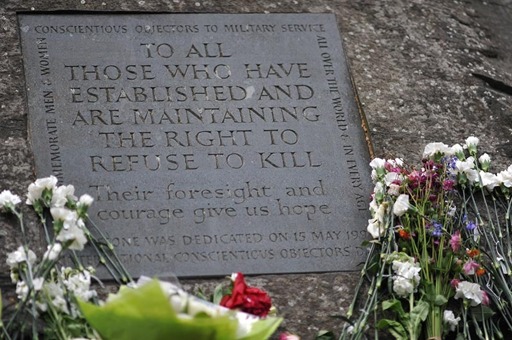
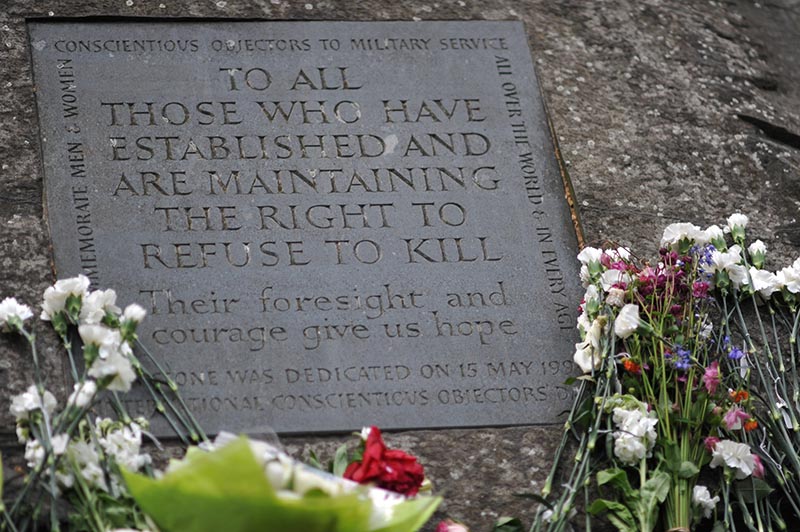
We reject this fatalism. Conscientious objection (CO) — the refusal to kill — is recognised within the United Nations human rights system as an exercise of freedom of thought, conscience, and religion (ICCPR Article 18). The Human Rights Committee and other UN bodies repeatedly urged States to provide fair procedures, accessible non-punitive alternatives, and to refrain from penalising those who object, in peace or wartime. Yet, these obligations are too often ignored.
CO is more than a personal right; it is a strategic and collective force that can prevent mass human rights violations. When refusal spreads — from individual objectors to mass draft resistance, in-service refusal, and wider social non-cooperation — it raises political costs, degrades military capacity, and can force policy change.
History demonstrates this: mutiny and refusal helped precipitate the end of World War I in Germany; GI resistance eroded the ability to continue the Vietnam War; mass desertion and draft evasion undermined Portugal’s colonial wars before the Carnation Revolution. When refusal scales, war becomes logistically and politically impossible.
From a human rights perspective, protecting conscientious objection is not only about safeguarding individual conscience; it is also a means of constraining organised killing and preventing large-scale violations of the right to life. Today, conscientious objectors and draft resisters face severe repression in many states, including Israel, Ukraine, Russia, Belarus, Türkiye, Greece, Germany, and elsewhere. Common violations include:
criminal prosecution, imprisonment, and punishment for refusal to serve, as well as arbitrary detentions, cruel treatment, torture, discrimination;failure to recognise conscientious objection during a war or other national emergency, and objection that arises after enlistment;alternative service that is punitive, excessively long compared to military service, or still under military control;discrimination against political objectors and those whose refusal is not religious;denial of asylum and forced returns of conscientious objectors to countries where they face persecution.
Recommendations:
Protect and expand CO in law and practice. Fully implement existing UN guidance by ensuring:
No attempts to change forcibly religion or belief of conscientious objectors to compel them to undergo military serviceFull recognition of right to CO, accessible and fair proceduresRecognition of conscientious objection in wartimeRecognition of in-service conscientious objectionGenuinely civilian alternative service in interests of society, taking into account scruples and skills of conscientious objectors, with their participation in governance of the nonmilitary serviceNo criminal penalties, repeated prosecutions, or discrimination
Create a UN mandate on CO. The Human Rights Council should appoint a Special Rapporteur/Independent Expert on conscientious objection to military service to consolidate jurisprudence, issue urgent appeals, and drive compliance. This will improve the right to conscientious objection globally and improve legislation and jurisprudence of human rights.Guarantee sanctuary. States must ensure asylum and protection for conscientious objectors, draft resisters and deserters fleeing persecution. Moreover, states should ensure to prevent removals that force COs to countries they originally fled from or where they are likely to face persecution.Resource refusal at scale. Governments and international institutions should fund legal aid, counselling, and cross-border support networks for COs; support municipal and university “sanctuary for CO” programmes.
Refusal is not passivity; it is society’s veto on organised killing. If we protect the right to conscientious objection and enable it to scale, we constrain warfare today — and make a demilitarised future not just imaginable, but achievable. We call on all governments to invest in and institutionalize nonviolent responses to perceived threats to peace in cooperation with representative organizations of conscientious objectors.
The post Conscientious Objection Could Change the World appeared first on World BEYOND War.
From World BEYOND War via this RSS feed
You must log in or # to comment.