


Photograph Source: TechCrunch – CC BY 2.0
I have written before about my yoga teaching friend, someone with whom I have experienced more altered perceptions and distorted senses of time than with anyone else. I have learned that he has had two strokes. The first, smaller, happened in Switzerland. The second, while attending a meditation retreat in Wales. This has left him with no sensation or movement to the right side of his body. What is extraordinary is that his “tuned somatic intelligence” should accompany him through the planned rehabilitation process in Brecon.
Another friend has sent me a second video from Ukraine about the retreats he has helped create for people living with PTSD. That phrase—post-traumatic stress disorder—first entered the medical lexicon in 1980, though the condition long preceded it. Among Vietnam veterans was post-Vietnam syndrome. Earlier still, combat fatigue, battle exhaustion, shell shock. I once saw a young soldier with it so bad he was medivacked out of Helmand Province in the same Chinook as me.
The names kept changing, but the experience did not. A heart that beats too fast. Insomnia. The past refusing to stay past. Much worse. It was the American Psychiatric Association that settled on the acronym PTSD. Watching my friend’s footage, concerns over the terminology dissolve. Basically, it shows us how we can deal with what war does to our nervous system, wherever it is fought, whichever side we are on.
I still can’t get over the fact that after I lost my suitcase travelling from London to Nairobi via Paris, a group of young Sudanese exiles seemed more concerned with my luggage than their own displacement. They had been part of the Emergency Response Rooms. I remember wishing I hadn’t mentioned the suitcase. What they had endured, and at such an early age, made my loss one of those #FirstWorldProblems.
And yet, this may be one of the lessons of conflict. Abdulgadir Mohammed in the Sudan Transparency and Policy Tracker has recently described Sudanese society as “marked by generosity, civic solidarity, humour in hardship, and an instinctive care for others.” I couldn’t agree more.
I was in my early twenties when I learned to get water from the desert—you dig a shallow pit, place a cup at the centre, stretch clear plastic over the top, and weight it so the condensation drips inwards. Given enough sunlight and time, you can collect half a litre a day. I have learned survival skills in places I never thought I’d need them. All these years later, I never expected to hear that Kent, bordering London, is running out of water. Tens of thousands of households have been left without water after burst mains and treatment-plant failures. Kent County Council, now run by Nigel Farage’s Reform UK, has had to declare a major incident. It turns out you don’t need to be lost in a desert to start thinking like a survivalist.
When I was very young, at an all-male junior school in Scotland, I had a friend whose real life seemed to begin somewhere else—Caracas, Venezuela. He had a sister called Tammy, my age, and I wanted her to be my pen pal, though I now can’t recall a single letter, or even whether any were ever sent. What I do remember is the pleasure of imagining a connection beyond the sealed, masculine world of my schooling. A small aperture opening onto somewhere else. I tried to learn about Venezuela, piecing together things from the library, scraps of conversation, books, my friend’s photographs. Only later in my mid-teens did I learn from outlier pamphlets about the inequality of its oil economy, the insurgencies there inspired by Che Guevara, whose enormous, unsmiling face stared down from a poster on my teenage bedroom wall. Today, with foreigners urged to leave Venezuela as if the country has slipped backwards, I find myself wondering what became of my friend, and what further darkness is in store for Venezuela.
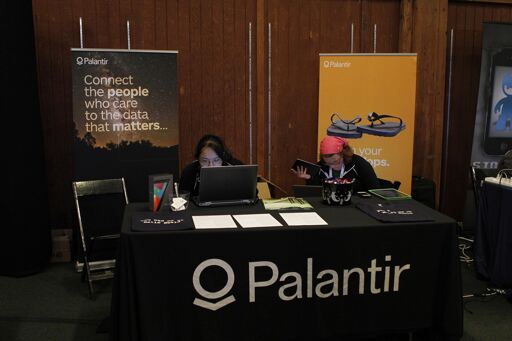
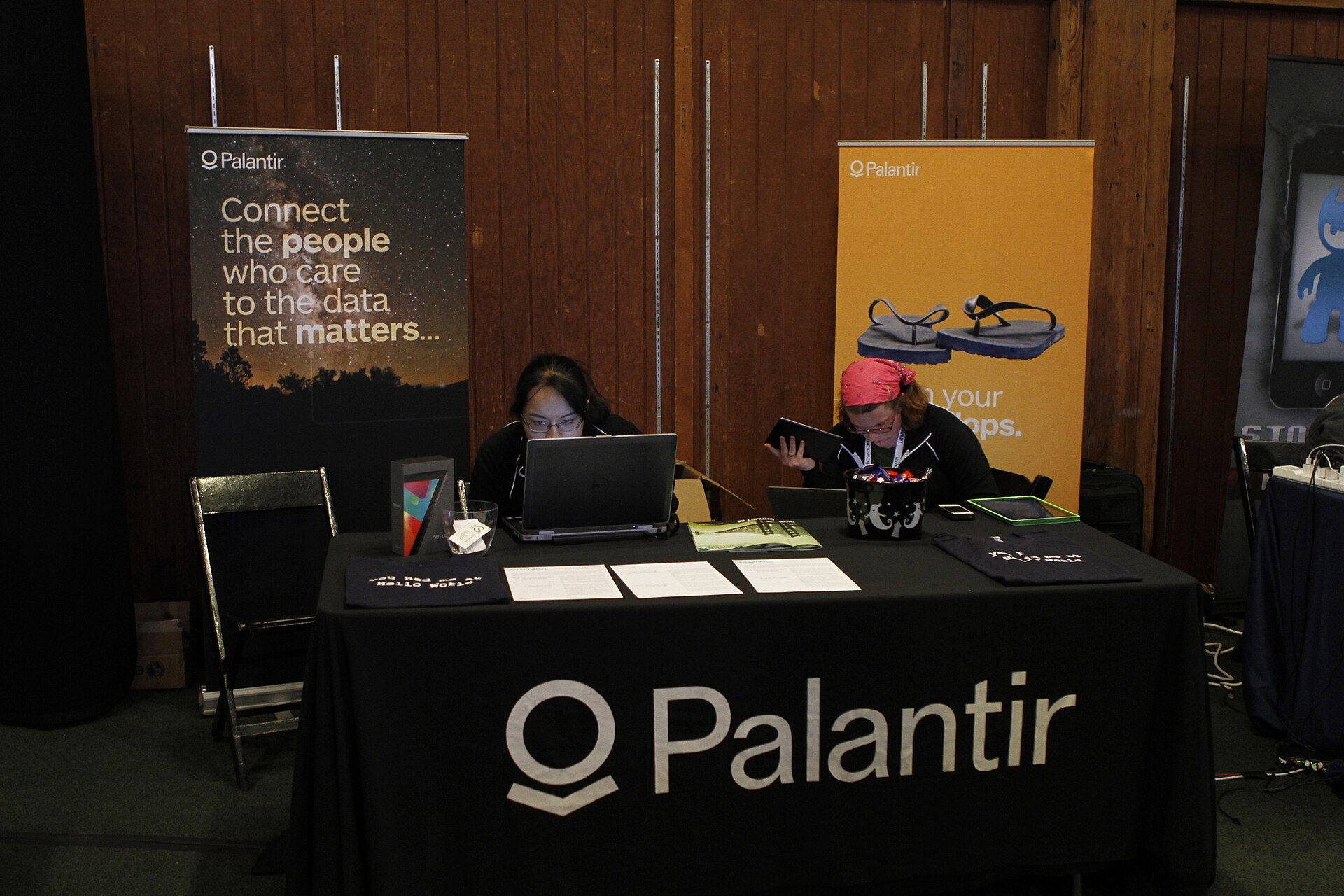
From personal memory, my attention keeps drifting back to power—who holds it, and how openly they now speak. It was brought to my attention at the weekend, over coffee, half-watching TV, that the billionaire CEO of Palantir Technologies told shareholders: “Palantir is here to disrupt… and, when it’s necessary, to scare our enemies and, on occasion, kill them.” Did he really say that? I looked it up. There he was, on camera. As former MP Andrew Bridgen asked: “Are all the shareholders happy with that? Sounds like terrorism?” The combination of its US origins, longstanding intelligence ties, and cloudy procurement certainly justifies growing political and civil-liberties scrutiny.
Though too many people make a sport of knocking the UK, watching Louis Mosley, Palantir’s UK CEO—and grandson of Oswald Mosley—extol the virtues of “hard power” on the BBC, I winced. On the same TV programme was Peter Mandelson, former ambassador to Washington and onetime associate of Jeffrey Epstein, who has acted as a paid adviser to Palantir while lobbying senior UK figures. Yet more potential blurred lines in the UK between lobbying, political access, and public procurement, especially in areas as sensitive as national data infrastructure.
I was remembering dreamy long walks in Hertfordshire, strolling through the mist and tall trees with friends. One friend’s father, who worked in medicine, had apparently been warning his son about antibiotics, saying there was a huge problem with them coming down the road. This was over 40 years ago. I was listening to his inherited rant as we kicked at the frozen earth and clapped our hands to keep warm.
Most of us know, at least intuitively, how antibiotics underpin much of modern medicine. Routine surgery, cancer treatment, even childbirth depend on them. Though I am given to swallowing the odd garlic clove myself to achieve something similar, I also know that without effective antibiotics, healthcare would not merely be less convenient, it would revert to the harrowing details of the early twentieth century.
What is far less understood is that antimicrobial resistance already kills more people each year than HIV/AIDS, and that its overuse in industrial agriculture is accelerating resistance, while the tacky economics of drug development discourage the creation of new antibiotics.
Yet this is still framed as a technical medical issue, something only for specialists to worry about. In reality, it is a slow-motion emergency that affects everyone. At the end of the day, this is not about bacteria, it is about whether the basic assumptions of modern life can still be trusted. I wish we all had my friend’s “tuned somatic intelligence.” I wish we all knew when to trust the intelligence that remains, even as the systems around us fray.
The post Diary of Unexpected Continuities appeared first on CounterPunch.org.
From CounterPunch.org via this RSS feed