

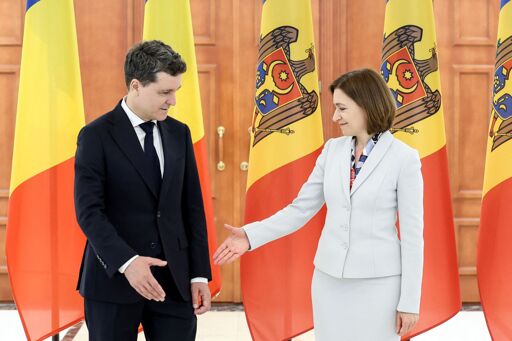
It is not often a president says they would support the dissolution of the state they are leading.
In a recent interview, Moldovan President Maia Sandu did just that, saying she would vote for the country’s reunification with Romania if such a referendum were to take place.
“It is getting more and more difficult for a small country like Moldova to survive as a democracy, as a sovereign country, and of course to resist Russia,” Sandu said.
She added, however, that the majority of Moldovans support maintaining independence and integrating into the EU rather than reunifying with Romania, and she will lead the country on this path.
According to political analyst Ileana Racheru, the statement is triggered by the changing world order following Donald Trump’s inauguration.
“The declaration was forced as an assessment: if the international order changes from a liberal to a ‘realist’ one, pushed by (Vladimir) Putin and Trump, the Republic of Moldova has to choose how it disappears,” Racheru told Kyiv Independent.
“Even a (Viktor) Orban-like regime in Romania — although I do not believe that the populist far-right would win a majority — would be preferable to Putin’s regime,” she added.
Romanian popular support for reunification has fallen from 70% to 40% following the Russian full-scale invasion of Ukraine in 2022. In Moldova, meanwhile, the public support has risen from 30% to 40% according to the latest polls.
Read also: Despite bomb threats, war fears, and disinformation, Moldovans still show up to reject Russia
Political will
Sandu’s statement on reunification has gathered support from the leadership of both Moldova and Romania.
Moldovan Prime Minister Alexandru Munteanu also declared that he would vote for reunification in a hypothetical referendum. Sandu and Munteanu have dual citizenship, as does a third of Moldova’s population.
Opposition lawmaker Vasile Costiuc, head of the populist Democracy at Home party, said that he will propose a bill to schedule a referendum.
Romanian President Nicușor Dan has also previously declared that he would support the reunification of Romania and Moldova, yet added that EU integration is “one of the ways (to reunite).”
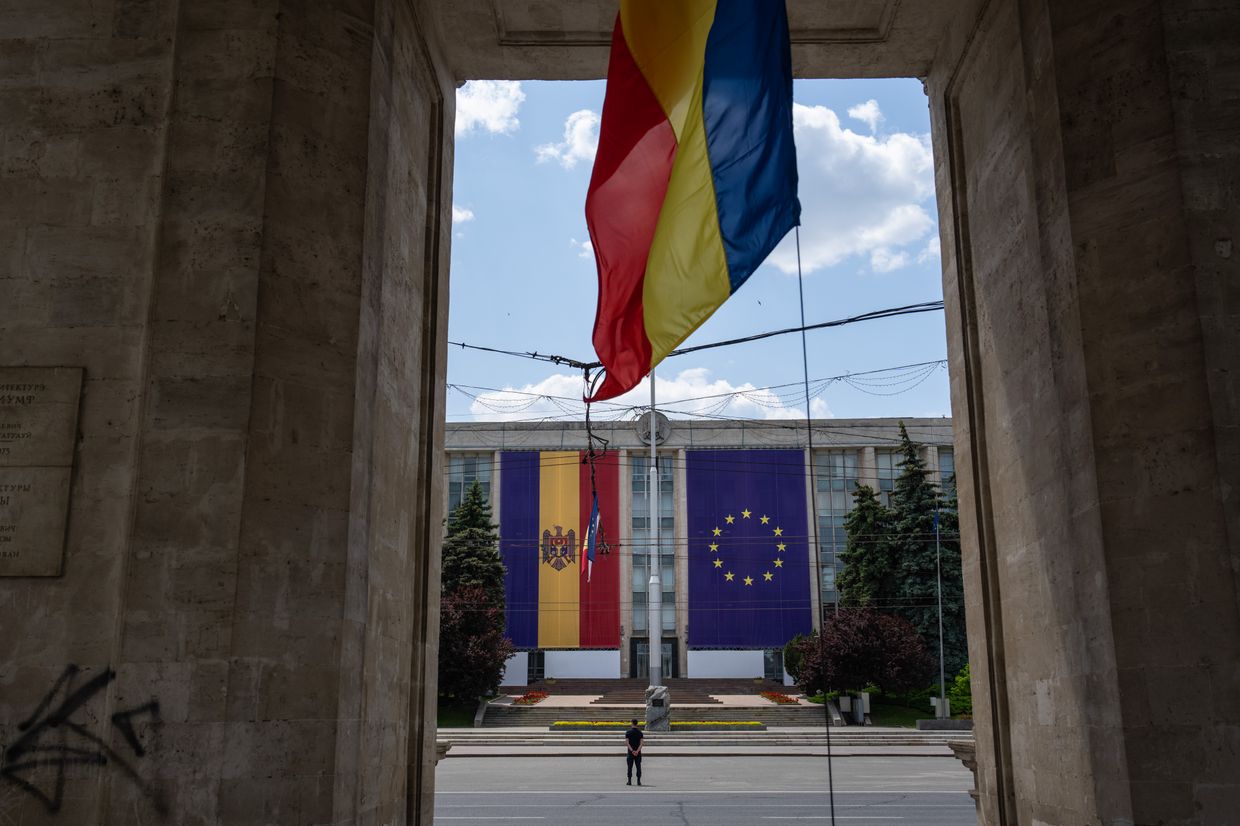
The Moldovan and European Union flags are displayed on the Government House of Moldova in Chișinău, Moldova, on May 31, 2023. (Carl Court / Getty Images)
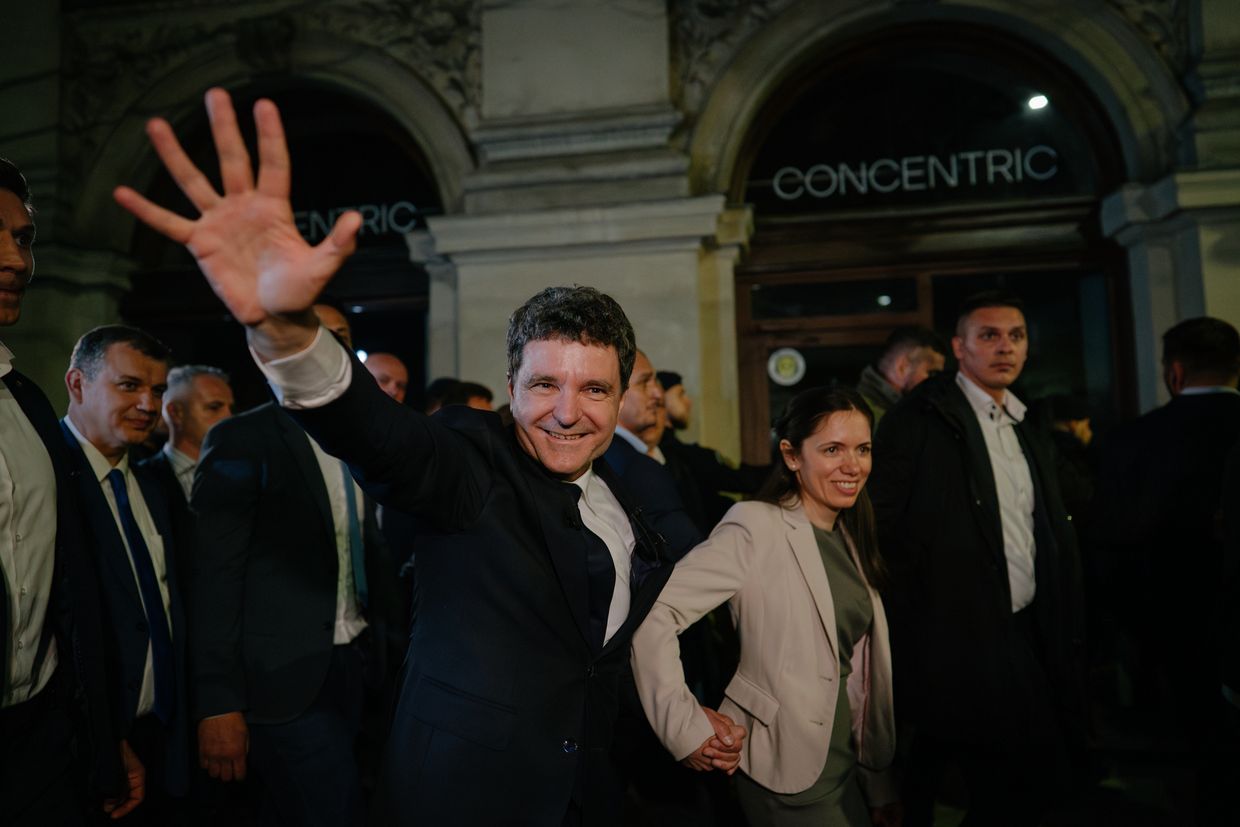
Then-presidential candidate Nicușor Dan and his partner Mirabela Grădinaru greet supporters after the release of the first exit poll results in Bucharest, Romania, on May 19, 2025. (Andrei Pungovschi / Getty Images)
According to Racheru, the declaration “has also reduced the degree of hatred from the voters of AUR,” or the populist far-right party Alliance for Unity of Romanians, who blamed Sandu and Romanian voters in Moldova for Dan’s win last year.
The party’s leader, George Simion, was defeated by Dan in the runoff of the contentious 2025 presidential elections.
Simion, who previously declared support for reunification, has abstained from comment. He is banned from entry in Ukraine and Moldova for alleged links to Russian secret services.
One language, one nationality, two states
Moldova was part of the medieval principalities that led to the formation of the modern Romanian state until it was annexed by the Russian Empire in 1812. After the First World War and the Russian Revolution, however, Moldova became once again part of Romania.
In 1940, the Soviet Union annexed Romania’s region of Bessarabia, named it Moldavia, and added it to the state as a “socialist republic.” The Romanian language was translated into Cyrillic and called Moldavian.
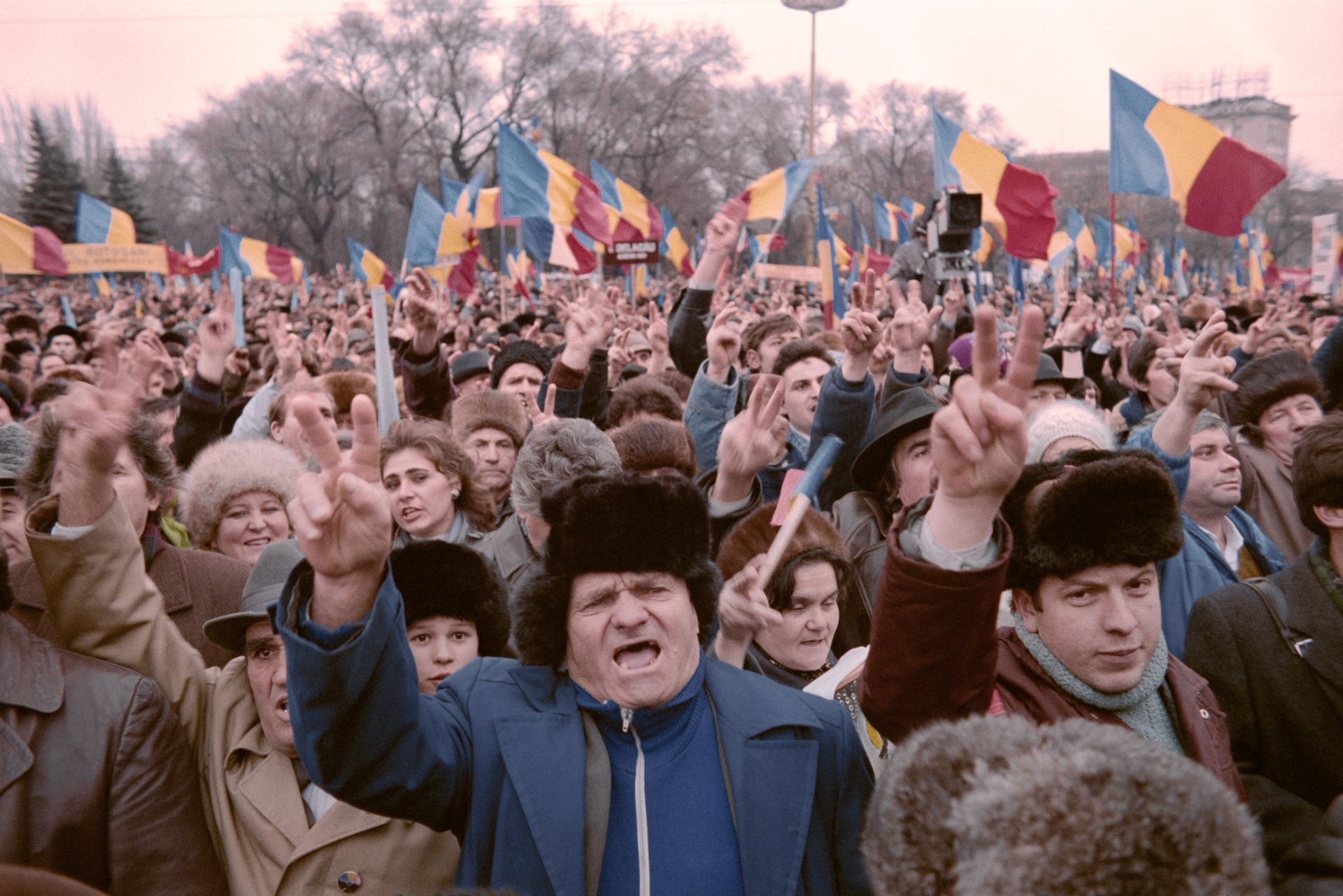
Hundreds of thousands of people protest outside the Grand National Assembly building in Chișinău, Moldova, on Dec. 16, 1990, during a rally organized by the Moldavian Popular Front. The rally was organised by the Moldavian Popular Front, during which the Assembly unanimously decided not to sign the treaty with the USSR. (AFP via Getty Images)
The desire for reunification with Romania re-emerged in the late 1980s, as part of the National Liberation Movement.
According to contemporary accounts, Moldova’s first President, Mircea Snegur, even proposed a union to his Romanian counterpart, Ion Iliescu, several times, only to be rejected.
Iliescu was seen as close to Moscow at that time.
Amidst talks of reunification, Russia attacked Moldova in March 1992, fighting on the side of the secessionist Transnistria. This predominantly Russian-speaking region was transferred from the Ukrainian Soviet Republic to the Moldovan one following Soviet annexation of the region.
Following the ceasefire agreement signed by Russian President Boris Yeltsin and Snegur in July 1992, the question of reunification was deprioritized.
Transnistria remained effectively under Russian control.
The idea of reunification was further compromised by far-right politicians, often linked to Russia.
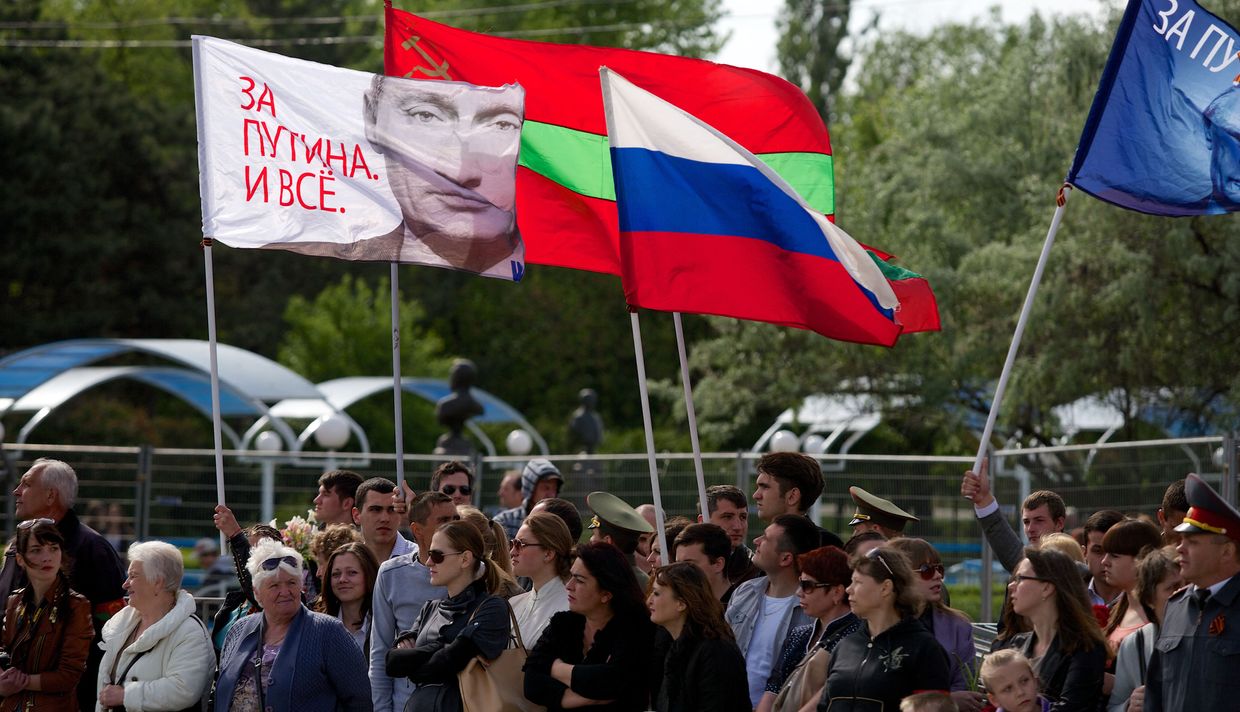
People carry a Russian flag and a banner bearing a portrait of Vladimir Putin reading “We are for Putin!” in Tiraspol, Transnistria, Moldova, on May 9, 2014. (Vadim Denisov / AFP via Getty Images)
Even now, reunification remains an ideal rather than a realistic scenario in the given circumstances, argues political analyst Victor Ciobanu.
“Beyond the opportunity in 1991, I believed in only one scenario, a forced reunification in an extreme scenario,” Ciobanu told Kyiv Independent. “In the case of Russian troops reaching Transnistria via Odesa, I think the prospect was discussed behind the scenes. This can remain a scenario,” Ciobanu added.
Transnistria borders Ukraine’s Odesa and Vynnytsia oblasts.
But it is not clear whether such a lifeline scenario would be welcome by Romania.
“I don’t know if Nicușor Dan would pursue reunification in extremis,” Racheru said.
If Romania risks becoming a Russian military target, the decision would not be taken only by Bucharest but also by Brussels and NATO, she added.
“I think that the West is quite aware that Russia wants to advance,” she said.
Read also: Romania’s new president faces daunting challenges after surprise victory over far-right upstart
From The Kyiv Independent - News from Ukraine, Eastern Europe via this RSS feed