

Friends,
First, a call from Minneapolis for mass action this Friday to get ICE out of Minnesota, which you can find here.
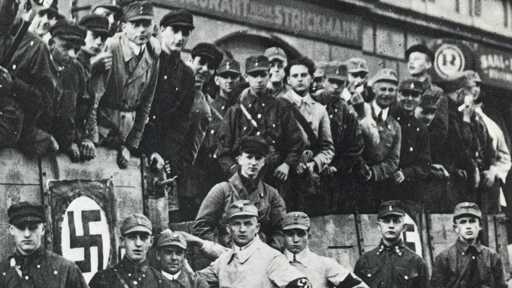
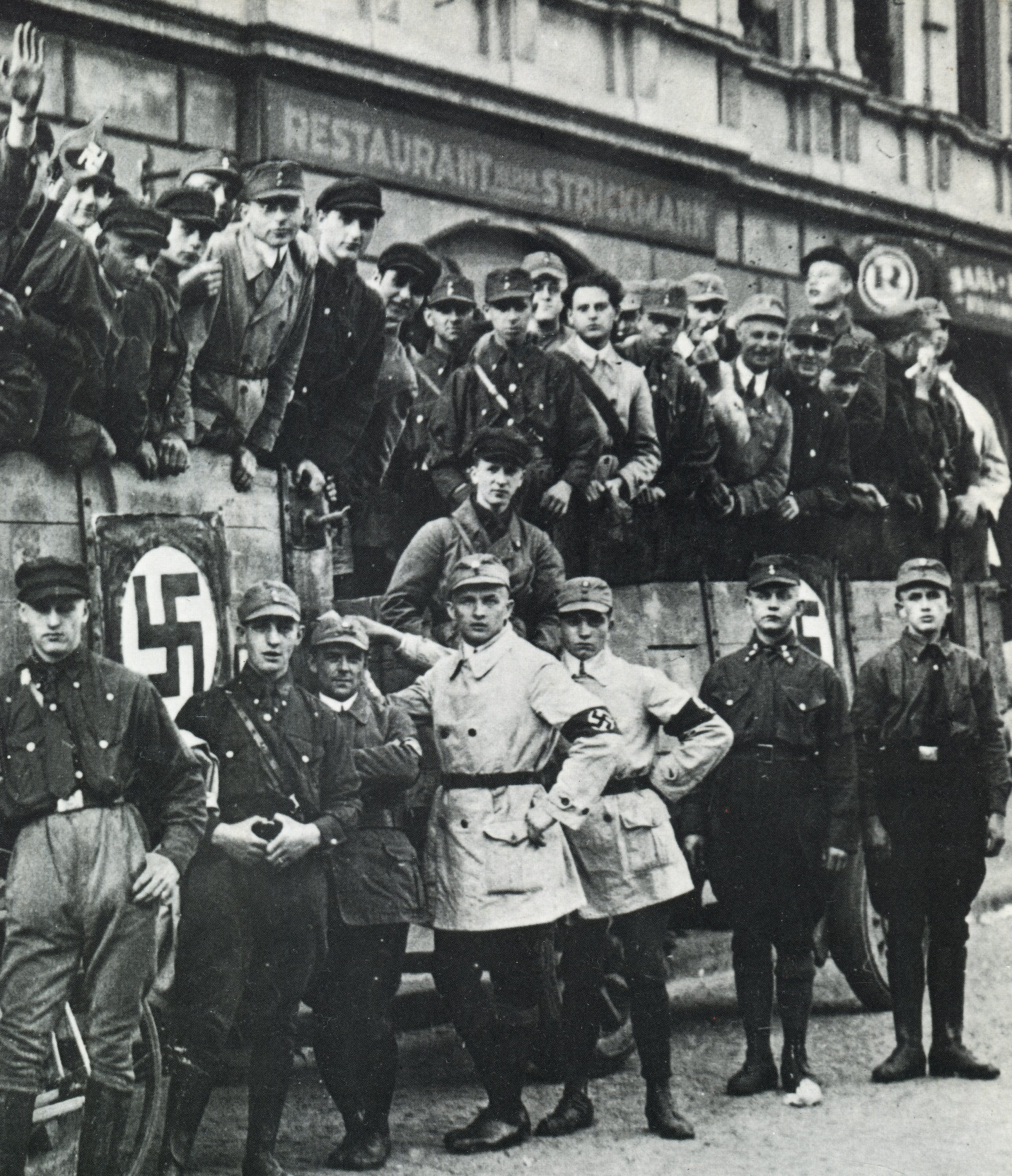
Second, and related to what’s happening in Minneapolis, I want to share with you a piece from a German documentarian who goes by the name of Neal McQueen on the chilling parallels between ICE and Hitler’s Brown Shirts, reproduced below with his permission.
**
When History Starts to Rhyme
Neal McQueen
Ninety-two years apart, two documents authorized rapid expansion of forces empowered to use coercion against designated populations. The contexts differ. The mechanisms — hiring surges, compressed training, weakened oversight — follow a recognizable pattern.
On February 22, 1933, Prussian Interior Minister Hermann Göring signed an order deputizing 50,000 stormtroopers as auxiliary police. On January 20, 2025, President Donald Trump signed an executive order entitled “Protecting the American People Against Invasion.”
Both documents expanded the authority of organizations tasked with confronting what their political sponsors called “enemies within.”
The comparison that follows is not about moral equivalence. The Sturmabteilung was a party militia that murdered political opponents and helped lay the groundwork for genocide. Immigration and Customs Enforcement is a federal law enforcement agency operating under statutory authority. They represent different legal systems, different eras, and different constraints.
What the comparison examines is structural. It asks: what happens when a state rapidly expands a force authorized to use coercion against a designated population? The mechanisms — recruitment surges, relaxed vetting, compressed training, weakened oversight — produce similarly recognizable patterns. Do those patterns have predictive value for the present?
The Surge
By January 1931, the SA numbered roughly 77,000 members. Under Ernst Röhm’s leadership, recruitment surged. Within twelve months, membership reached 400,000. By the time Hitler became Chancellor in January 1933, the rolls showed approximately two million. The force had grown twenty-five-fold in two years. A sample from 1929-1933 found that over 77 percent of SA members were under thirty; nearly 59 percent were under twenty-five. Many were unemployed. The Great Depression had thrown millions out of work, and the SA offered what the labor market did not: a uniform, a purpose, a promise of action. Ideology mattered less than belonging.
ICE’s expansion followed a different path but a similar tempo. At Trump’s second inauguration, the agency employed approximately 10,000 officers and agents. The “One Big Beautiful Bill Act” (Big Ugly), signed into law in July 2025, devoted $150 billion over four years to border and deportation efforts — boosting ICE’s annual funding from roughly $10 billion toward $100 billion by 2029. A tenfold increase. By December 2025, the agency had onboarded 11,751 new employees. More than 56 percent of ICE’s workforce by New Year 2026 had less than one year on the job. The majority were rookies.
The recruitment campaigns differed in medium but shared a targeting logic. The SA charged no dues and asked for no credentials beyond a willingness to fight. ICE’s 2025 expansion lowered the minimum age to eighteen, eliminated the maximum age, dropped college degree requirements, and waived polygraph examinations under Direct Hire Authority. The Washington Post reported ICE spending over $100 million on a “wartime recruitment strategy” that placed ads on conservative podcasts, at NASCAR races, near military bases, and at gun shows. One poster asked: “Which Way, American Man?”—a phrase echoing nativist slogans about cultural decline.
Both organizations attracted a mixture of true believers and opportunists. According to Rudolf Diels, the first head of the Gestapo, roughly 70 percent of new SA recruits in Berlin during 1933 had been Communists — men who sensed which way the wind was blowing. ICE leadership in 2025 stated they sought people “inspired by MAGA ideology rather than by the typical perks of a federal badge.” One veteran ICE officer cautioned: “You’re gonna get a lot of people who are just power hungry and want authority.” Rapid hiring selects for zeal over judgment.
Authority Expanded
The SA spent twelve years in a legal gray zone before its February 1933 transformation. Weimar authorities viewed it as a private militia subverting the constitution. The organization operated quasi-legally as a “sports and gymnastics” club, with men armed with clubs, rubber truncheons, and brass knuckles rather than firearms. The Reichstag Fire Decree, issued six days after Göring’s deputization order, suspended civil liberties and shielded SA actions from legal consequences. The shift required no new legislation—only the will to use existing emergency powers without restraint.
ICE needed no such workaround. It inherited existing statutory authority under the Immigration and Nationality Act. What changed in January 2025 was how the executive branch chose to use that authority. Trump revoked Biden-era orders that had set enforcement priorities and limited certain ICE actions. DHS rescinded guidance that had barred enforcement at schools, hospitals, churches, and protests. An ICE memo required supervisory approval before action in formerly protected areas— but set no penalty for skipping approval. The restraint was nominal.
By September 2025, DHS announced over 1,000 agreements with local law enforcement— a 641 percent increase from approximately 150 such agreements before 2025. The Laken Riley Act mandated detention without bond for any non-citizen charged merely with a theft-related offense.
A crucial judicial development came in September 2025. In Noem v. Vasquez Perdomo, a lower federal court had enjoined ICE from making stops based solely on factors like race, language, location, or type of work. The Supreme Court stayed the injunction. Justice Kavanaugh’s concurrence reasoned that while ethnicity alone cannot create suspicion, the “totality of circumstances”— many undocumented residents in the vicinity, common work patterns, language — meant agents could use those factors collectively. Justice Sotomayor’s dissent condemned the ruling as declaring “all Latinos… who work low-wage jobs are fair game to be seized at any time.”
The outcome was similar across these two eras: a force authorized to use coercion against a designated population, operating with diminished oversight. The SA gained police powers in weeks. The change was visible and dramatic. ICE’s expansion was incremental and bureaucratic. Both ended in the same place: expanded latitude, weakened checks.
Training Compressed
The SA’s training was paramilitary but ad hoc. There was no formal academy. Manuals circulated with instructions on hand-to-hand combat and crowd control. The uniform’s psychological effect — intimidation through mass display — was integral to tactics. The SA’s strength lay in numbers and willingness to use force, not tactical competence.
ICE historically required approximately 13 weeks of comprehensive basic training at the Federal Law Enforcement Training Centers — covering immigration law, arrest procedures, firearms, defensive tactics, and Spanish language. In 2025, these timelines were cut by more than half. DHS officials confirmed academy training was cut to 47 days — roughly a 60 percent reduction. The number was symbolic: Trump is the 47th president. Spanish language training was eliminated or minimized; NBC News found recruits received only one week.
ICE asserted that “no subject matter has been cut.” Three ICE officials told The Atlantic that the reduction was purely to expedite deployment. Both statements cannot be true. A House Committee letter expressed concern about “a potential for an insufficiently trained and vetted force of thousands.” Over 200 recruits were pulled from training mid-course after belated background checks revealed disqualifying information.
The structural logic was the same: political leadership demanded immediate results. Training was the variable that could be cut.
Detention Expanded
Throughout 1933, SA regiments set up hundreds of improvised detention sites — “wild camps” — in abandoned factories, breweries, and cellars. The Oranienburg concentration camp near Berlin was established by SA troops in March 1933 without central permission. Local police acquiesced. By mid-1933, SA guards there were on the Prussian government payroll. The state did not shut the camps down. It paid for them. Conditions were brutal. Records document at least 16 prisoners killed by guards at Oranienburg alone. The camps were eventually absorbed into the formal concentration camp system. The state wanted terror, but organized terror.
ICE inherited a national detention infrastructure built starting in the 1980s. What changed in 2025 was its scale. The Big Ugly’s $45 billion detention allocation funded rapid construction. In 2025 alone, ICE opened 59 new sites and reopened 77 closed centers — 136 facilities in twelve months. The detained population nearly doubled, from roughly 39,000 to approximately 70,000 by January 2026. Capacity outpaced staffing, oversight, and medical care.
Communities learned of proposed facilities through news reports rather than formal consultation. In Social Circle, Georgia — population 5,000 — local officials expressed alarm at reports of a proposed 5,000 to 10,000 person detention center. The town, they noted, lacked sufficient water and sewer capacity. In Kansas City, the City Council enacted a five-year moratorium on non-municipal detention centers after learning DHS had scouted a warehouse as a potential 7,500 bed facility. Resistance was reactive. The scouting had already happened.
Thirty-two detainees died in ICE custody in 2025 — triple the prior year’s figure of eleven. The mechanisms differed from the wild camps’ documented murders. The outcome was the same: state-sanctioned detention that produces fatalities.
The “Enemy Within” Frame
Nazi ideology rested on a founding lie: the Dolchstoßlegende, or stab in-the-back myth, which held that Germany’s army had been betrayed from within by Jews, Marxists, and democrats. In Mein Kampf (1925), Hitler wrote: “Before one defeats external enemies, the enemy within oneself must first be annihilated.”
The Trump administration reshaped immigration enforcement with a structurally similar frame. Executive Order 14159, signed on inauguration day 2025, was titled “Protecting the American People Against Invasion.” The order framed illegal immigration not as a law enforcement matter but as a national security emergency.
The invasion frame transformed undocumented immigrants from lawbreakers into combatants. But it required an additional element: an explanation for why the “invasion” had been permitted. Soon before the 2024 election, Trump told Fox News: “I think the bigger problem is the enemy from within… . We have some very bad people, sick people, radical left lunatics.” He added: “The enemy from within is more dangerous than China or Russia.”
A year later, addressing military commanders at Quantico, Trump said: “The enemy from within is a bigger threat than any foreign enemy.”
Stephen Miller, Deputy White House Chief of Staff for Policy, provided the ideological framework. He depicted a clash between America’s “noble, virtuous people” rooted in “Judeo-Christian and Western heritage” and “forces of wickedness.” On Fox News in October 2025, he declared: “To all ICE officers: You have federal immunity… no city official, no state official, no illegal alien, no leftist agitator or domestic insurrectionist can prevent you from fulfilling your duties.”
The claim of “federal immunity” had no basis in law. DHS amplified the message as a “REMINDER.” The legal fiction did not matter. The permission did.
What We Know, What We Don’t
The parallels are well-documented: rapid expansion, lowered barriers, compressed training, expanded detention, and ideological framing of targets as existential threats.
What remains uncertain:
Whether ICE’s expansion exceeds institutional control. The SA’s trajectory was eventually curtailed not by external accountability but by Hitler’s purge of its leadership in June 1934, when Röhm’s ambitions threatened the regime’s alliance with the army. ICE faces no internal purge, and its political sponsors remain in power.
Whether American oversight mechanisms can constrain the agency. The DHS Inspector General has opened an investigation into training adjustments. Federal judges have issued injunctions that were subsequently stayed. Congressional Democrats have vowed to oppose new funding but acknowledge they lack votes to defund ICE. Trump’s Big Ugly bill locked in resources through 2029. Public opinion polling show that deportation operations have become “deeply unpopular,” but public opinion operates on different timelines than operational expansion.
Whether the “enemy within” framing will expand in application. The Nazi usage of der Feind im Inneren evolved from “November criminals” to “Jewish Bolsheviks” to simply “Jews.” So far, ICE has targeted undocumented immigrants, particularly Latinos. Yet Trump’s rhetoric embraces a broader category of “enemies within” including Democrats, federal bureaucrats, and media that criticize him. Whether operational targeting follows rhetorical expansion is not yet determined.
The comparison does not predict outcomes. It identifies mechanisms. The basic question it asks: once set in motion, can institutions control these trajectories? The record suggests it depends on whether oversight constrains domestic armies before they double in size.
From Robert Reich via this RSS feed
You must log in or # to comment.