

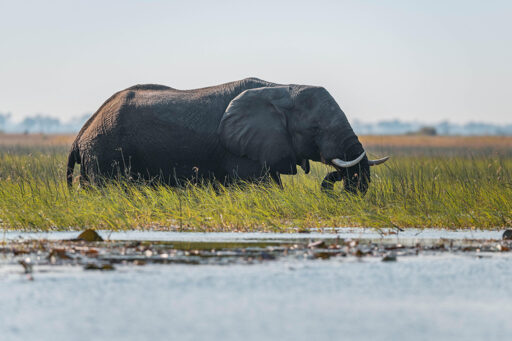
In a remote part of Angola’s highlands, a critical natural reservoir or “water tower” has been recognized as a wetland of international importance. Known to locals as lisima lya mwono, or “source of life,” the area supplies water to the region’s most important rivers and supports unique native wildlife. Officially designated last October by the Angolan government and announced Jan. 6 by the Ramsar Convention on Wetlands, the site covers around 53,000 square kilometers (20,500 square miles) in Moxico province. The area sits on a vast plateau roughly 1,200 meters (3,900 feet) above sea level. It’s creased by valleys and dotted with freshwater lakes, rivers, peatlands and marshes. These ecosystems store huge volumes of rainfall, releasing it steadily into major African river systems, including the Okavango and Zambezi. “It’s like a hidden world,” Kerllen Costa, Angolan director for the National Geographic Okavango Wilderness Project (NGOWP), told Mongabay. Project researchers first encountered the region’s water systems while tracing the length of the Cuito River in 2015. Since then, the team has documented nearly 150 new-to-science species from the area, including spiders, snakes, mice and mushrooms. Camera traps have revealed abundant wildlife, including lions, leopards and cheetahs. They’ve also confirmed local reports of secretive “ghost elephants” that may be a genetically distinct population. NGOWP botanical research director David Goyder, also with the Royal Botanic Gardens, Kew, in the U.K., said the water tower’s deep, sandy soils support deciduous miombo woodlands. These are home to highly specialized plants, often unique to the region,…This article was originally published on Mongabay
From Conservation news via this RSS feed
You must log in or # to comment.